Get in touch with Zeyu lntelligent Industrial Company
OEM AUTOMATION SOLUTION
The 9-Station Fiber Optic Connector Assembly Machine | ZEUEE 20-Year Patch Cord Production Line OEM
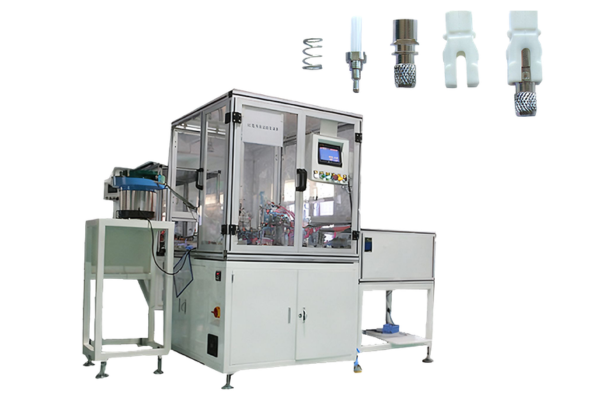
A 9-station automated fiber optic connector assembly machine – strip, cleave, crimp, glue inject, cure, polish, inspect, IL/RL test, 3D geometry verify – producing Telcordia GR-326-CORE-grade patch cords at factory-scale volumes. ZEUEE provides full-line patch cord production solutions with itemized pricing, ISO 9001:2015 quality control, support for all major SC/LC/FC/ST/MPO/MTP connector types, leveraging two decades of industrial automation OEM experience in over 30 countries.
9 stations
Reference Architecture
20 years
OEM Experience
SC/LC/MPO
Connector Types
≥60 dB
APC Return Loss
ISO 9001
Certified Quality
30-90 days
Tiered Lead Time
Why Fiber Connector Production Bottlenecks Are Compounding in 2025
Outsourced patch cord suppliers are no longer an option. AI data centers need five times the fiber density of a typical hyperscale array and Nvidia’s latest Blackwell 72-GPU nodes command sixteen times the fiber connectivity of a standard cloud switch rack. Today’s splicing teams can’t keep up with such a demand, let alone satisfy the strict insertion-loss thresholds demanded by tier-3 contracts.
The top buyer pains we see most often:
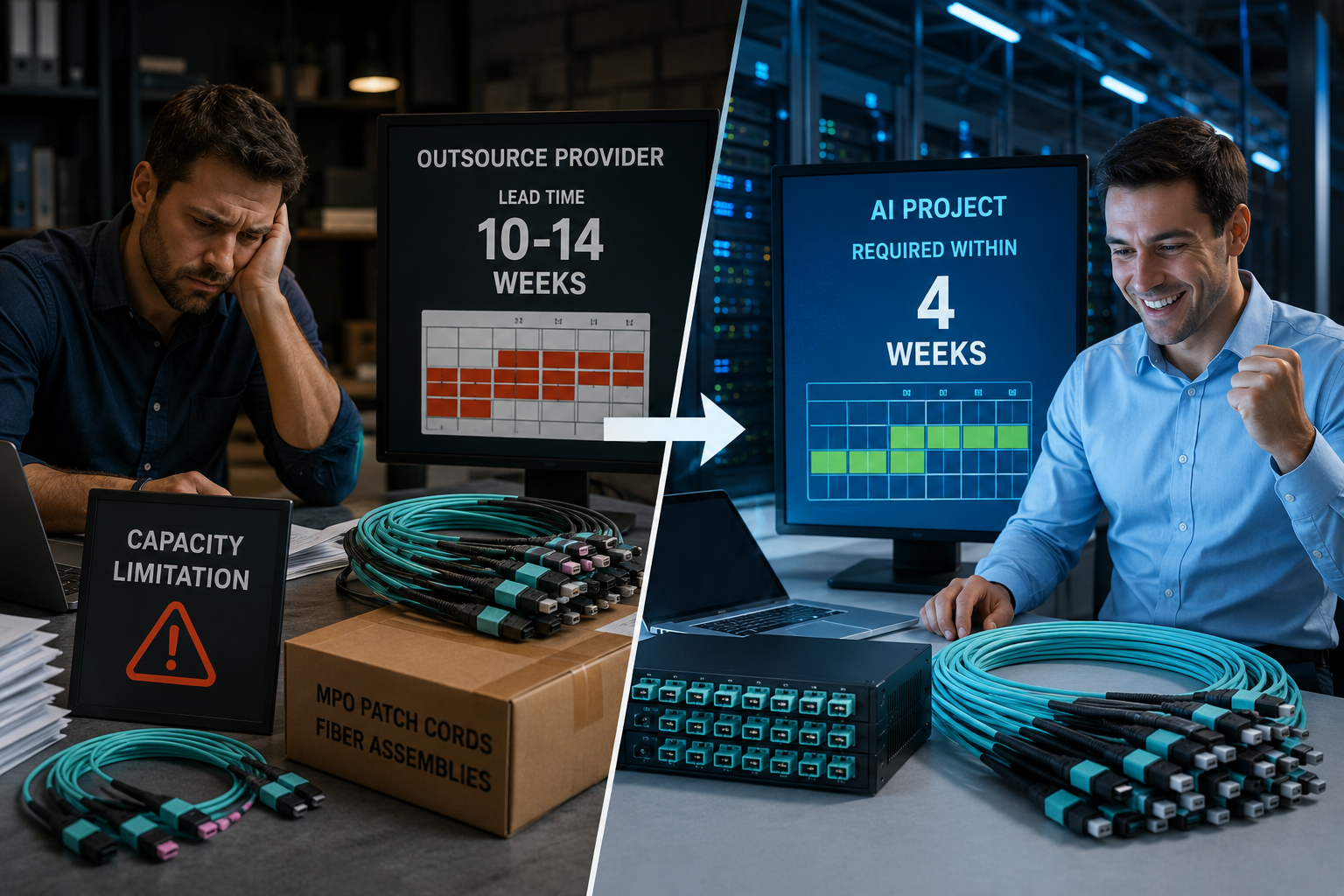
Capacity Limitation: Outsource providers quote a 10-14 week lead time for MPO patch cords and fiber optic assemblies; however, AI projects require them within 4 weeks.
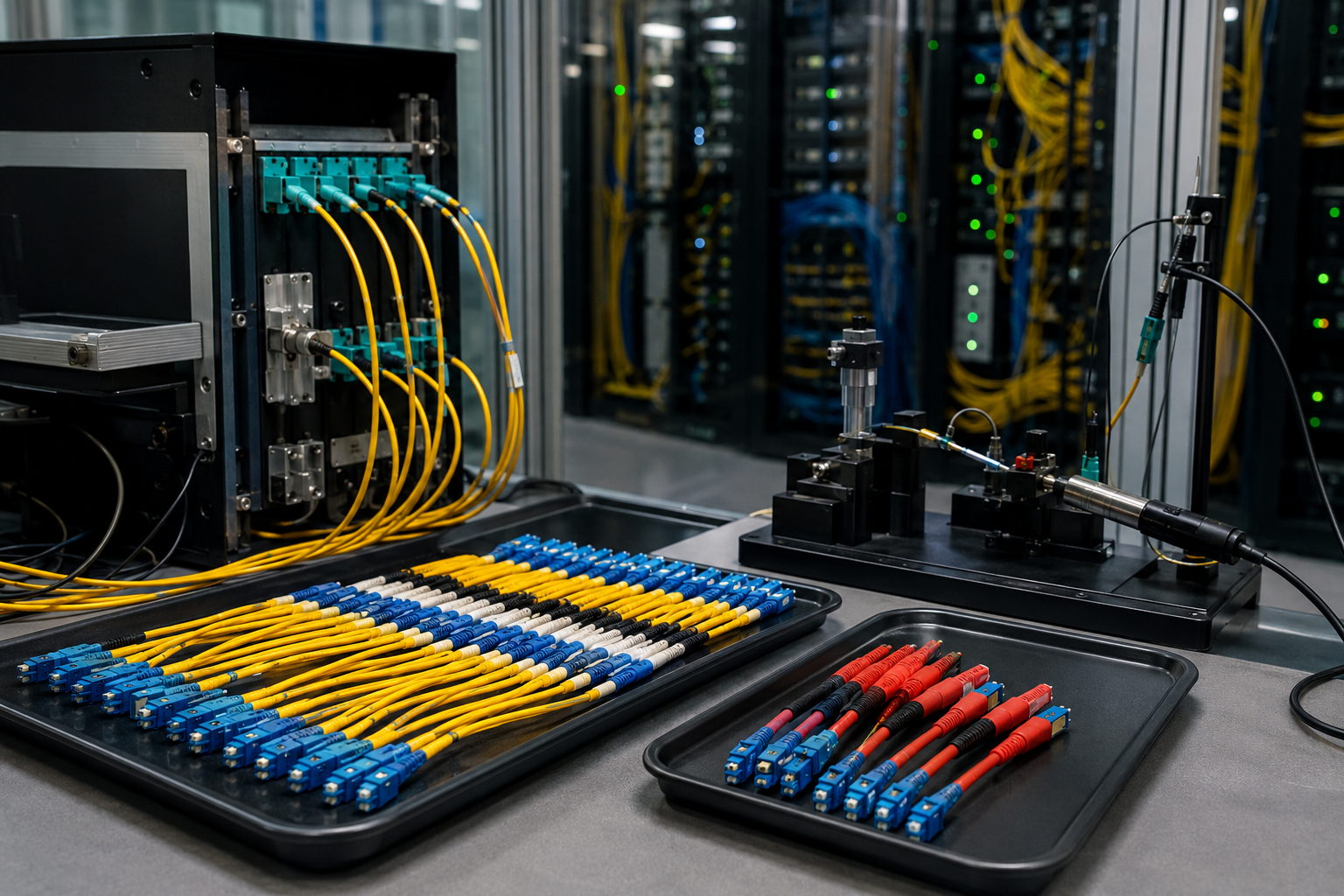
Quality Drift: For data-center handoffs, the observed drift in IL specifications with our current outsourced batches necessitates 6-8% rework, a problem particularly amplified within our fiber optic cable assembly output batches.

Compliance Gap: The majority of lowest-bidding vendors omit the requisite third-party IEC 60794-4-10 certification report, leaving us susceptible to dispute and the risk associated with unreliable equipment manufacturing origins.
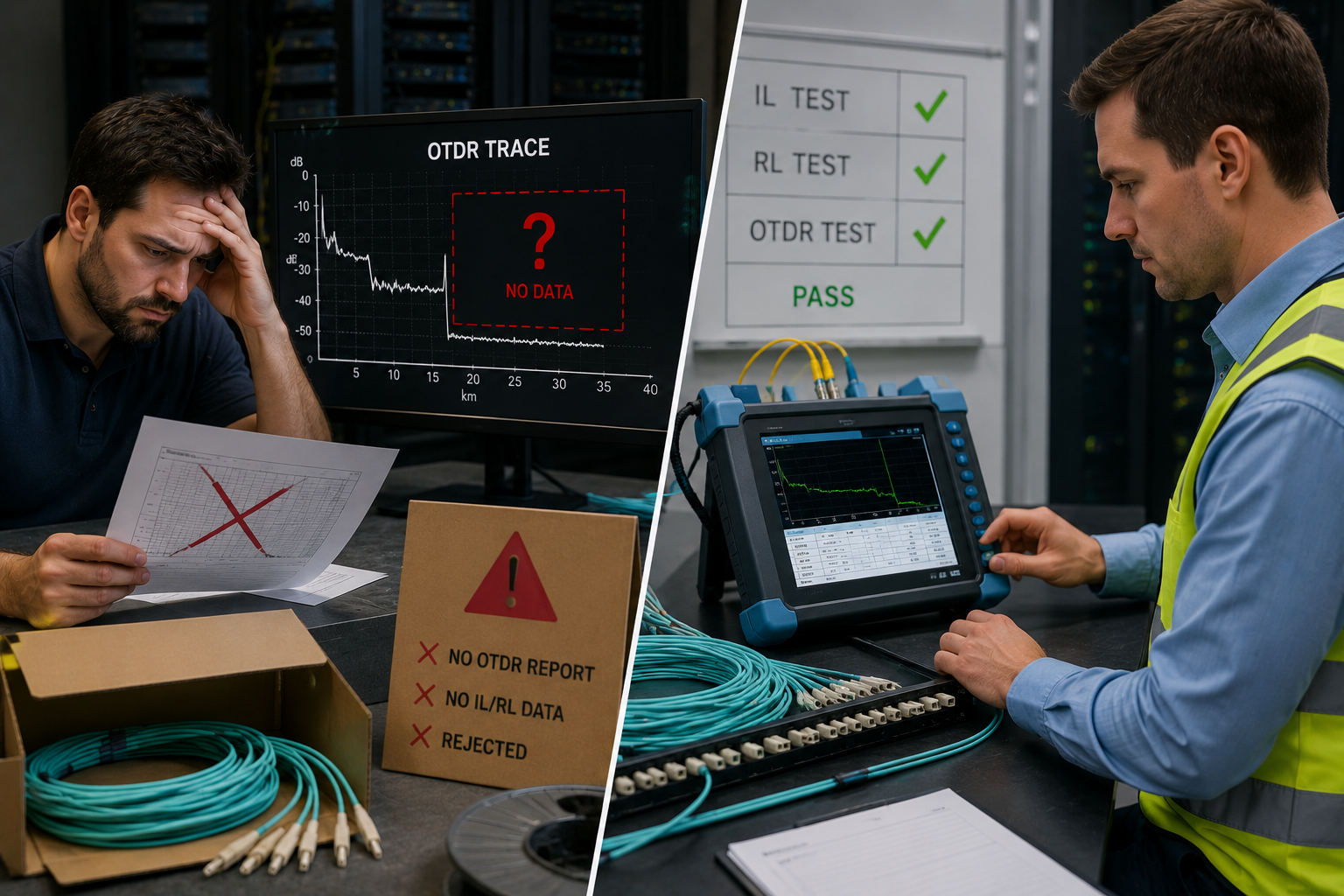
OTDR Trace Gap: Required OTDR test results were not provided by many lowest-bidder suppliers in 2024-2025 lawsuit case files, forcing receiving teams to redo full IL/RL acceptance before installation.
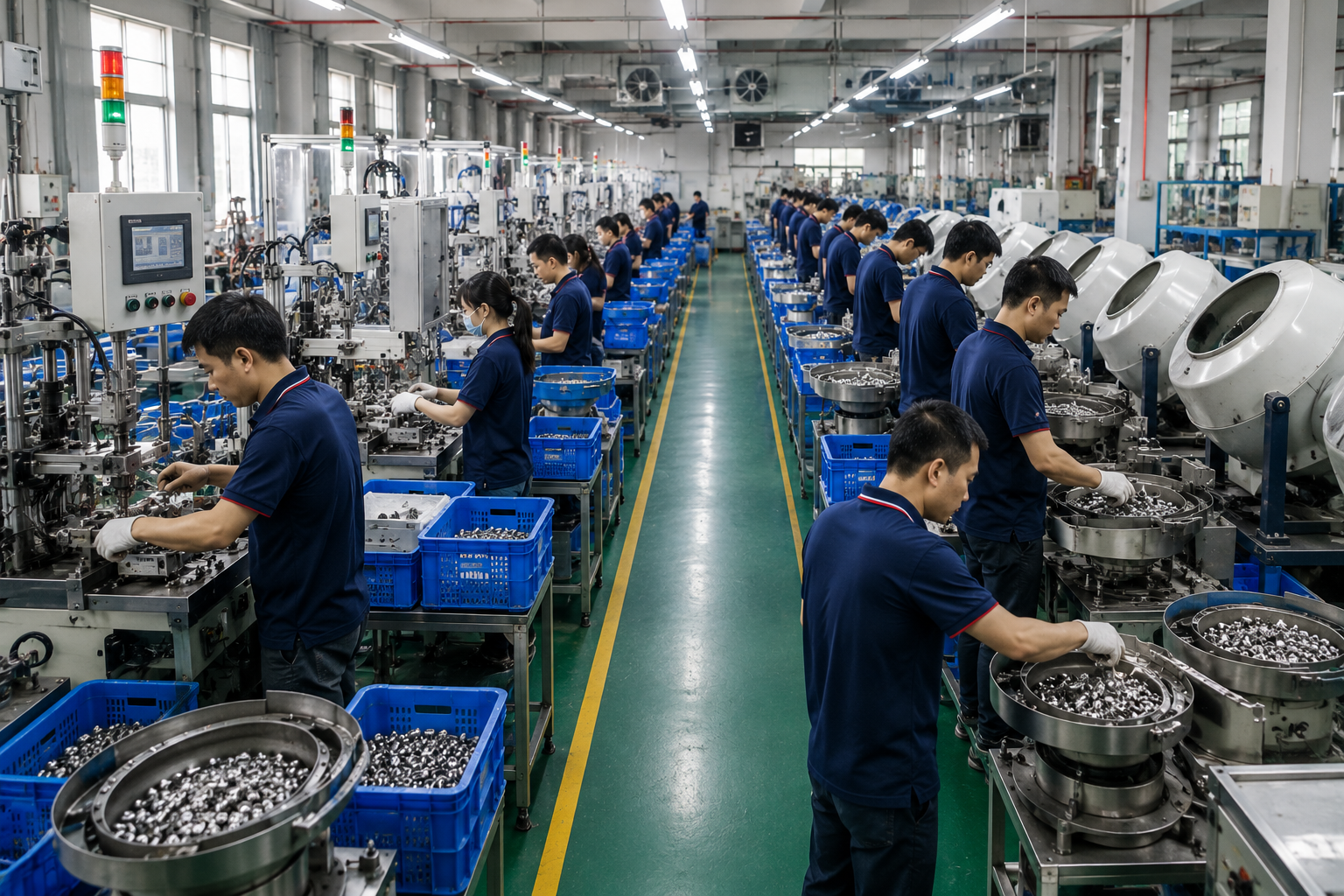
Staffing Reality: Industry data confirms 15-20 staff per line plus four polishing machines push 6,000-7,000 connectors through one 11-hour shift; teams that under-spec staffing miss every payback projection in year one.
As we move forward towards 2025, a sharp pivot in our procurement approach is evident; it’s no longer about finding the cheapest product but about identifying compliance and certified partners who align with western safety benchmarks. In response to this evolving landscape, ZEUEE offers an end-to-end solution: a dependable 9-station fiber optic patch cord production line rooted in twenty years of industrial automation OEM excellence, running ISO 9001:2015 quality management, and ensuring direct alignment with the Telcordia GR-326-CORE specification for all our fiber optic cable and optical cable assemblies (additional AI-data-center fiber demand context: IEEE ComSoc Technology Blog, December 2025).
Our real-world implementation experience ranges from in-house patch cord factories serving FTTH last-mile deployment, to hyperscale data-center rack-building partners (per IEEE ComSoc 2025-12 analysis) that have shifted toward pre-fabricated solutions, and to the aerospace/military MPO fiber array shops where we account for 11% of the global MPO patch cord market. In the 30+ countries we serve, the recurring customer query is consistent: What machine sequences are necessary to meet Telcordia and IEC specifications from the very first article? This inquiry is what the 9-Station Reference Architecture meticulously outlines below, supported by the proven designs defended by 32+ invention patents registered at our Shenzhen and Taihe production facilities.
The 9-Station ZEUEE Fiber Connector Assembly Reference Architecture
Patch cord production is fundamentally more than a single machine; conceptualizing it as such often leads to in-house lines that fail to meet desired throughput metrics. An average standard benchmark requires up to twenty operators in conjunction with four polishers, producing approximately six to seven thousand connectors over an 11-hour shift. ZEUEE simplifies this process into nine distinct stations, each independently responsible for a key performance indicator. This architecture effectively quarantines any failure mode before it can spread through out the system.
| # | Station | Quality KPI | Cycle Output |
|---|---|---|---|
| 1 | Strip | Coating residue ≤ 0.05 mm at cleave point | 2-3 sec/cable |
| 2 | Cleave | End-angle within ±0.5° | 4-6 sec/cable |
| 3 | Crimp | Boot retention ≥ 9 N pull | 5-8 sec/connector |
| 4 | Glue Inject (Epoxy Two-Component) | Dispense volume CV ≤ 3% | 6-10 sec/connector |
| 5 | Cure (Convection Oven) | Profile 80-150 °C, ±2 °C uniformity | 30-90 min batch |
| 6 | Polish (Multi-Step + APC 8°) | Apex offset ≤ 50 µm, fiber height ±50 nm | 2-4 min/cycle, 12-24 connectors |
| 7 | Visual Inspect (IEC 61300-3-35 zones) | Zone A/B defect-free per pass/fail criteria | 10-15 sec/connector |
| 8 | IL / RL Test | IL < 0.3 dB, RL ≥ 60 dB APC SM | 15-25 sec/connector |
| 9 | 3D Interferometric Geometry | Per Telcordia GR-326 geometry table | 20-30 sec/connector sample |
This nine-station layout is consistent with recently filed industry patents of connection assembly processes; indeed, the latest U.S. patent (USPTO patent US20240033879A1, 2024) of a polishing fixture for single-cycle finishing of APC ferrule end-faces, attests that the process economic at station six has dramatically been refined since the first single-axis tool defined in U.S. patent US4839993A (1989).
“We had 14 patch cord designs in the 2024-2025 bids we put together before we finally landed on this synchronization nine-station model. Point is we’re not putting in more machines – we’re making sure each station’s responsible for one and only one defect mode and isolating at QC is the standard.”
[SYS_DOC_REF::OVERVIEW]
SYSTEM ACTIVE
Zeuee Production Line Equipment Walkthrough — Seven Core Machines
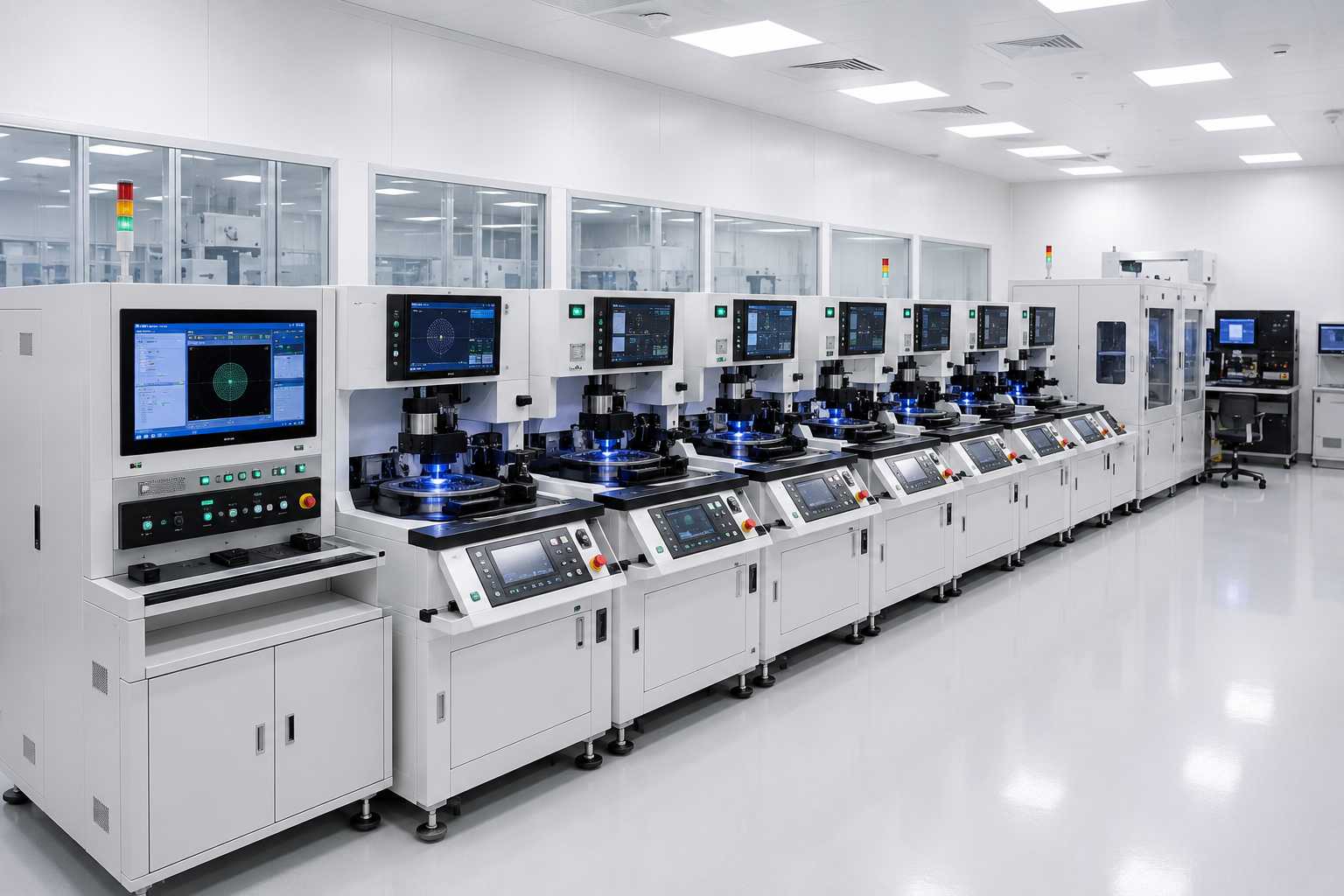
Stations one thru nine — anchored to the dual-end APC polishing fixture in USPTO US20240033879A1 (2024) and the multi-pad polishing flow of US20170139152A1 (2017) — correspond to seven actual families of machines — the strip and cleave occupy the same workstation and both in/RL and geometry share one of inspection bays. Every piece of production equipment will have a ZEUEE-type number with its spec and regulated air pressure connection defining the level in Step 8 to follow. All of the activities – cable stripping, crimping cycle machine activity, polishing the fibre optic cable and microscopic view are defined individually stations of reliability and not the black box.
All this while managing a broad range of output, from single-fiber pigtail terminations all the way to the finished output of an MPO patch cord. Connector boots press fit on the ferrule body with the Z-CRIMP press fit head, and epoy fluid is dispensed at controlled volumes in the next station. Physically the whole operation remains the same whether an operator has to assemble one thousand SC pigtails or five thousand MPO patch cords per shift.
3A
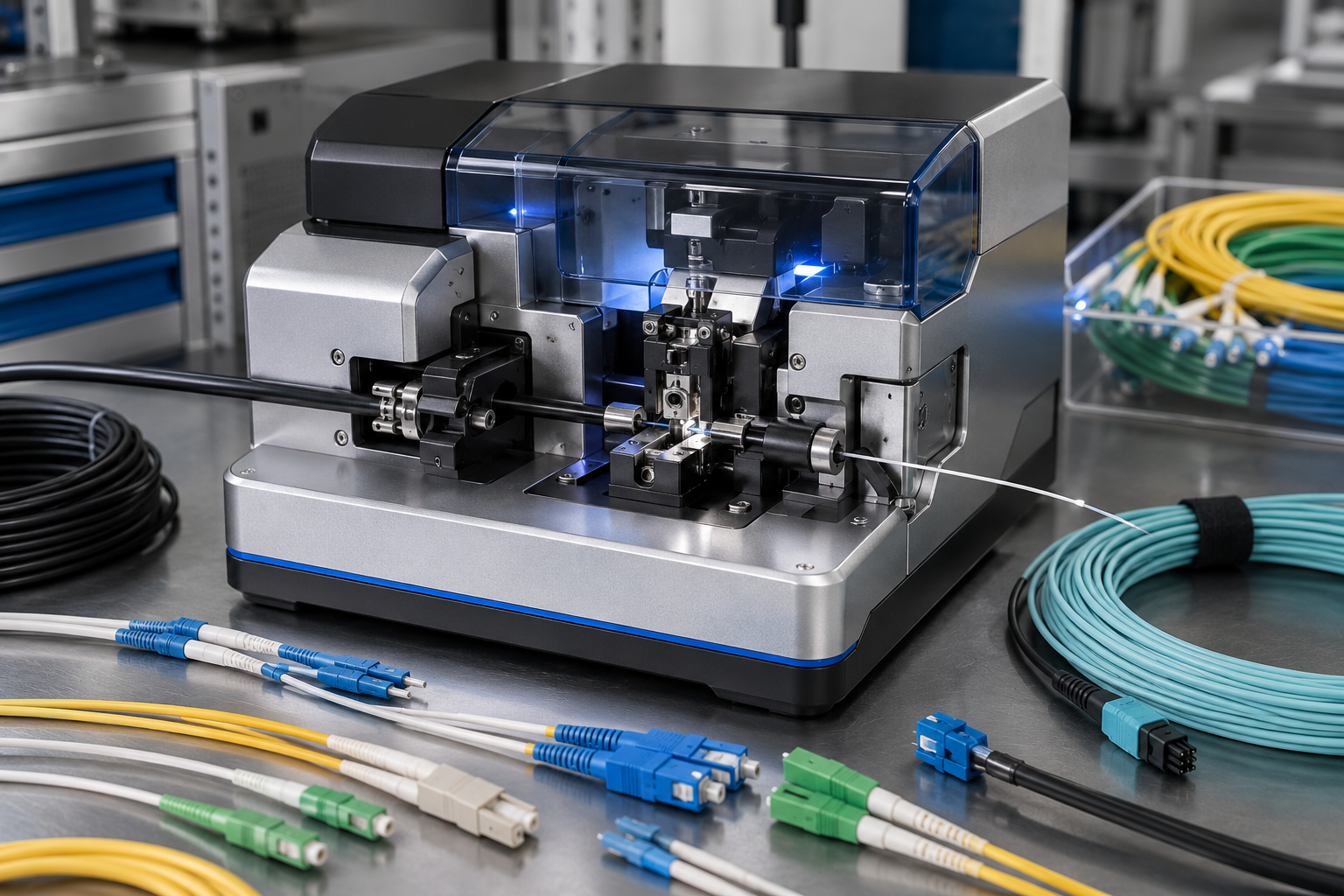
Z-CUT Series // Automatic Fiber Cutting Machine
Z-CUT machines first strip the outer jacket and cladding off the incoming fiber cable to a pre-set length, then insert the fiber to the cleaver within one movement cycle. Cycle time is 2-3 seconds per fiber cable ( jacket diameter 0.9 to 7 mm ). With standard Z-CUT-200 simplex-duplex patch cables, as well as free running jacket and wire.
[DATA] Z-CUT-200 SPECIFICATIONS
Cable diameter0.9 mm – 7 mm (simplex + duplex)
Cycle / Air2-3 sec/cable | 0.5-0.7 MPa
ApplicationsFTTH drop cable, indoor patch cord, MTP/MPO trunk
Standard tier$2,200 – $2,900 per machine
3B
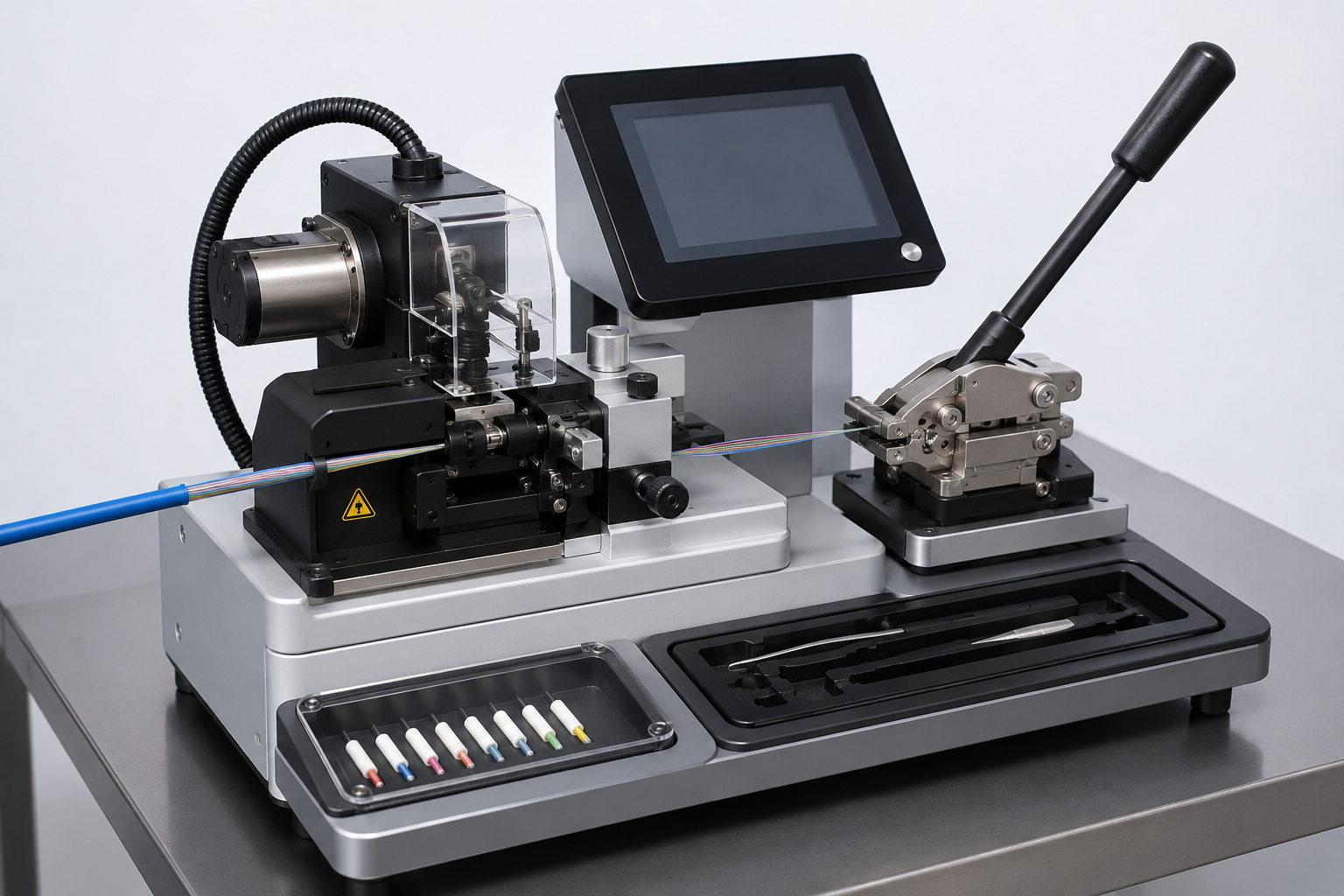
Z-STRIP // Fiber Stripping Module + Miller Stripper
What it doesn’t strip back the coating from the fiber; that’s where Z-STRIP does the job. The patented Z-STRIP offers a quality-controlled combination unit which features a precision motorized stripped and a stationary manual Miller stripper, and supports both the single and ribbon cable with coating-clear cleave preparation in any application, as close as .05 mm from the cleave location. Coating-build-up or contamination – either one – kills your insertion loss budget, any one micrometer of leftover acrylate adds unwanted scatter at the splice.
[DATA] Z-STRIP-100 SPECIFICATIONS
Modesmotorized + Miller stripper combo
Cable250 µm to 900 µm tight-buffered + 2-3 mm jacketed
Cycle2 sec/cable | Compatible with Z-CUT-200
Standard tier$240 – $480 per machine
3C
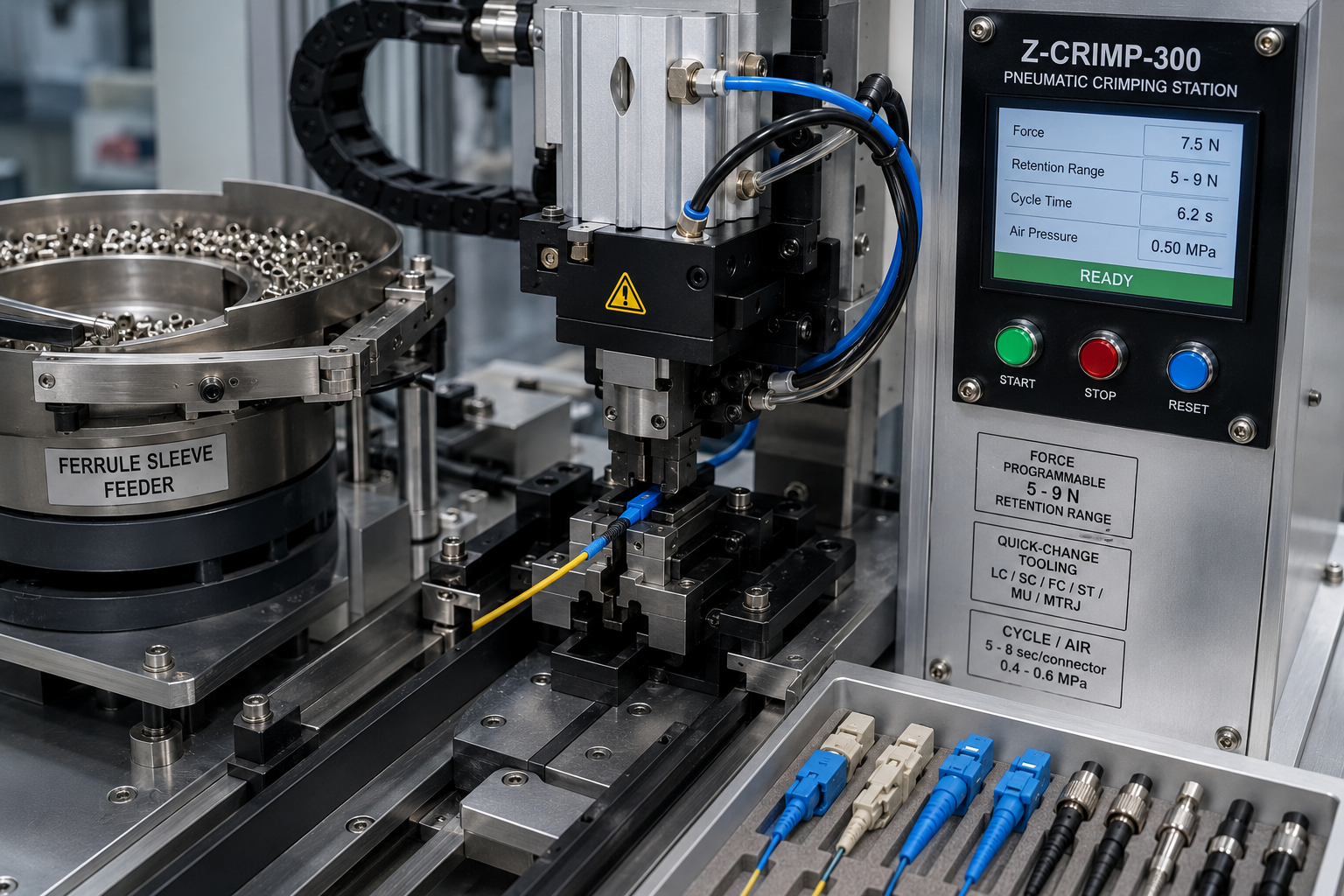
Z-CRIMP // Pneumatic Crimping + Press Bonding Station
At station three, Z-CRIMP features a unique air-actuated crimping head that will operate on a ferrule sleeve and boot retainer, ensuring a minimum 9 N pull retention without crimping the under-clad fiber. On-board bonding press chamber on-board for all LC/SC/FC/ST/MU & MTRJ style ferrule family’s using quick change tooling.
[DATA] Z-CRIMP-300 SPECIFICATIONS
Forceprogrammable, 5-9 N retention range
Quick-change toolingLC / SC / FC / ST / MU / MTRJ
Cycle / Air5-8 sec/connector | 0.4-0.6 MPa
Standard tier$280 – $480 per machine
3D
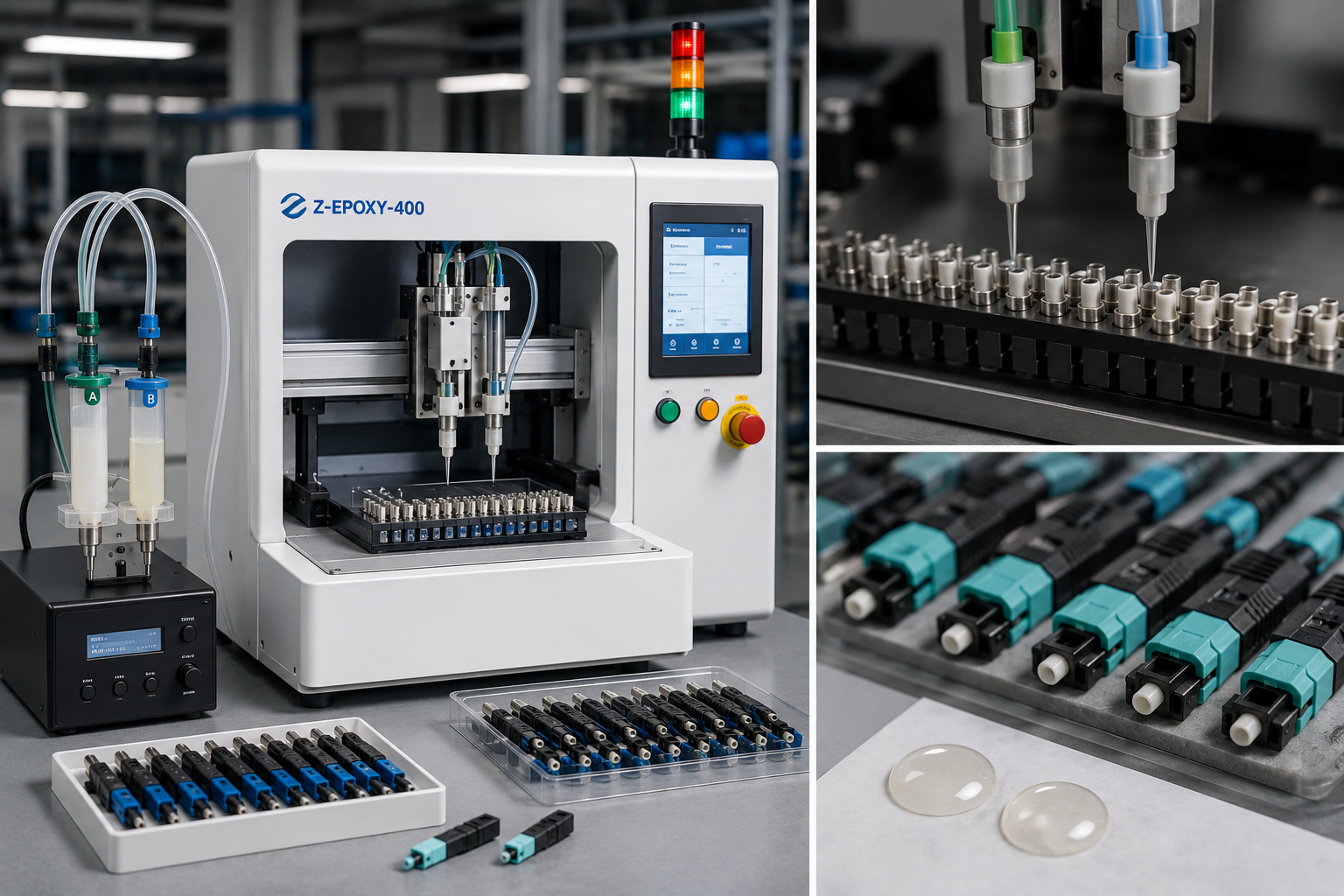
Z-EPOXY // Ferrule Glue Injection — Epoxy Two-Component
It’s the volume-controlled dispensing that makes the Z-EPOXY glow : 2-component dispensing head, featuring closed loop control of volume. This provides better than 3% of Fluid CoV over 1,000 connectors. Dispensing economics of epoxy fluids is an important topic, volume variation is the cause of more apex-offset failure at the subsequent polishing stage than any other cause.
[DATA] Z-EPOXY-400 SPECIFICATIONS
Dispense2-component, closed-loop volume control
Volume CV≤ 3% across 1,000-connector batch
Compatible epoxiesstandard 80-150 °C cure profiles
Standard tier$2,000 – $2,400 per machine
3E
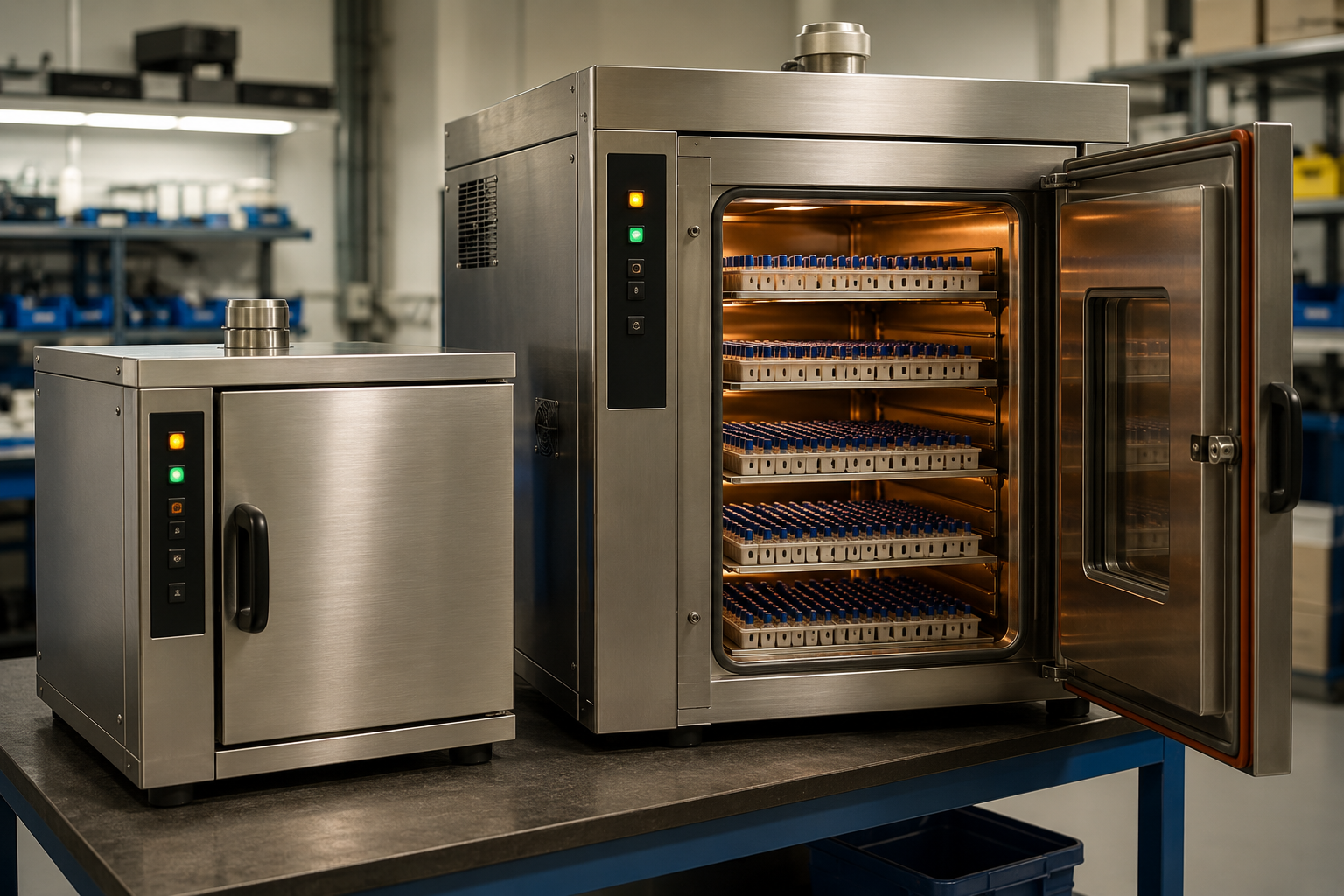
Z-CURE // Curing Oven 24-Port or 100-Port
Z-CURE relies on convection profiles, traveling from 80 °C to 150 °C within a 2 °C uniformity band, and then maintaining heat at levels defined by the epoxy vendor for the particular cure cycle. Port capacity range: From 24 connectors per batch up to 100, to accommodate single-line shops or higher volume sites.
[DATA] Z-CURE-24 / Z-CURE-100 SPECIFICATIONS
Temperature80 °C – 150 °C, ±2 °C uniformity
Capacity24 ports (entry) or 100 ports (scale)
Programmable profilesstepped cure, post-cure soak
TieringEntry: $150–$290 | Scale: $700–$1,100
3F
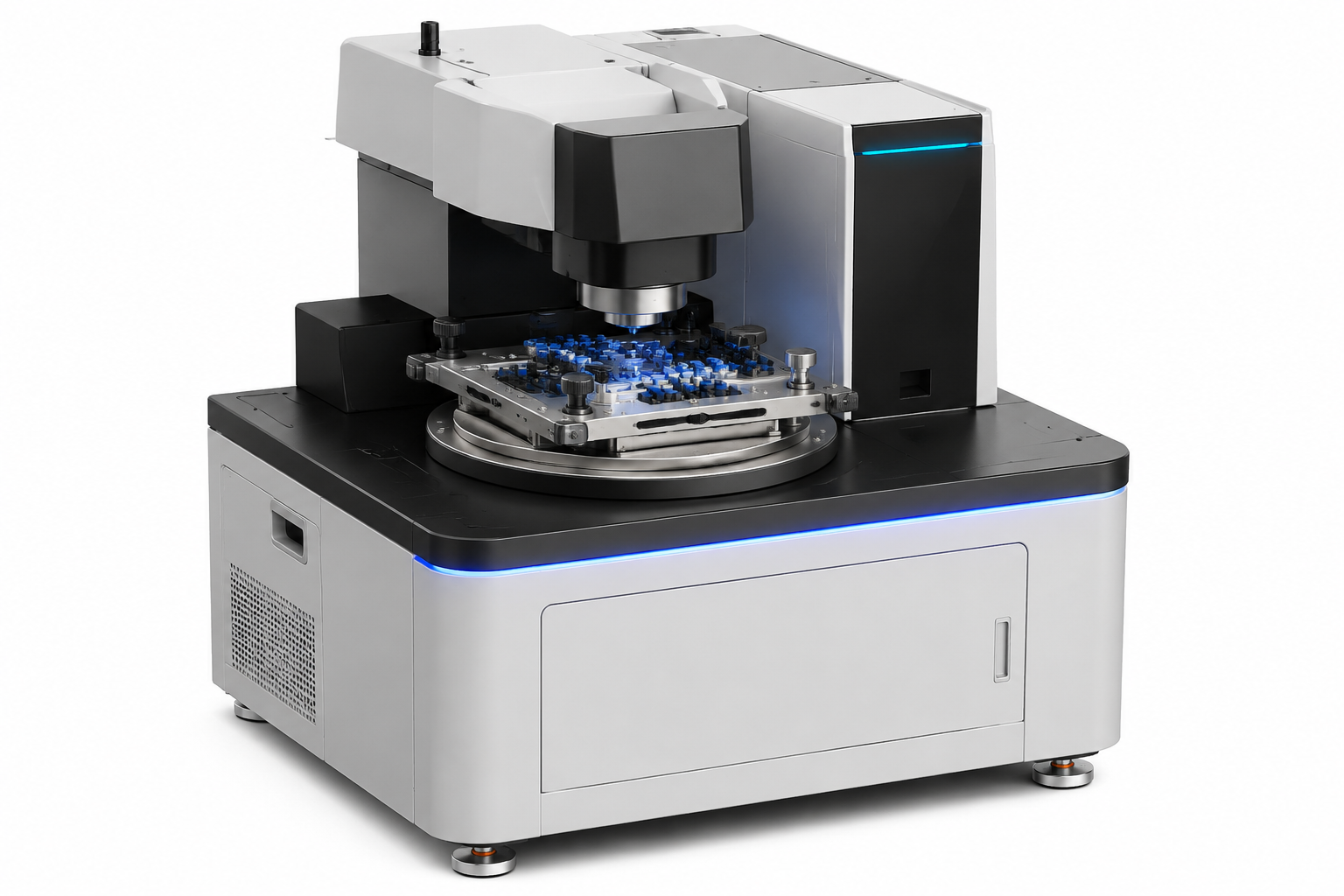
Z-POLISH // Four-Corner Pressure Polishing Machine — APC 8° Capable
This system runs on a four-corner pressure platform to control platen force applied at four corner pressure zones. Those zones perform UPC and APC end-face geometry that falls within Telcordia GR-326 standards. An APC tooling head sets the required 8-degree angle to achieve total cancellation of the reflected beam back into the fiber — geometry rather than polish quality alone is what delivers the 60 dB return loss spec.
Our Z-POLISH platform provides fiber optic polishing geometry that remains consistent for all eight connector families, all within a single fiber optic polishing machine bay, as opposed to single-axis swept polish-centric, older optic polishing machines. A stepped polishing film advancement sequence-from 9- to 0.02 m grit-executes as one recipe from the Z-POLISH HMI; replacing the familiar manual film-change used on more outdated fiber optic machine workflows.
[DATA] Z-POLISH-600 SPECIFICATIONS
Polish modesUPC + APC 8° (single tooling change)
Capacity12-24 connectors/cycle, 2-4 min/cycle
Geometry controlapex offset ≤ 50 µm, fiber height ±50 nm
Patent referenceUS20240033879A1 (2024) dual-end APC fixturing
Standard tier$940 (entry) – $2,750 (FTTH 4-corner) per machine
3G
[SYS_CHECK::FINAL_INSPECTION]
Z-TEST + Z-GEO // IL / RL Test Station + 3D Interferometer
Insertion loss and return loss are measured on the Z-TEST per IEC 61300-3-4 & IEC 61300-3-6.
Sampled batches travel from that test bay through the 3D interferometric geometry head as defined by IEC 61300-3-4 and 61300-3-6, and then a system samples out each batch through a 3D interferometric geometry head and high magnification optical microscope. This optical microscope validates fiber-end-face apex offset, radius of curvature and fiber-height envelopes against Telcordia GR-326 requirements. Singlemode patch cords are tested at 0.3 dB maximum of insertion loss (IL) and 60 dB of APC return loss (50 dB for UPC variations). The microscope lens and display also function as the end-of-line customer user interface to verify the visually finished cable assembly.
[DATA] Z-TEST-700 & Z-GEO-800 SPECIFICATIONS
IL measurementper IEC 61300-3-4, dual-wavelength 1310/1550 nm
RL measurementper IEC 61300-3-6, dynamic range > 75 dB
3D geometryapex offset, radius of curvature, fiber height per GR-326
Pricing tierIL/RL: $850–$1,100 | 3D geometry: $3,500–$6,000
ZEUEE vs Fishman, Domaille, and Mefiberoptic — Data-Driven Comparison
The major players on a patch cord manufacturing equipment line fall into 3 archetypes: Top Tier US Automation Suppliers, Top Tier US Polishing Suppliers, or Chinese Oem Full Line Supplier. The vendors in the category we are part of, but unlike the other three archetypes we provide data-grade transparent data you will not find within one single vendor anywhere in the other groups currently. A Reference Table follows that leverages information found on product pages along with certified industry standards (ISO 9001:2015 applies as the baseline quality framework across all four vendors compared here).
| Dimension | ZEUEE | Fishman (US) | Domaille (US) | mefiberoptic (CN) |
|---|---|---|---|---|
| Connector type support | SC, LC, FC, ST, MU, MPO, MTP, E2000 | LC, SC, MT only | Universal (polishing only) | SC, LC, FC, ST, MPO, MTP |
| Single-machine vs full line | 9-station turnkey + modular | Single benchtop epoxy robot | Polishing machines only | Full 24-item line |
| Line-item pricing | Published 3-tier ($8K – $100K) | Opaque (lead-gen form) | Opaque (call only) | Itemized ($150 – $2,900 each) |
| Telcordia GR-326 referencing | Decoder table + full sub-test list | Not referenced | Not referenced | Cited, no decoder |
| Customization tier matrix | 3-tier (Standard / Modular / Turnkey) | 1-tier benchtop | 2 models only | Item-by-item only |
| Customer reference density | 10,000+ cases, 30+ countries | Brand-only, no named clients | AS9100 footer, no cases | 15-year OEM, no named clients |
| RL APC SM spec | ≥ 60 dB (GR-326 limit) | Not stated | Not stated | > 60 dB stated |
Three predictable themes tie these three types of competitors together. Every one releases some subset of data buyer’s require and all three fail to publish all data buyers’ need. ZEUEE takes the exact opposite approach by making the entire set-pricing options, GR-326, end-customers, and connector by station matching-available all together within a single resource called a Pillar.
The 1×4 Carve-Out: Where ZEUEE Wins on Procurement Math
Industry-reported pay-back windows for a standard tier patch cord line run 12 to 22 months in indoor production applications, and 16 to 22 months for outdoor/specialty cable. In general, a 5% material cost savings and/or 10% increase in sales would reduce the pay-back time 6 to 12 months. Our modular tier solution has been specifically engineered to allow purchase by the end user to scale up to the throughput levels required to make the payback mathematics attractive.
Need the comparison math done for your throughput goal?
Determine your payback range
Telcordia GR-326-CORE Compliance Decoder + IEC 61300 / IEC 61755 Standards Stack
Buyer who know GR-326 just “as the telecom standard” don’t get the “whole picture” why is it applicable both to data center, industrial and aerospace. Issue 4 (issuedFeb2010) tests thermal ageing and mechanical durability, and it uses visual inspection across all those parameters that apply to ANY singemode connector carrying any single bit-high stream. Like in, say, AI training networks that add yet more 16 fiber/server rack (companion standards: IEC 61300-3-35 end-face inspection, IEC 61755 connector intermateability).
DATASET // GR-326 SUB-TEST ALIGNMENT
STATUS: ACTIVE
| Sub-Test | Verified Parameter | ZEUEE Process Alignment |
|---|---|---|
| Thermal Age | 85 °C, 7 days, uncontrolled humidity | Z-CURE-100 post-cure soak profile + outsource validation lab |
| Thermal Cycle | -40 °C ↔ +75 °C, 3 hr/cycle | Sampled batch sent to accredited environmental chamber |
| Humidity Aging | 75 °C, 168 hr, 95% RH | Same as Thermal Age sampling path |
| Humidity Condens. | -10 °C ↔ +65 °C, 90-100% RH, 14 cycles/168 hr | Quarterly batch validation |
| Vibration | 3 axes × 2 hr, 1.52 mm amplitude, 10-55 Hz | Outsourced to mechanical test partner per shipment lot |
| Flex | 0.9 kgf (0.6 kgf SFF), 100 cycles, 0°/90°/-90° | Boot retention crimp at Z-CRIMP-300 ≥ 9 N pull verifies pass margin |
| Durability | 200 insertion cycles | Connector body QC sample protocol |
| Impact | 1.5 m drops on cinderblock × 8 | Lot-level batch validation |
ISO 9001:2015
Telcordia GR-326
IEC 61300-3-35
CE / RoHS / REACH
32+ Invention Patents
National High-Tech
Customer Results — 10,000+ Cases Across 30+ Countries
Our patch cord and connector automation machines enter exactly the same global industrial customers our brush, hinge, handle and toy automation machinery sell to (Corning USA, TE Connectivity, Sumitomo, LEGO, SONY, TCL and Foxconn are among those long term customers, along with many others). Fiber demand growth across these customers is tracked in IEEE ComSoc 2025-12 analysis of AI data center buildouts. Our case studies below show anonymous 2023-2025 fiber-line build projects. Logo’d brand of identified customer brands are under specific NDA agreements.
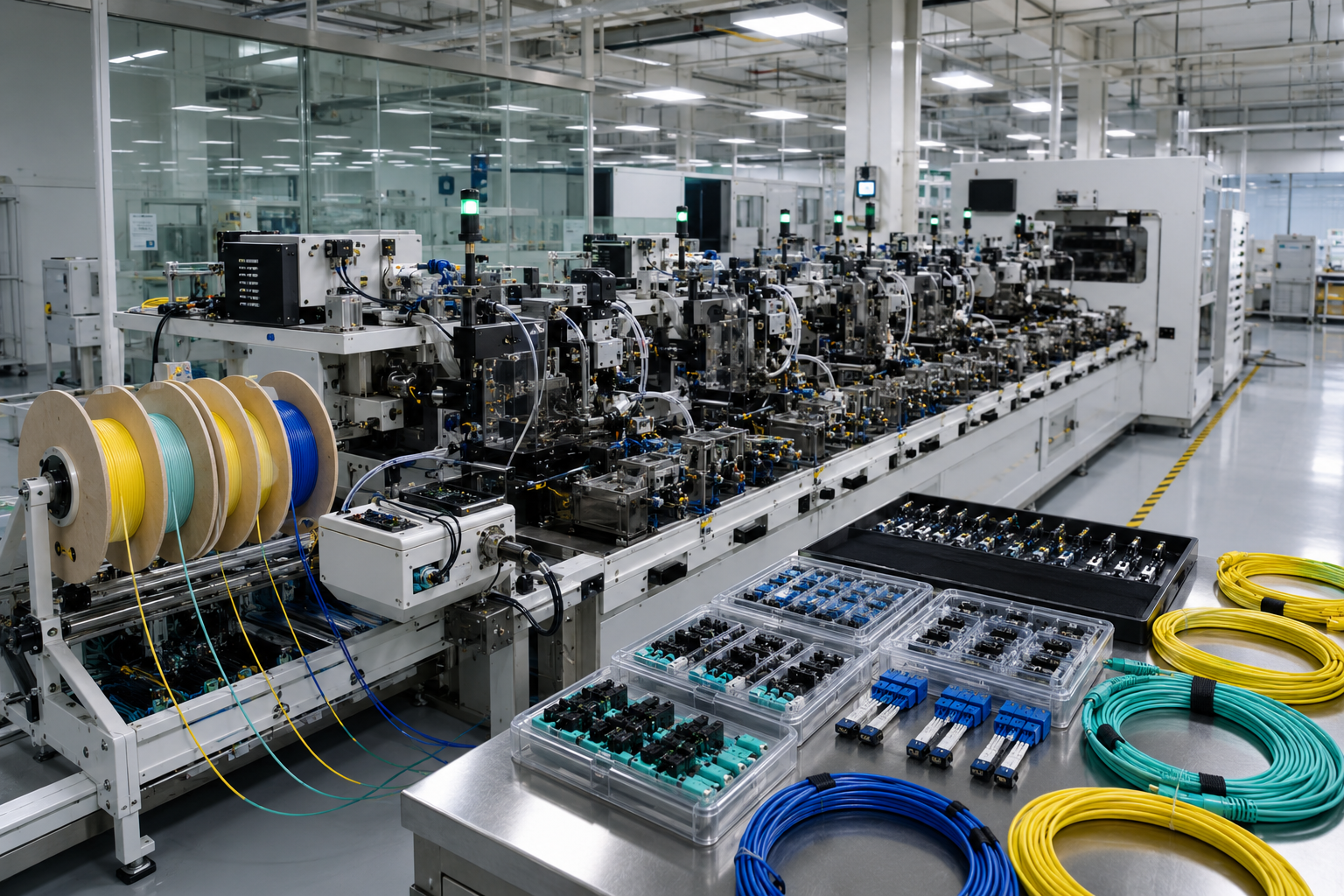
SYS.01 // APAC REGION
SE Asia Hyperscale Patch Cord Factory — FTTH + Data Center Mix
Patch cord factory in South East Asia streamlines MPO & LC Production A regional patch cord plant in Southeast Asia was losing ground with separate single-machine cells for both MPO & LC productions and implemented one ZEUEE 9-Station line for both patchcord varieties. Resulting improvement in Throughput per head increase 2.4X, and a reduction in IL spec drift by over 83% (down 6.8% to 1.2%) in the first 90-days post installation.
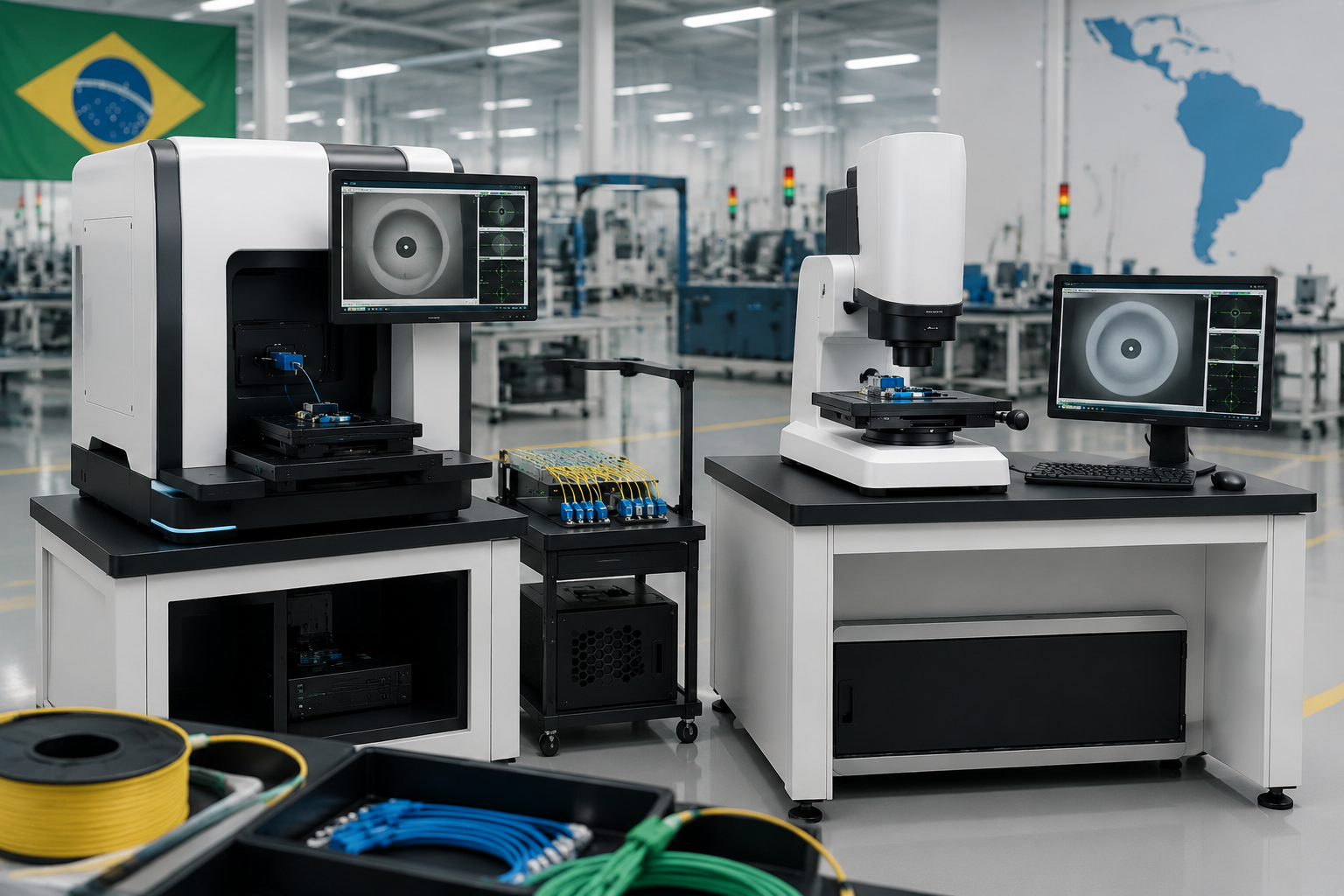
SYS.02 // LATAM REGION
Latin America Telecom OEM — GR-326 Compliance Bid
A Brazilian telecom OEM needed Telcordia GR-326 documentation pass-through to win a regional Tier-2 carrier contract. We supplied the Z-POLISH-600 plus 3D Z-GEO-800 inspection bay, with batch sampling protocol that produced compliant lot-level reports. Contract award was confirmed inside 8 weeks of line commissioning.
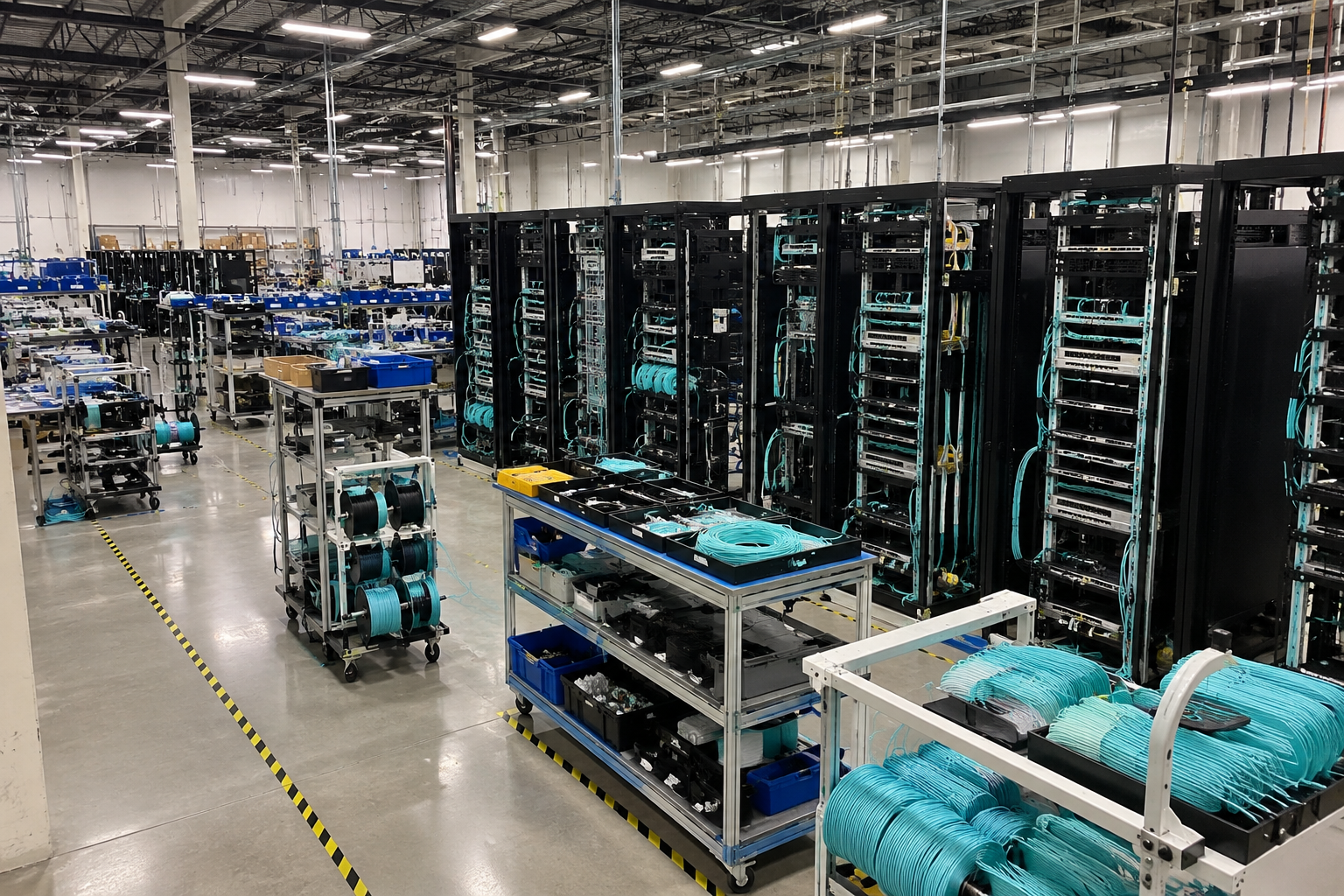
SYS.03 // NA REGION
North America Hyperscale Rack Assembly Partner
By 2026, the hyperscale movement to factory rack pre-build out-sources patch cords to controlled facilities again. A North American rack-build partner has implemented a ZEUEE modular line that is exclusively set up for AI training fabrics. Run rates from that operation match the 6-7000 connectors per 11 hr shift (based on an industry standard 6,000) run rate that many are utilizing today.
Specifications and connector type compatibility matrix
Specification incompatibility has to be number one in “the single biggest hidden cost” for fiber optic connector purchases, since IEC 61755 intermateability rules govern which connector families plug into which without signal loss. That incompatibility only becomes noticeable in real time, during installation; for example, PC vs. UPC vs. APC do not work. You buy a connector with an SC form factor and just sort of assume it plays well with MPO, will find that your job takes a while on the ninetieth day. Here’s the chart, and we remove the chance before it bites; ZEUEE pairs every one of its lines with all eight connectors that it provides tooling for based on configurations coming from its Taihe factory, so a green line (normal tool)or green with an asterisk (insert machine comes with a rapid tool head add on in production) represents something readily available for you.
Real-world FTTH operators installing SC plus LC duplex catalogs say the matrix produces a supply table on the front page; hyperscale DC procurers designing Nvidia-caliber MPO/MTP fabrics validates which stations have the asterisked tooling kits. This same matrix from the shop floor SOPs accompanying every Z-series platform-bencher – this is lift what the procurement clerk orders, what the engineer declares.
[SYS_DATA] COMPATIBILITY_MATRIX_V1.0
STATUS: VERIFIED
| Station / Connector | SC | LC | FC | ST | MU | E2000 | MPO | MTP |
|---|---|---|---|---|---|---|---|---|
| Z-CRIMP-300 | ✓ | ✓ | ✓ | ✓ | ✓ | ✓* | ✓* | ✓* |
| Z-EPOXY-400 | ✓ | ✓ | ✓ | ✓ | ✓ | ✓ | ✓* | ✓* |
| Z-CURE-100 | ✓ | ✓ | ✓ | ✓ | ✓ | ✓ | ✓ | ✓ |
| Z-POLISH-600 (UPC) | ✓ | ✓ | ✓ | ✓ | ✓ | ✓ | ✓* | ✓* |
| Z-POLISH-600 (APC 8°) | ✓ | ✓ | ✓ | — | — | ✓ | ✓* | ✓* |
| Z-TEST-700 (IL/RL) | ✓ | ✓ | ✓ | ✓ | ✓ | ✓ | ✓ | ✓ |
| Z-GEO-800 (3D) | ✓ | ✓ | ✓ | ✓ | ✓ | ✓ | ✓ | ✓ |
OEM Procurement Guide — Pricing, Lead Time, and Three Customization Tiers
Procurement teams routinely waste 2-4 weeks on quote rounds because most fiber optic patch cord production line vendors keep pricing opaque — and skip the IEC 60794-4-10 type test report that buyers should request first — Fishman, Domaille, and most Western competitors all default to lead-gen forms instead of published ranges. Our three-tier pricing model removes that friction: buying organizations budget early without a quote phase, and the tier matrix below maps single-machine purchases through modular assembly solutions to turnkey OEM site commissioning with installation included.
These tier ranges reflect actual 2024-2025 ZEUEE project bids across hyperscale data-center rack-build partners in North America, FTTH patch cord factories in Southeast Asia, and aerospace MPO fiber array shops in Europe. Every quote starts from the same Taihe-factory cost basis (Jiangxi production base, 20,000 square meters, ISO 9001:2015 audited), and each tier represents a different scope of station synchronization and on-site service coverage. The differentiator versus competitor pricing is that ZEUEE publishes the bands; competitors quote each line custom.
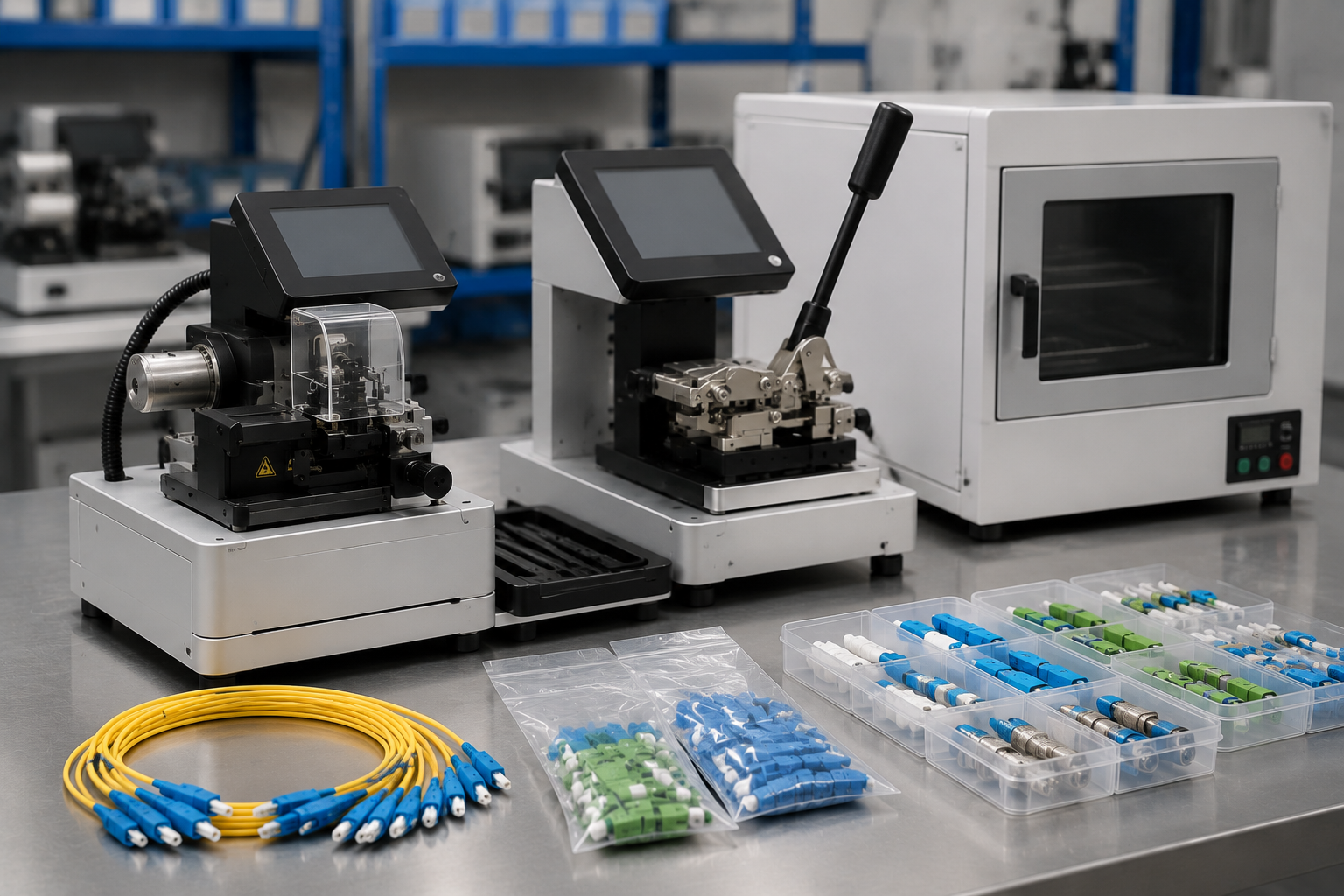
T1 Standard Tier
Two stations or one machine can be selected from inventory available products. SC, LC, FC, ST tooling is provided. Equipment purchased at this tier can also match a buyer’s existing curing oven or polishing line.

T2 Modular Custom Tier
The Four to Six-station are built to your target connector mix, including easy-change tooling for MPO / MTP, one operator visit to your site and a 12 month package of spare parts included.
T3 Full Turnkey OEM Tier
9- station total synchronization in bay with 3D geometric inspection, batch inspection according to the GR-326 protocol, installation in site and 24 months spare parts package. With the option of private label branding (ODM).
Global Procurement Terms
Three common procurement terms are valid for all 3 tier models: Shipping is via FOB Shenzhen or EXW Taihe at customer discretion; a 24-month warranty covers our machine frames; consumables are rated for 6-months of usage and then replaced. We stock spare parts and offer international support via a network that ships parts within five business days for operational machines.
Supply Chain Risk Assessment
The real procurement pain in this category is opaque quoting paired with surprise lead-time slips on first PO — 60-day promises that quietly become 90 days. Our Standard tier ships from in-stock inventory at the Taihe production base, so 30-45 day lead time is a published commitment rather than a target. For data-center rack-build partners under AI fabric ramp pressure, that in-stock entry point is the single most useful differentiator versus the Fishman lead-gen model.
Need a spec guide with sample R&F language and a pricing comparison?
Download the procurement Checklist + Pricing Range Guide, complete with RFQ document template and a compatibility table!Engineering & Procurement Assessment Tools
MODULE // 01
ROI Payback Calculator
Input line sizing and production targets to estimate financial return and payback period for automated fiber optic assembly lines.
MODULE // 02
Station Tier Selection Quiz
Map your connector mix, automation requirements, and volume goals to the correct modular production tier (T1, T2, or T3).
MODULE // 03
GR-326 Compliance Checklist
Review required geometric inspection parameters and batch sampling steps for Telcordia GR-326 certification.
Fiber Optic Connector Assembly Machine FAQ
Standard Model single machine units in stock deliver in 30-45 days of order. Our Modular Custom model requires 45-60 days of production post-PO, and the Full Turnkey Model with on-site commissioning requires 60-90 days depending on the variety of connectors and scope of the inspection setup required.
Yes – in the Full Turnkey ModelODM customer branding is standard. You can order the Modular Custom model with a paid add-on for ODM custom color schemes and logo plate or interface display. For an additional cost, there is also an option to add custom logos or splash screens.
APC – the 8 degree polish is designed to prevent Fresnel back-reflections at the fiber core; Instead the reflections travel into the cladding. APC reduces back-reflections by diverting reflections from the core so they will dissipate into the cladding and not re-enter the laser. An 8-degree offset relies on geometry, not just polish quality, to avoid a negative return loss.
All of ZEUEE’s equipment models are built with durability in mind, with all machinery bodies carrying a two-year warranty. consumables are provided with an estimated six-month life expectancy and spares support via our global network ensure quick replacements within 5 working days when needed.
With facilities in Shenzhen (headquarters) and an advanced, 20,000 sqm manufacturing plant in Jiangxi (operational since 2020), all in-house development, R&D, machining, assembly and quality control work is managed at our own production facilities. Tours are available by appointment, or via video tour pre-production.
This versatile line is built for use with simplex, duplex single mode & multi mode fiber with a complete set of tools including quick change tooling for most major connector series: SC, LC, FC, ST, MU, MPO & MTP. Additional support is available for fiber types and connector polish including UPC, APC and high performance fiber.
Standard packing for ocean freight is per-machine sea-freight containers that include anti-shock and humidity protection measures. Air-freight is also available if urgent spare parts shipment is required. ZEUEE supports many Incoterms for international customers.
Telcordia GR-326-CORE specifies acceptable fiber protrusion within a very tight envelope around zero. Our APC polish geometry at 8 degrees is designed to allow sufficient fiber protrusion under pressure. We verify each test lot with the Z-GEO-800 3D Interferometer in the inspection bay, and the resulting geometry is well within this spec.
Although they share some of the same skills, a fiber splicing process joining two end-face fibers is distinct from connectorizing equipment that terminates fiber optic cable assemblies. Our 9-station line connectorizes fiber cables for many patchcord makers that produce SC, LC, FC, ST, MPO, MTP, and other connectors and terminations on various cable types. Most other factories run a splicer machine alongside their patchcord process.
ZEUEE production lines connectorize patch cords from any IEC 61755-compliant connector supplier-the top fiber optic connector OEMs are Senko, Diamond, Sumitomo, TE Connectivity, and Corning; the toolhead will fit any ferrule family and all are supplied by ZEUEE if the customer chooses. Typically OEM customers buy the connector parts themselves from one of the OEMs below, and use the ZEUEE equipment to connect them onto patch cords; this is the most economical means to produce a custom branded patch cord.
WHY WE WRITE THIS
About ZEUEE Engineering Insights
ZEUEE shares technical guides based on real automation project experience. Since 2005, we have designed and manufactured non-standard automation equipment for connector assembly, wire harness production, robotic lines, vision inspection, and smart factory upgrades.
Founded in 2005
20,000 m² production base
120+ specialists
150+ R&D patents
ISO9001:2015 certified
![Automated Screwdriving: Torque & Cycle Time [Guide]](https://zeueeauto.com/wp-content/uploads/2026/10/automated-screwdriving-featured-150x150.png)