Get in touch with Zeyu lntelligent Industrial Company
Automated Assembly Line Manufacturer — Custom Design, Build & Integration
Two decades of experience as an automated assembly line manufacturer, ZEUEE provides designing, fabricating, and commissioning of fully automated turn key solutions for connectors, electronics, and precision-hardware assemblies, called automation solutions. With over 10,000 automation installations in 30+ countries and to AVIC, GAC Group, Corning, LEGO, Sony, Foxconn and many others, each of our systems is custom-designed based on your product and your process.
Request a Quote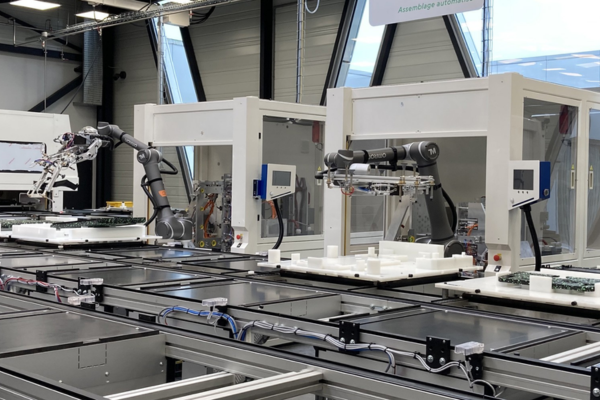
20 yrs
Building automation since 2005
150+
R&D patents (32+ invention)
10,000+
Automation projects delivered
30+
Countries served
ISO 9001
:2015 quality system
20,000 m²
Taihe production base
From Manual Bottlenecks to a Turnkey Automated Assembly Line
Manual, semi-automated, and fully automated lines share one constraint: headcount caps throughput. In manual-based systems, time lost to operator fatigue and inconsistent shift output is a hidden cost — one you only discover when missed shipping dates and expensive late rework hit months later. An automated assembly line removes that variability because parts move through fixed or robotic workstations under closed-loop, standards-based control, not at human pace.
For an industrial buyer running a 12-month product cycle, ZEUEE builds the line around your part — machine vision inspection, indexing or conveyor transport, robotic handling, in-line testing, and unit-level traceability in one controlled flow. Fixed cycles and high utilization deliver consistent product quality at high-volume production rates that manual lines cannot match.
The honest starting point
There’s one cardinal rule regarding automating your business operations, “Do not automate a faulty, unstable or undocumented manufacturing process.” The reason is “you are just automating the output of errors”. ZEUEE process expertise helps you to overcome these hurdles by first having your existing process standardized, bottleneck identified and cycle-time measured prior to designing hardware that fix the problem.
-
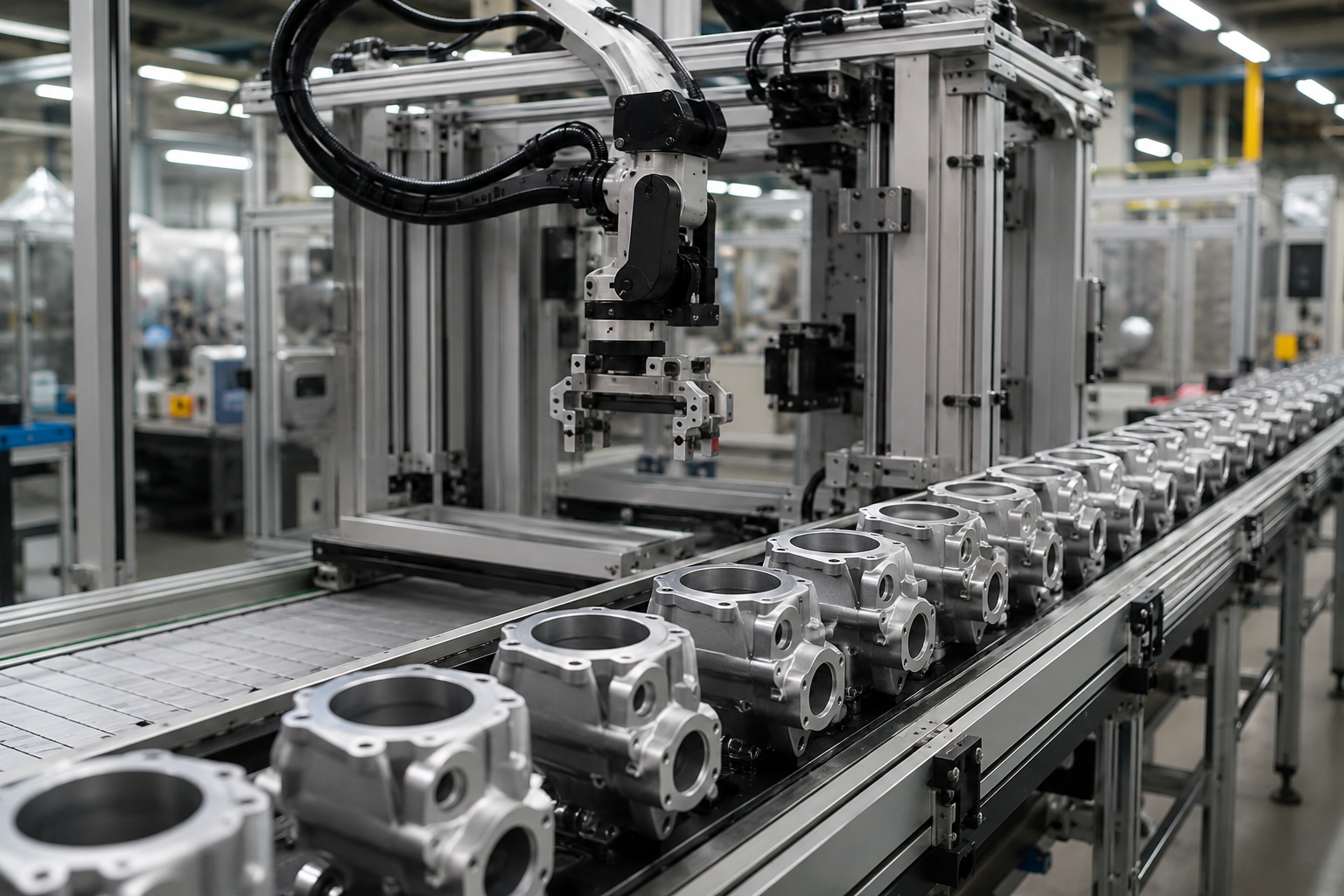
Consistency is assured
A fixed-cycle station holds your throughput constant across every production shift.
-
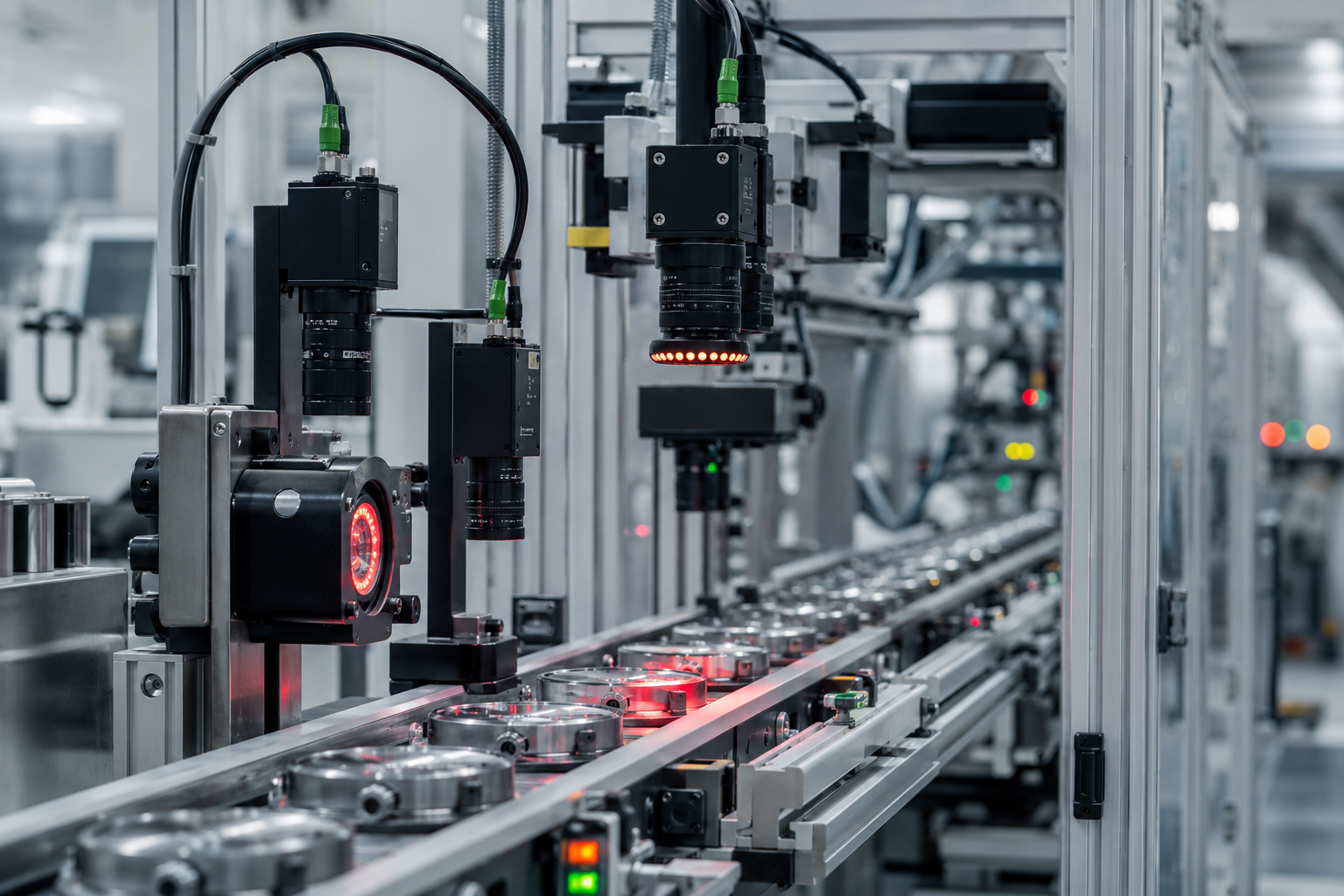
Product Quality Assurance
High-resolution machine vision and other in-line inspections guarantee early detection of defective products, avoiding last-minute waste or rework.
-
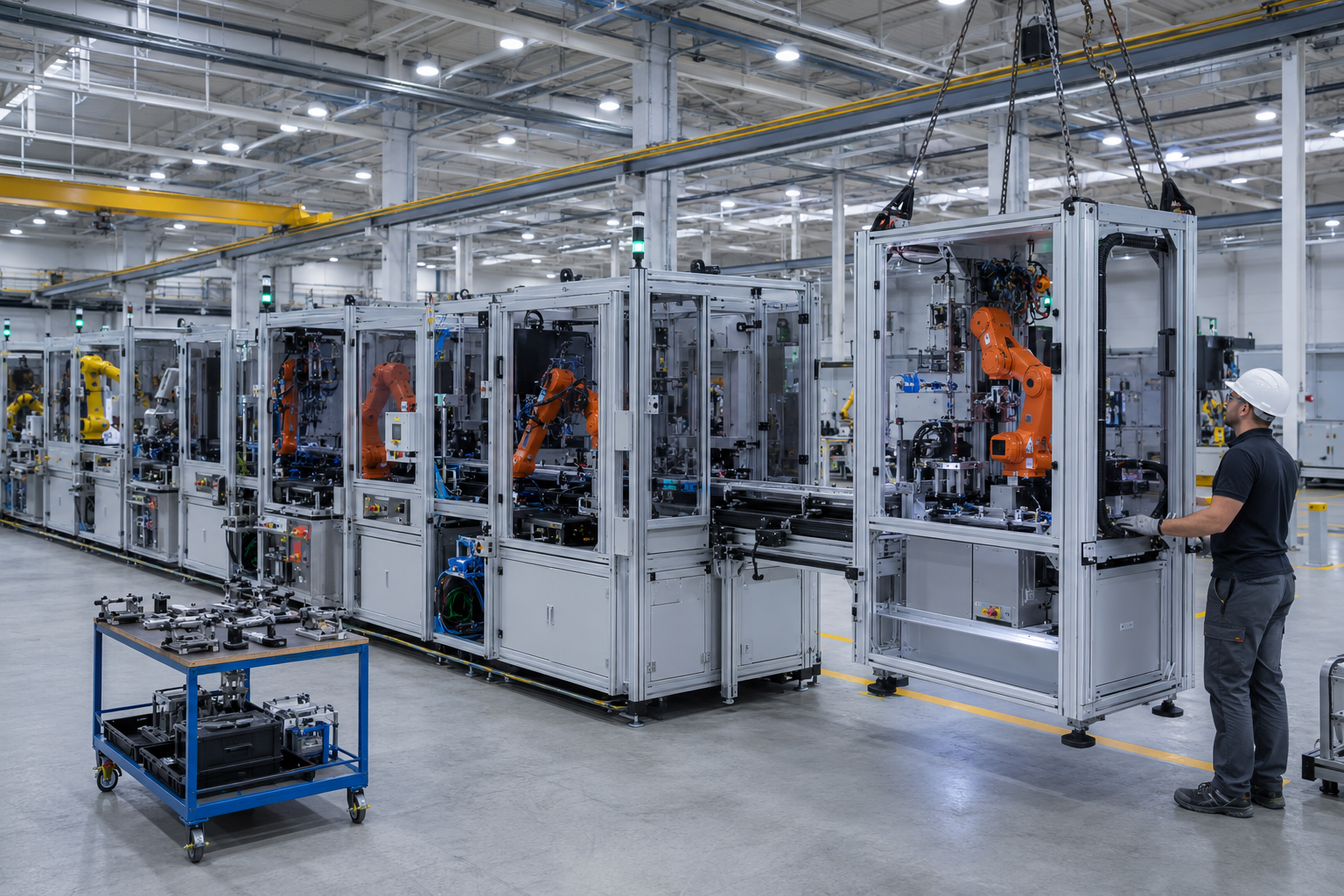
Scalability and Modularity
Our modular line architecture enables to easily add or reconfigure stations to accommodate future volume increases.
Not sure your process is automation-ready?
Request a ZEUEE engineering process audit →Automated Assembly Lines We Design & Build
With two decades of experience serving tier-1 suppliers across automotive, aerospace, defense, medical device, consumer electronics, and hardware assembly, ZEUEE builds for any level of complexity. From a single robotic assembly line to a plant-wide automated manufacturing line, ZEUEE’s engineering team matches the right line architecture to your throughput, volume, product mix, and change-over requirements.
// SYS-MATRIX: 01
ZEUEE Line Architecture Selector
| Your production profile | Recommended line type | Typical throughput | Changeover |
|---|---|---|---|
| High volume, 1–2 stable products | Dedicated / dial-index line | High, fixed-cycle | Low / infrequent |
| Medium volume, several variants | Flexible / modular line | Medium, re-balanceable | Tooling swap |
| High mix, frequent new parts | Robotic cell + reprogrammable | Medium, recipe-driven | Software recipe |
| Multi-cell, plant-wide flow | AGV-linked line network | Scalable | Route reconfig |
Actual throughput, cycle-time, flexibility and changeover times for these systems depend on part geometry and individual line setup, including takt times and specific product, processes defined within the design gate.
// SYS-ARCH: CORE
Each architecture is a different point on the automation spectrum — from fixed automation for stable high-volume parts, to flexible automation and programmable robotic automation for higher-mix work. ZEUEE engineers the control system, conveyor flow, and industrial robots around that choice, so cycle times and production rates track your real demand instead of a generic template.
Regardless of system configuration, each ZEUEE engineered line relies on consistent building-block modules including: machine vision guided robotic pick-and-place, in-line force testing, integrated leak testing, and end-to-end traceability processes, which are the industry standard components within the latest automated assembly line systems.
// MODULE-DEF: STANDARD
Standard line modules
-
01
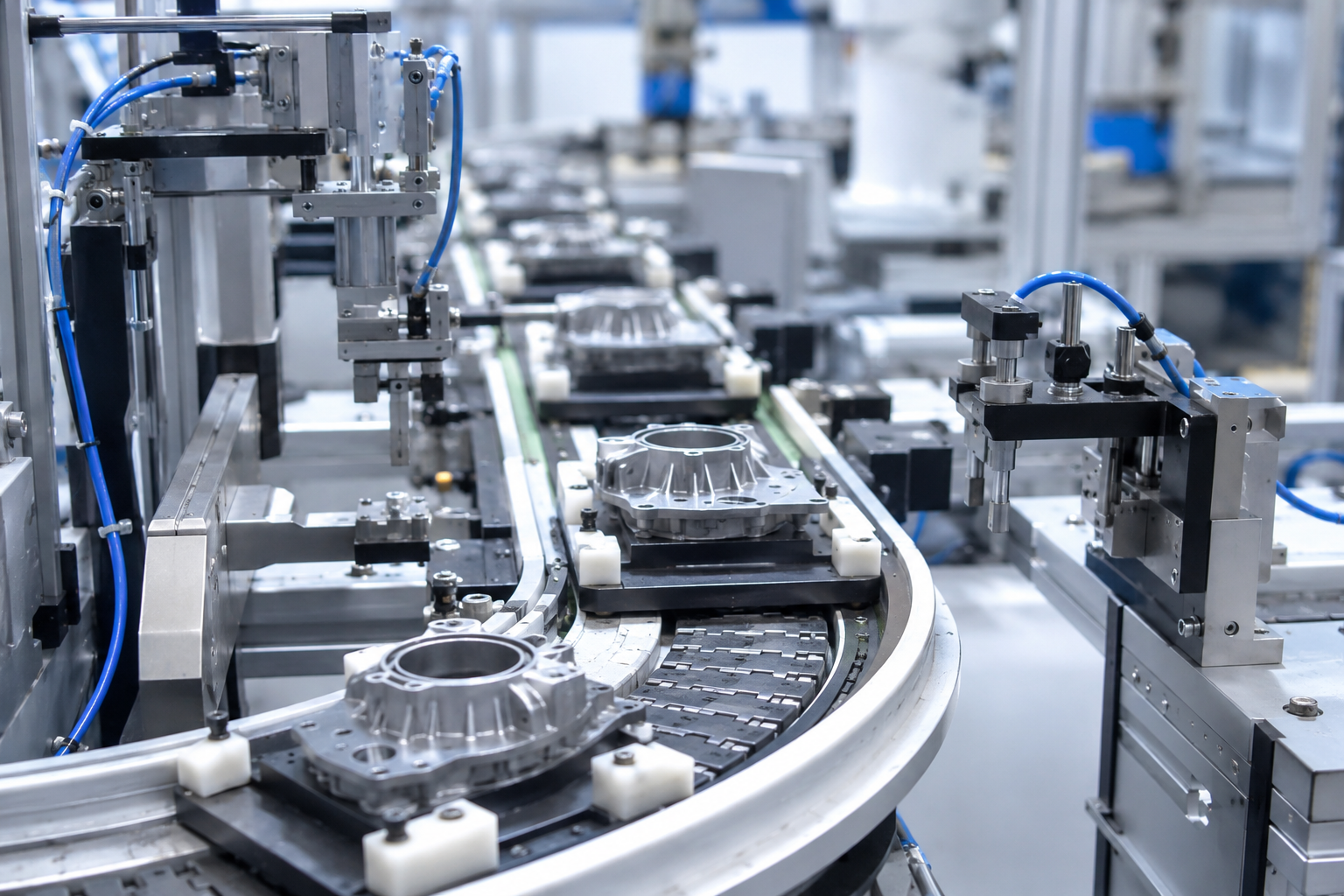 [PROCESS]
material handling and Indexing / conveyor conveyance synchronizing parts between work station stations.
-
02
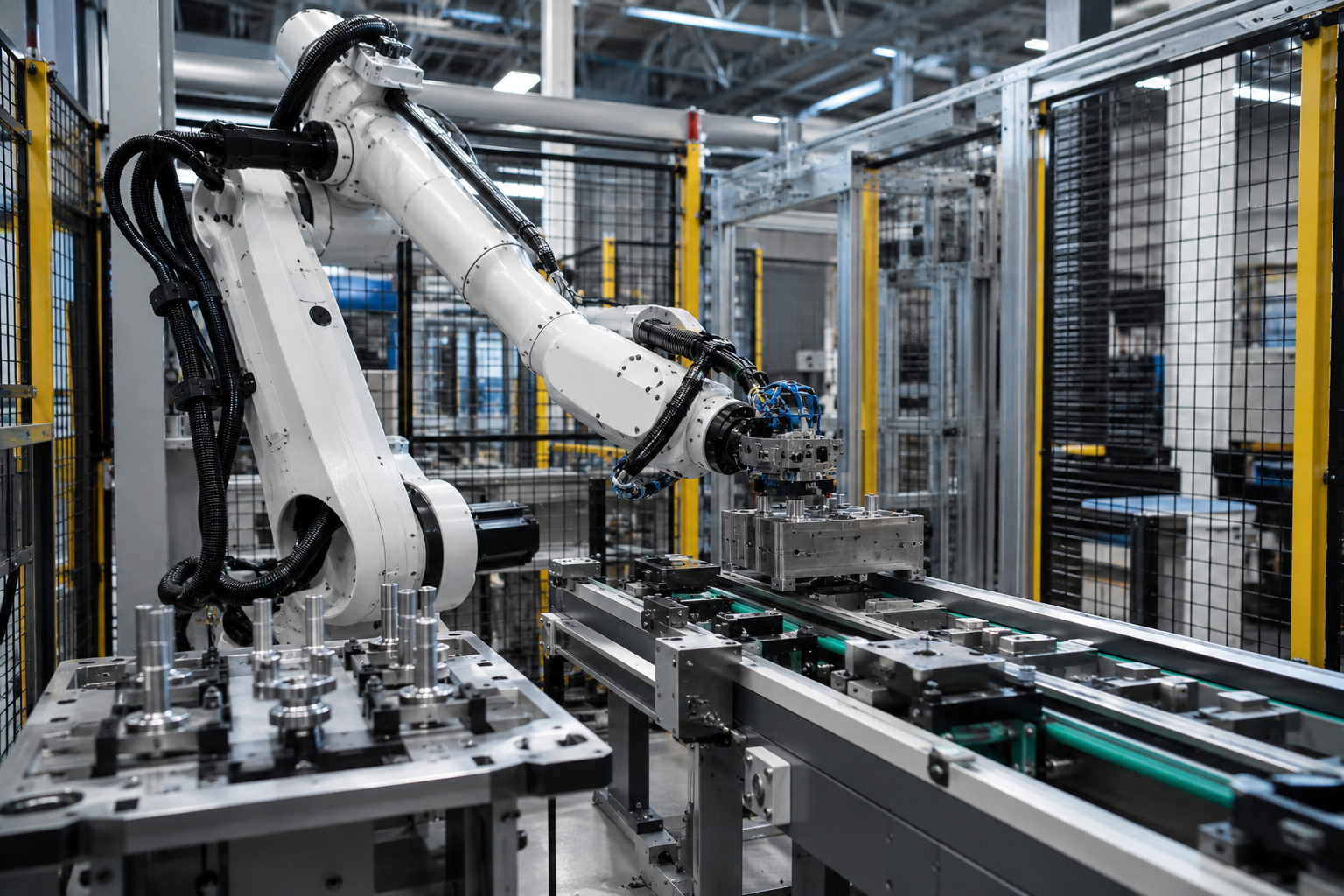 [ROBOTICS]
robotic part handling from industry leaders FANUC, ABB, Epson, or KUKA, programmed to meet your cycle times.
-
03
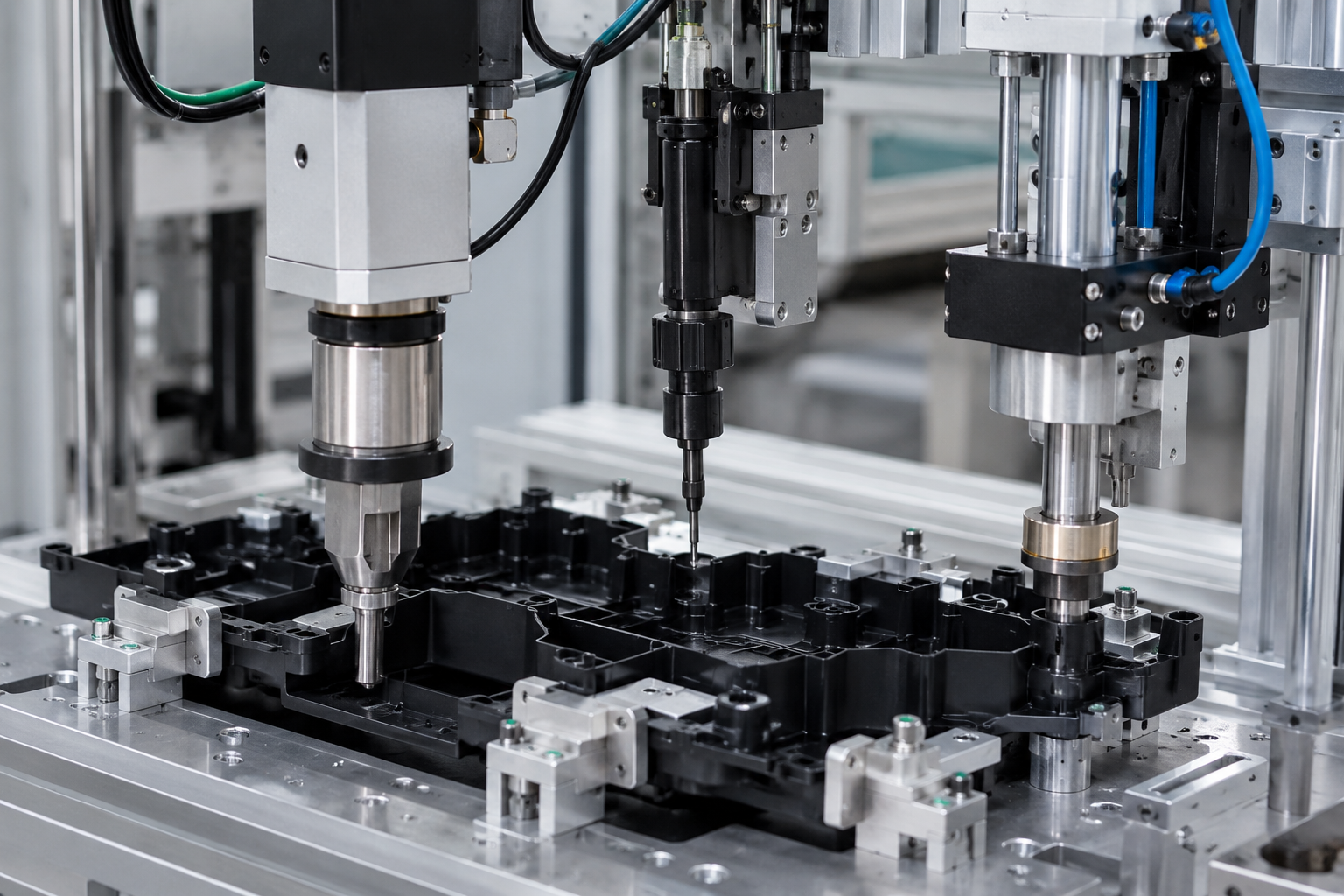 [ASSEMBLY]
Joining & fastening – ultrasonic welding, screwdriving, and press-fit stations matched to your assembly.
-
04
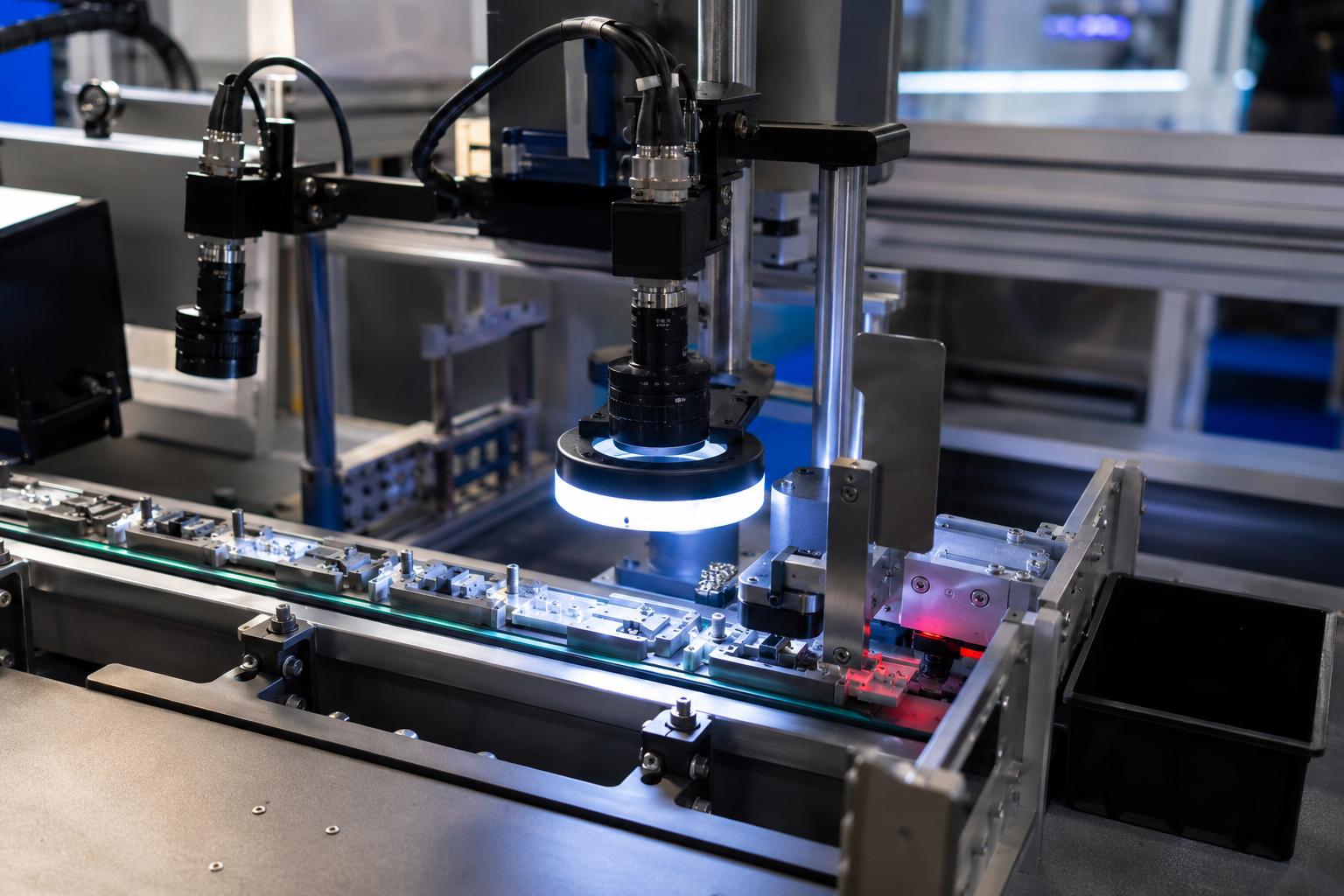 [VISION]
Machine vision & inspection – CCD-guided alignment, presence/position checks, defect rejection.
-
05
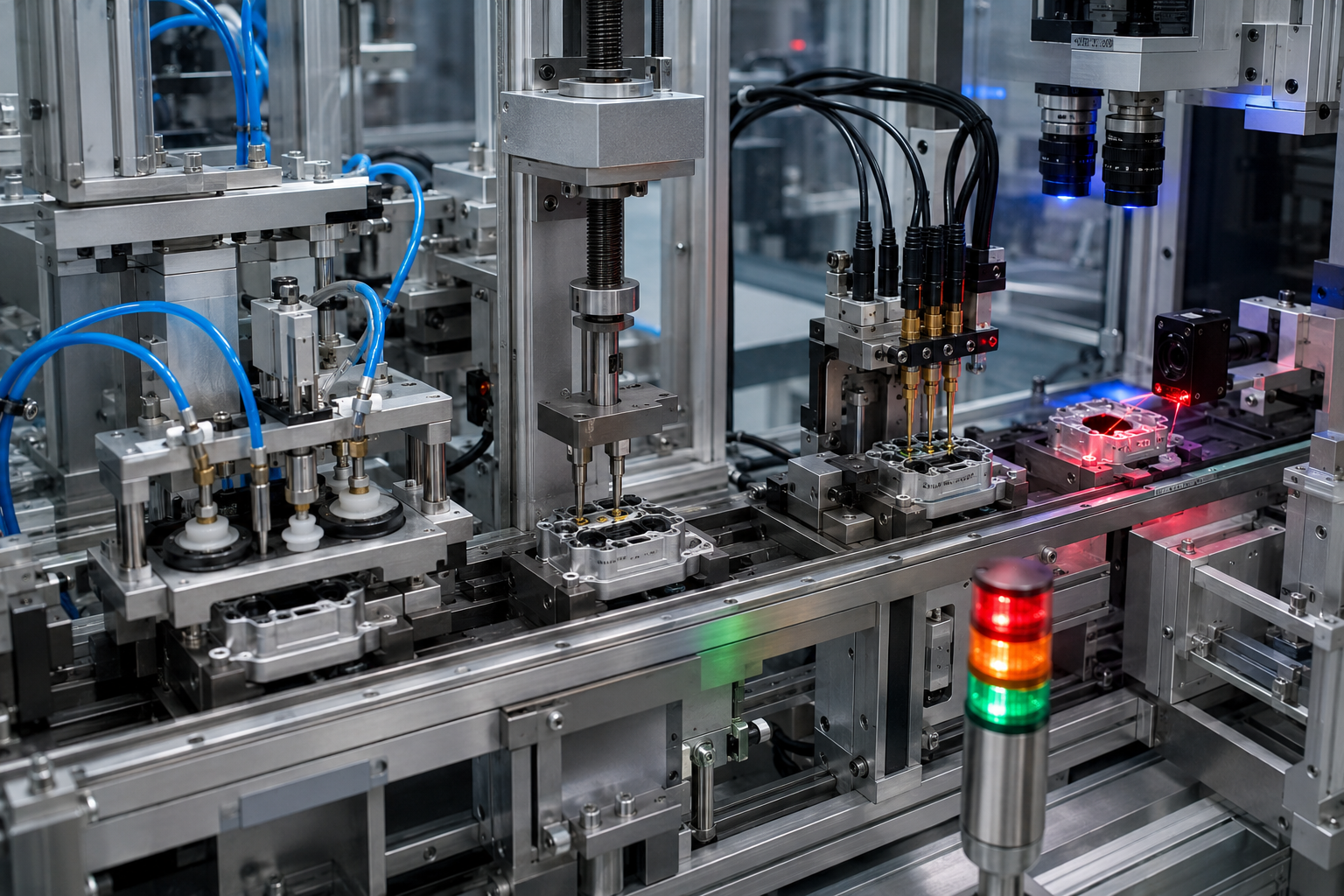 [TESTING]
In-line testing – leak, insertion-force, electrical, and dimensional checks before the part leaves the line.
-
06
[DATA]
Traceability — per-unit data logging, ready for MES integration.
This is the same assembly line automation equipment set behind reference lines covered in trade-press deployments – fully automated assembly and packaging, vision-guided pick-and-place, 100% in-line leak testing, and unit-level traceability. For a US buyer or EU buyer scaling a regional plant, ZEUEE delivers the same modules whether you need a fully automated assembly line running 18 stations or a semi-automated cell you can upgrade later. The architecture is built around your roadmap, because retrofitting flexibility after the fact is where most line investments fail.
Vendor Comparison
ZEUEE vs. Typical Automation Integrators — Where Custom Lines Win
Most buyers compare a domestic integrator against a standalone machine vendor and miss a third option: a factory-direct OEM that designs, machines, and integrates under one roof. That difference shows up in cost base, specialization depth, and how much of the line is actually built versus subcontracted. Concrete attributes, not vague ratings, drive the comparison below.
| Attribute | ZEUEE (factory-direct OEM) | US/EU integrator | Standalone machine vendor |
|---|---|---|---|
| Cost base | Factory-direct (in-house build) | Higher (domestic labor) | Per-machine, line not included |
| Build scope | Design + machining + integration in-house | Often subcontracts fabrication | Single station only |
| Specialization | Connector / precision assembly depth | General-purpose | Single process |
| Patents / IP | 150+ R&D patents | Varies | Limited |
| Line traceability + MES-ready | Standard | Standard | Add-on |
| Global install + after-sales | On-site SAT + remote support | Regional | Limited |
Manual vs. Automated Assembly Cost Breakdown
Sticker price is the smallest part of the decision. Industry analysis is consistent that the purchase price of automation equipment is only about 20-40% of lifecycle cost, and that buyers who weigh price alone end up spending 40-60% more over the equipment’s life. Below, the breakdown shows where the real money lives.
| Cost driver | Manual line | Automated line (lifecycle view) |
|---|---|---|
| Direct labor | High, recurring, shift-dependent | Reduced & predictable |
| Scrap & rework | Operator-variable | Lower via in-line inspection |
| Throughput ceiling | Capped by headcount | Re-balanceable / scalable |
| Hidden costs (install, training, spares) | Low upfront | ~25–50% over sticker — plan for it |
| Annual maintenance | Minimal | ~3–8% of equipment cost |
Lifecycle and maintenance figures are industry averages, presented to set expectations – not ZEUEE-specific quotes; ZEUEE’s own builds are validated against recognized acceptance standards.
Lifecycle math is why automated assembly systems beat a stack of standalone machines: one integrated automation system spreads control, vision, and material handling across stations instead of duplicating them. That is also where industrial automation lowers labor costs predictably — the line holds a fixed cadence while repetitive tasks shift from people to automated equipment. Consistent product quality follows, no longer dependent on who is working that shift.
Want this modeled for your part and volume?
Request a custom cost-and-throughput comparison →Our 6-Gate Design–Build–Commission Workflow
A line is only as good as the gates it passes before it ships. The expensive failure mode is skipping factory acceptance – buyers then risk commissioning hidden defects on their own floor, where a fix can cost weeks of lost production. ZEUEE runs every build through six gates because each one closes a category of risk, and each has a defined exit criterion you sign off on.
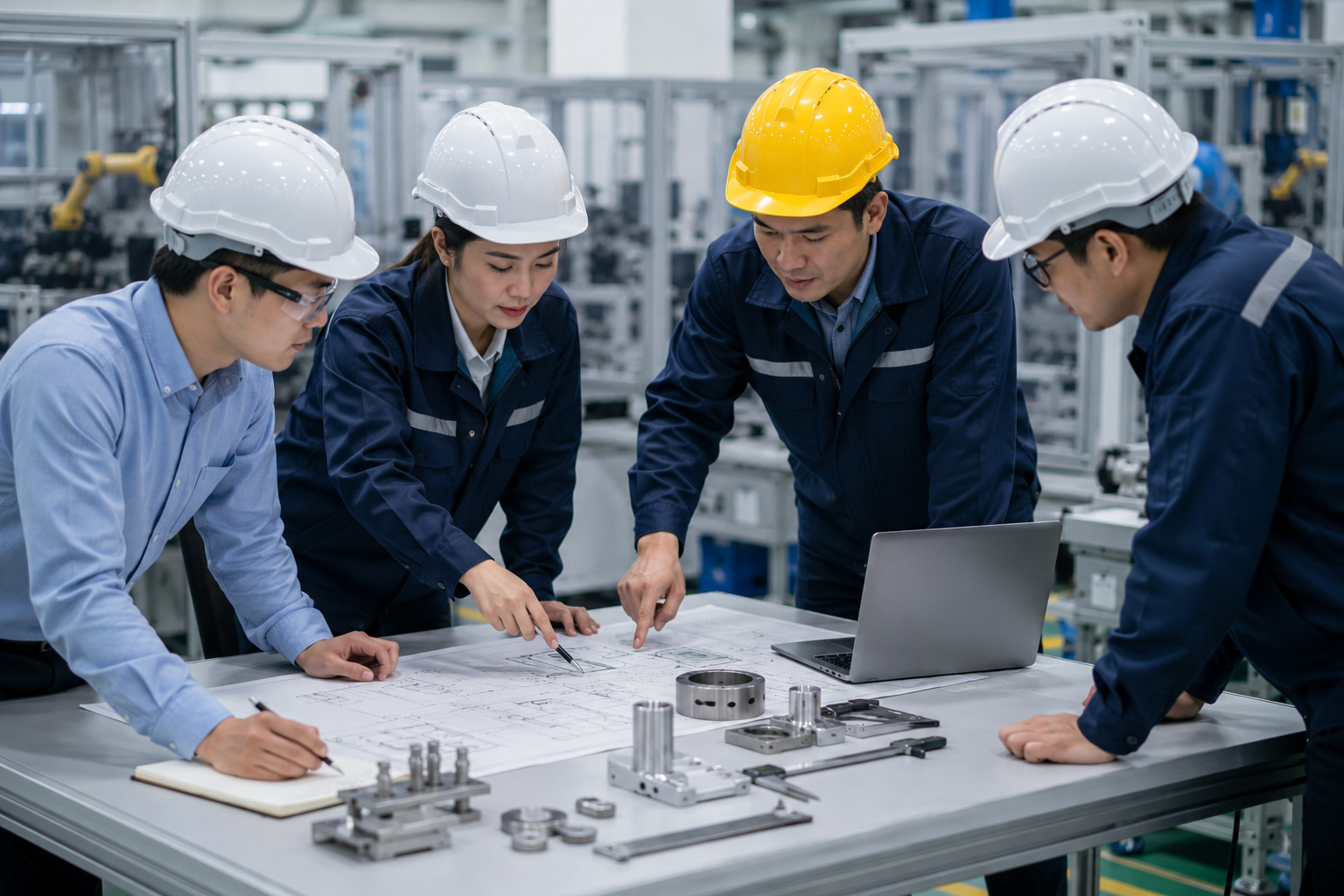
[SYS-01]
Gate 1
DFM & process audit
standardize the work method, confirm the line is solving the real bottleneck.
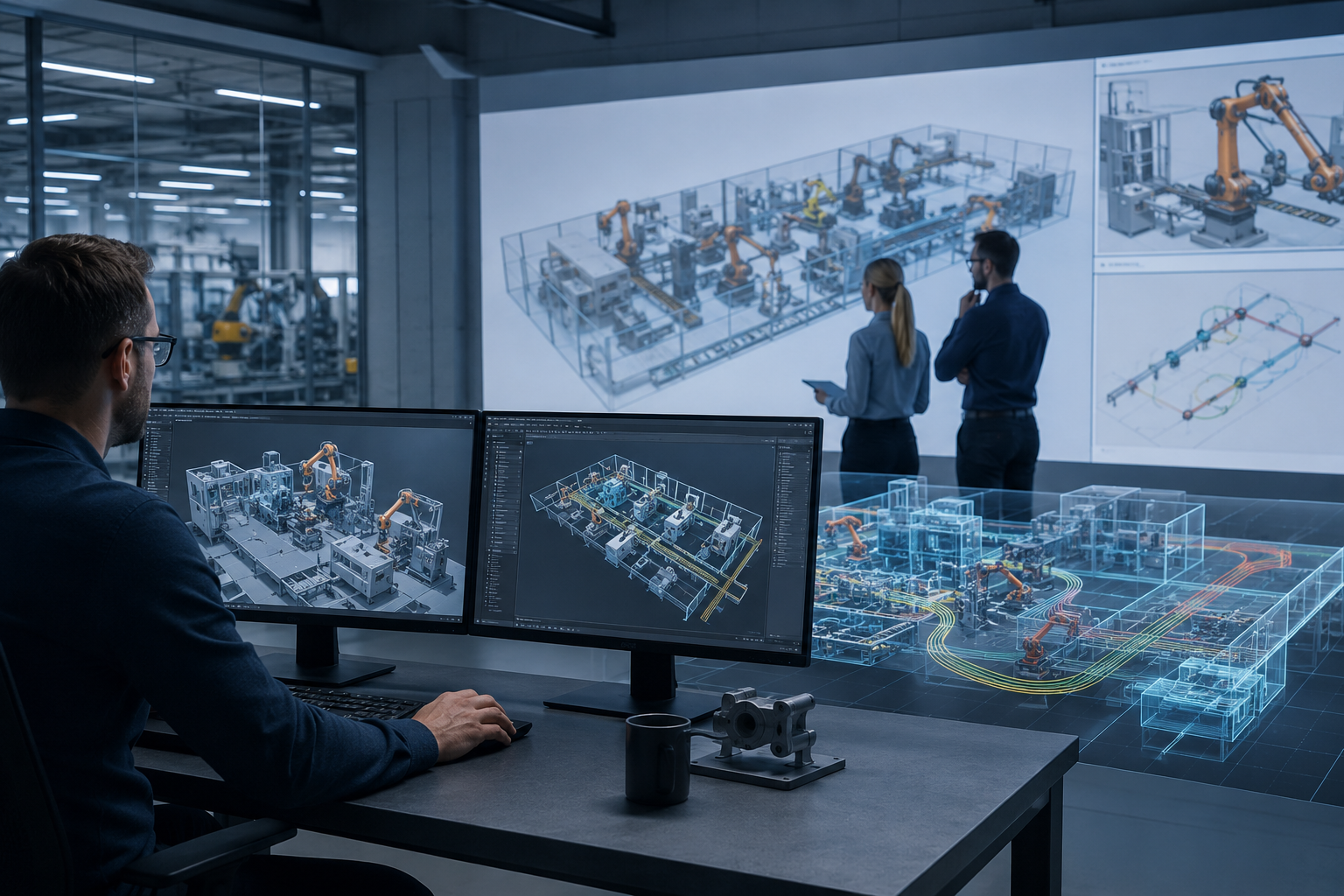
[SYS-02]
Gate 2
Design & simulation
station layout, cycle balancing, and a digital review before metal is cut.
[SYS-03]
Gate 3
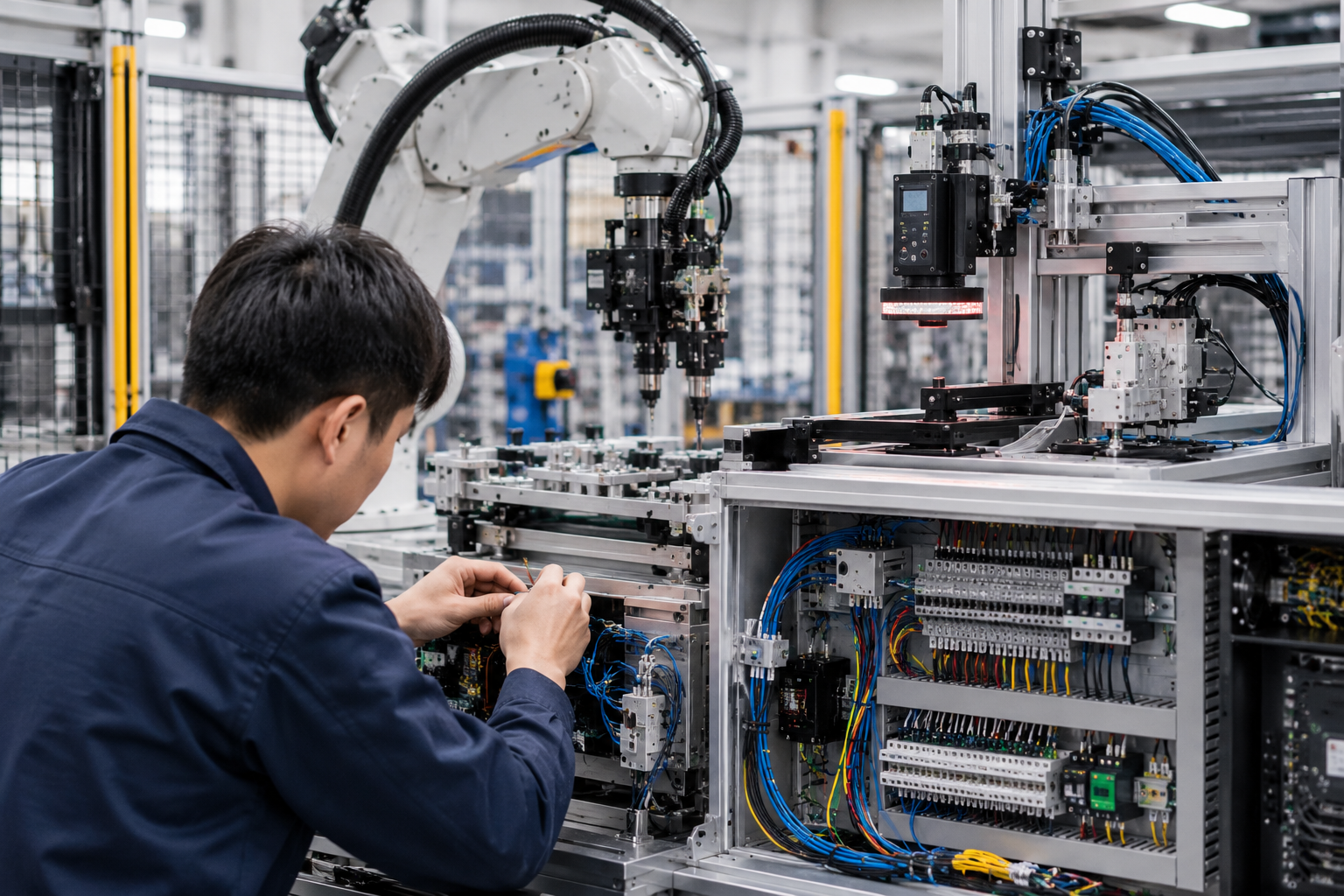
Build & integration
in-house machining, robot integration, vision and control wiring.
[SYS-04]
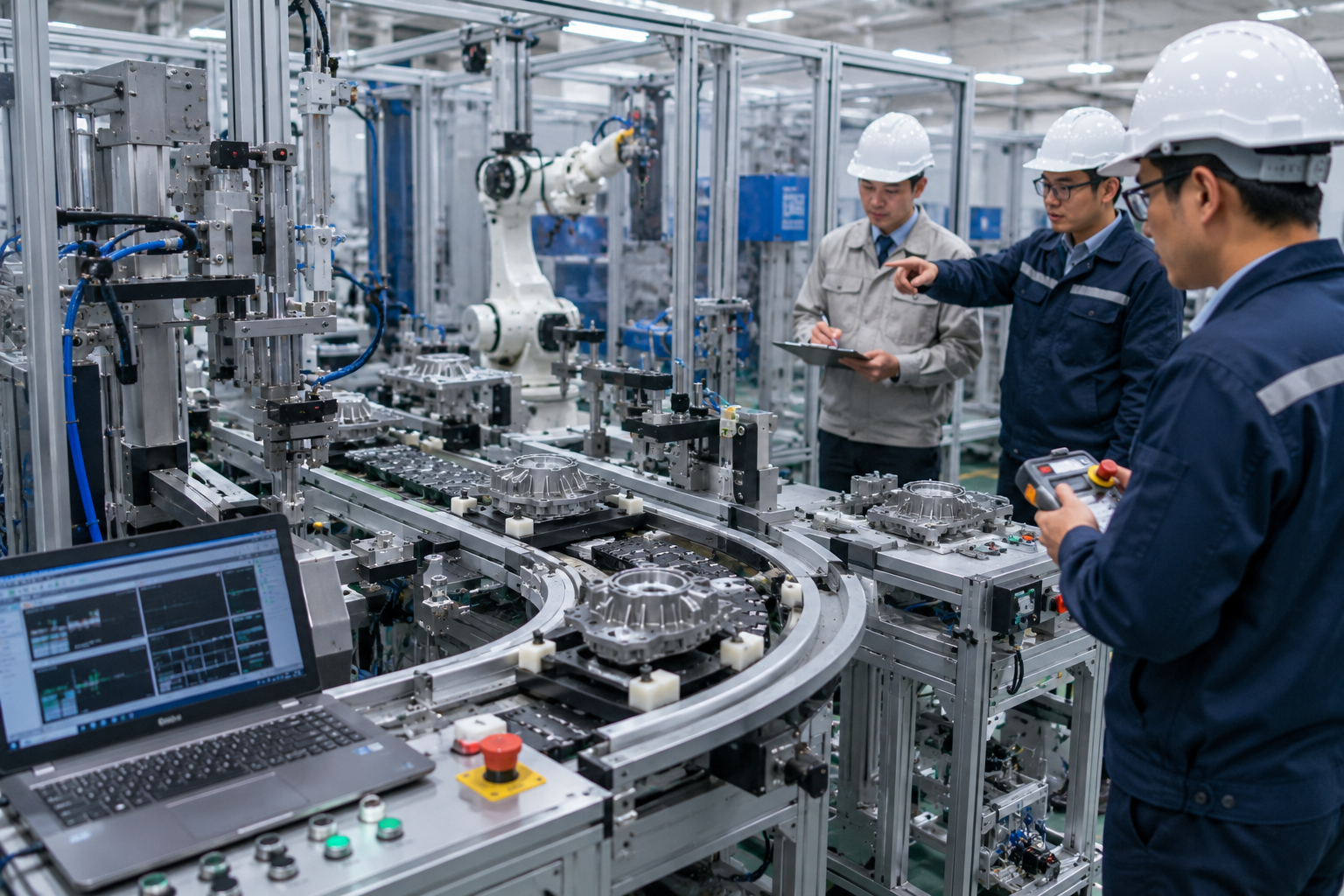
Gate 4
Factory Acceptance Test (FAT)
we run your parts on the line at our plant under simulated load before shipment.
[SYS-05]
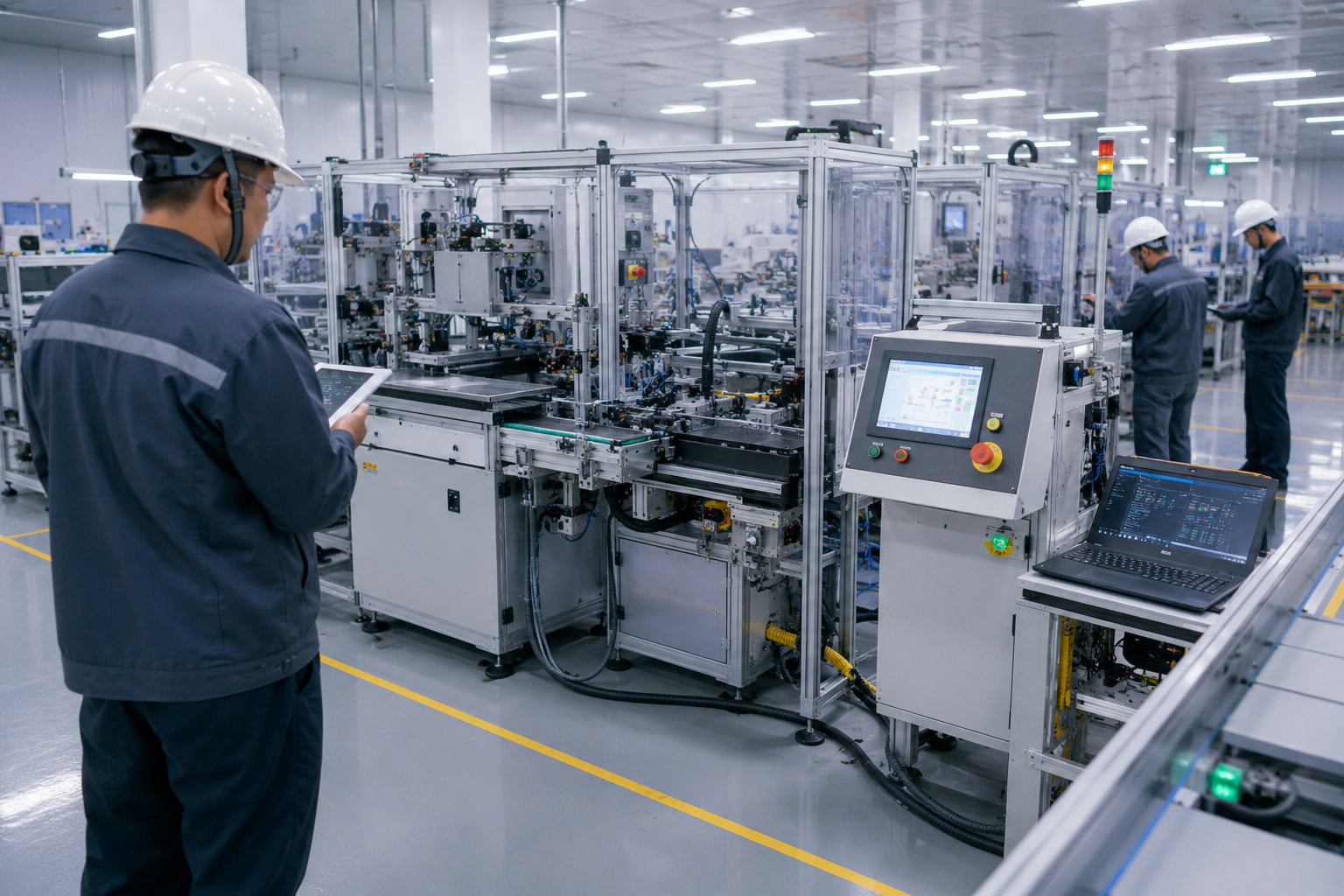
Gate 5
Install & Site Acceptance Test (SAT)
on-site setup, utilities, and sustained run-off under real conditions.
[SYS-06]
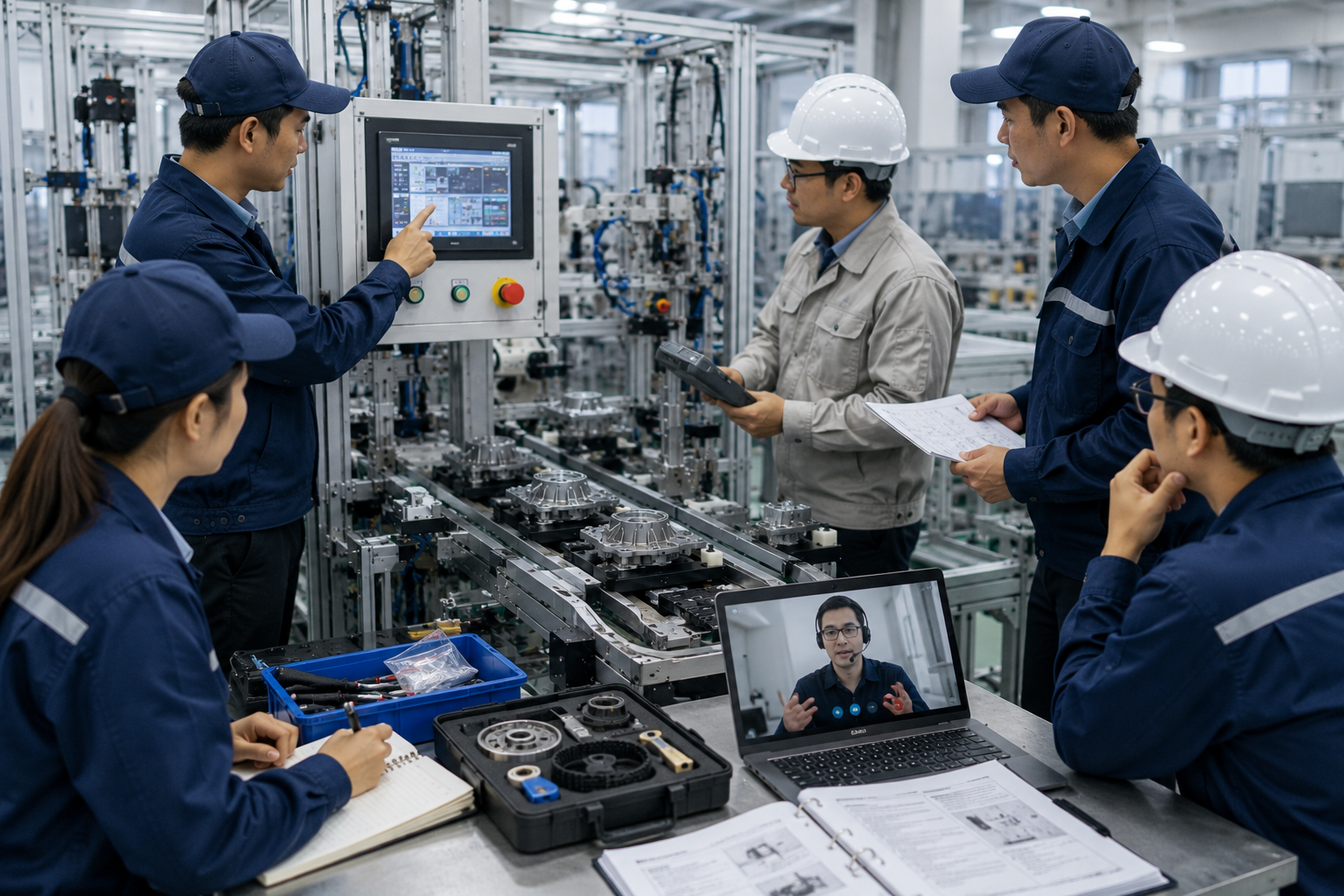
Gate 6
Training & after-sales
operator and maintenance handover, spares, and remote support.
FAT and SAT are not paperwork – they are the difference between catching an assembly or software fault in our factory versus on your line. FAT verifies control logic, I/O, interlocks, and emergency stops under simulated conditions; SAT confirms installation integrity and sustained operation on your floor, consistent with ISO quality practice and the staged acceptance model described in automation engineering guidance.
For an overseas industrial buyer, FAT is also your travel-budget insurance: a regional team can validate a 20-station line at our plant in one visit rather than discovering issues after a 30-day ocean shipment. ZEUEE records FAT results against your acceptance criteria so the SAT on your floor is a confirmation, not a renegotiation.
“We don’t put price on paper until we see the part run in the system. Over many jobs the root of the defect was actually a few steps earlier in the process the customer wanted us to automate – the faster we get it through, the faster we shipped them the problem.”
— ZEUEE Engineering Team, Automated Line Integration
Proven Across Connector, Electronics & Hardware Assembly
Two decades of builds have put ZEUEE lines into aerospace, automotive, 3C electronics, medical device, and hardware plants. Our customers include AVIC, China Shipbuilding, GAC Group, Corning, Hunter, TE, Sumitomo, LEGO, TCL, Sony, and Foxconn. The common thread is precision assembly at volume – the same discipline behind our 269-terminal automatic assembly line.
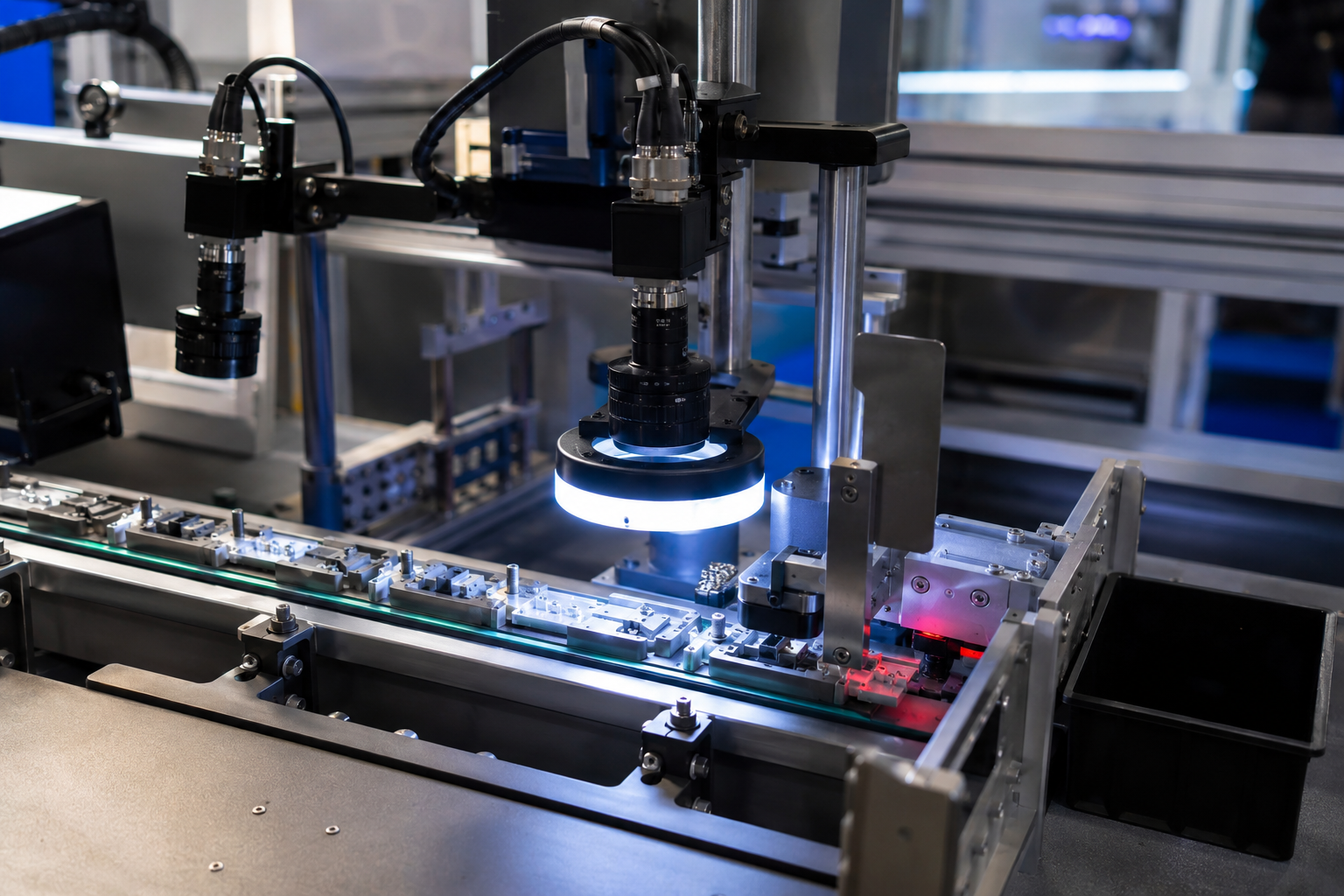
[CADENCE SPEC]
Representative line classes & cadence
Our delivered lines run at production cadences such as 10-12 pcs/min (hinge and DC-wire lines), 15-18 pcs/min (handle assembly), and 16-18 pcs/min (brush assembly with in-line CCD inspection). These are real line speeds from delivered ZEUEE equipment, not catalog maximums.
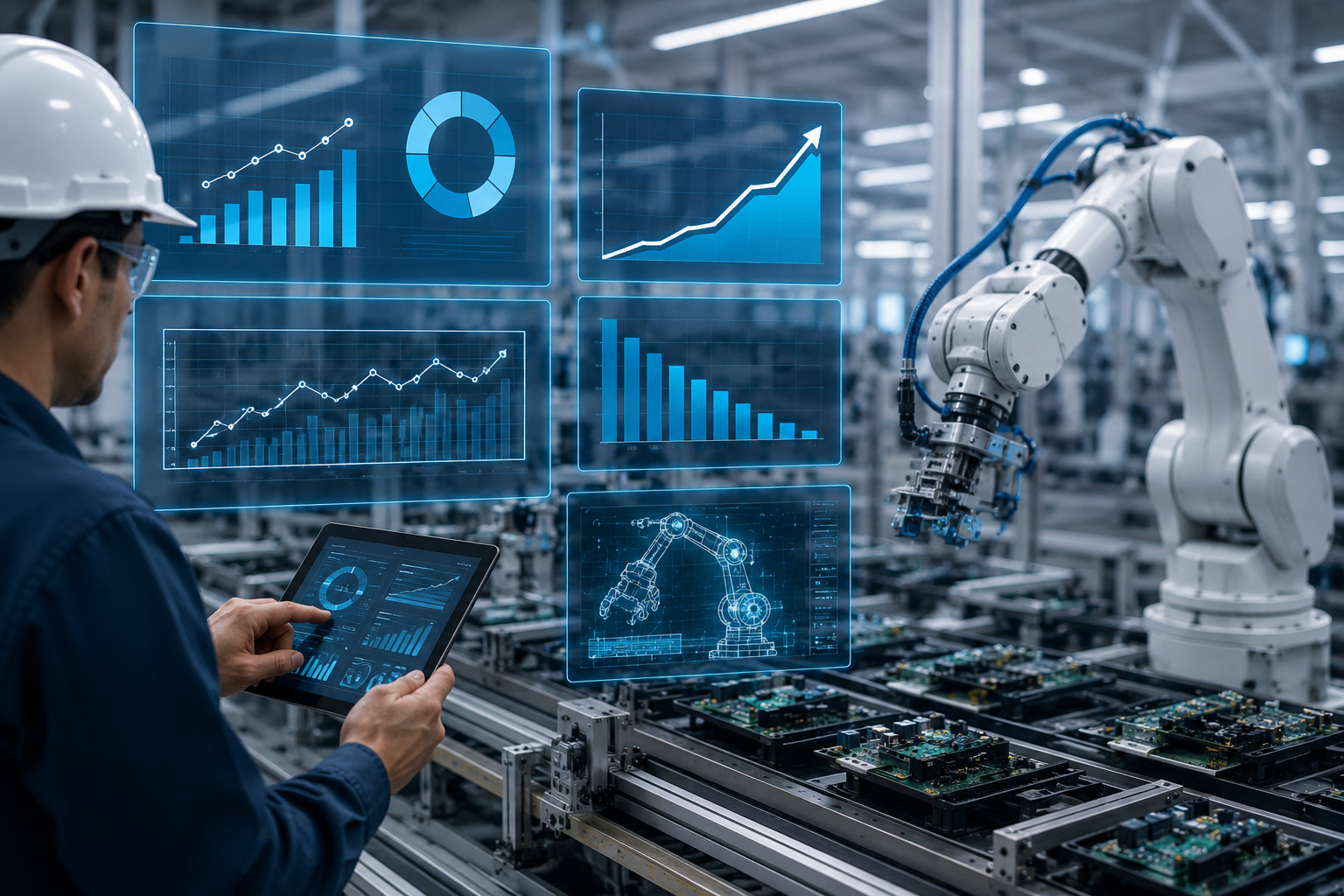
[VALIDATION DATA]
Independent case data points the same direction: one electrical-assembly deployment reported a 20% throughput increase, a measurable lift in line productivity, and a 15% reduction in operating cost within a year of going automated. We frame results honestly because the common ROI mistake – dividing robot cost by displaced labor – undercounts the quality, downtime, and throughput gains that actually drive the return. Technology direction backs the case too: recent flexible robotic-assembly patents point to lines that adapt to more parts without a rebuild.
[ROI PROJECTION]
18–30 mo
Typical payback window for manufacturing automation, with 25–45% in ongoing annual cost savings reported across industry studies.
Industry-average ranges (qualified). Your payback depends on volume, labor cost, and quality gains — request a line feasibility review for a number tied to your numbers.
Primary: Procurement | Secondary: Engineering
Certifications & Engineering Credentials
For an overseas industrial buyer, the real risk is not the machine – it is a supplier who cannot document what they claim. That gap is where vendor audits fail and projects stall. ZEUEE’s credentials are documented, not asserted: 20 years of build history, 150+ patents, and an ISO 9001:2015 system the badges below summarize for the procurement team.
Our patent portfolio is not a vanity metric – it reflects in-house mechanisms our competitors subcontract. The direction of the field is toward flexible, vision-driven, sequence-tuned lines, a trajectory visible in recent filings such as US20240001551A1 (flexible robotic assembly) and ongoing work on automated assembly-sequence generation.
Need documentation for your vendor audit?
Request Documentation
ISO 9001:2015
Quality management system150+ Patents
32+ invention, 68+ utilityNational High-Tech
Enterprise qualification20 Years
Est. 2005, 10,000+ cases30+ Countries
Global delivery + supportAutomation Engineering Toolset
Use our standard calculation models to define line specifications, evaluate process feasibility, and build the business case for your assembly project.
Line Architecture Selector
Determine the optimal kinematic layout (rotary indexer, linear pallet, or robotic cell) based on your assembly sequence.
Select LayoutAutomation Readiness Scorer
Evaluate part geometry, tolerance stack-ups, and process stability to objectively assess feeding feasibility.
Score ReadinessTakt Time & Throughput
Calculate required station cycle times, net shift capacities, and target OEE to meet your production volume.
Calc Takt TimeAutomation Payback Estimator
Model direct labor offset, scrap reduction, and capital expenditure amortization schedules for reliable ROI.
Estimate PaybackAutomated Assembly Line Buyer FAQ
WHY WE WRITE THIS
About ZEUEE Engineering Insights
ZEUEE shares technical guides based on real automation project experience. Since 2005, we have designed and manufactured non-standard automation equipment for connector assembly, wire harness production, robotic lines, vision inspection, and smart factory upgrades.
Founded in 2005
20,000 m² production base
120+ specialists
150+ R&D patents
ISO9001:2015 certified