Get in touch with Zeyu lntelligent Industrial Company
Contact Form 使用中
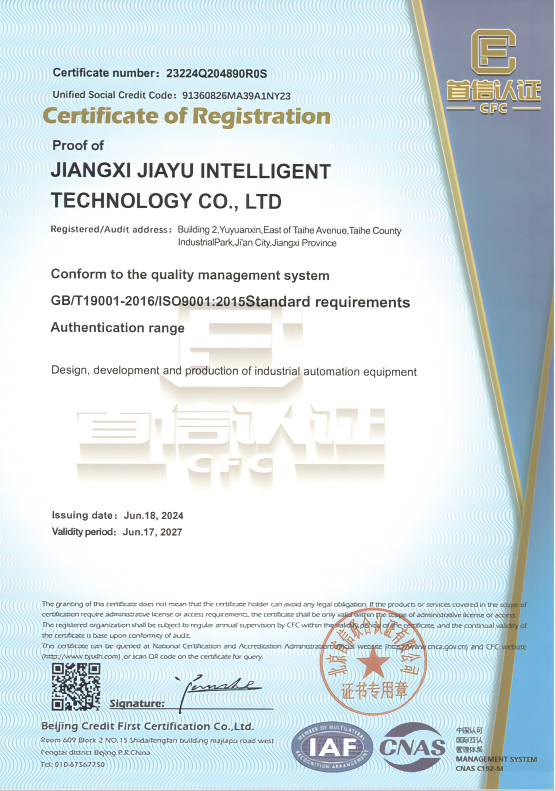
ISO 9001 Certified

Aerospace & Defense

Aerospace & Defense Connector Manufacturing Equipment

Automated twist-pin cutting and laser-welding systems that allow connector manufacturers and defense OEMs to create mission-critical contacts in house – at 0.02 mm and with 100% machine-vision inspection.

±0.02 mm Cutting length accuracy
100% CCD weld & length inspection
Dual-end Laser welding per cycle
MIL-DTL 32139 / 83513 / 38999 ready
Request a Quote
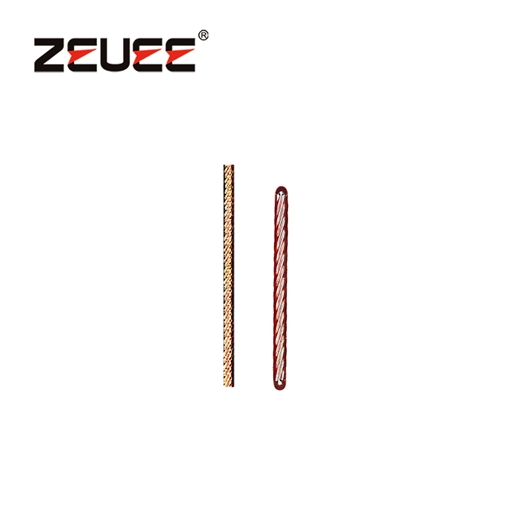
Aerospace Defense Connector Manufacturing Equipment System Twist-pin cutting and laser-welding detail process

±0.02 mm

Cutting length accuracy

100%

Machine-vision inspection

20 yrs

Automation engineering

30+

Countries served

The Aerospace & Defense Connector Production Challenge

Defense connector manufacturing equipment has to hold tolerances where a defect you can’t see becomes a failure you can’t afford. The micro-size of twist-pin and micro-rectangular contacts for avionics, missiles, and satellites, combined with their crimp and weld assembly at sub-millimeter separations, introduces significant failure risks. Indeed, cracking of connector solder joints and wear-out of contacts subjected to vibration and temperature cycles are known failure modes for aerospace electronics. If even a tiny fraction too much braid of a twist-pin is cut, or a welding issue creates a virtual contact at one of its ends, such a part might slip by a quick visual inspection only to fail post-deployment.
This type of risk-often called root cause-is exactly what most manufacturers struggle to eliminate. Manual and semi-automatic production of contacts relies solely on the diligence of the operator, and minute welding or length deviations, such as frayed wires, inaccurate cut lengths or improper solder application, are exactly what elude the naked eye at this scale. ZEUEE equipment engineers and builds machines that automate to remove that variability, producing consistent, 0.02 mm contacts that also pass stringent vision checks before they’re ever delivered. Our automated cutting, welding, and inspection systems deliver built-in reliability in this category of industrial automation for the aerospace and defense industry – and our products fit precisely.

ZEUEE Equipment Line — Twist-Pin & Micro-Connector Production Machines

We developed our flagship production machine for gold-plated twist-pin contacts that populate Nano-D, Micro-D, and micro-rectangular connectors. This machine is designed to work with stranded wire for engineers focused on repeatable geometry and to make automation of the assembly process readily available for purchasing teams requiring line-ready systems rather than desktop equipment.
← Click Left Page to Prev Click Book to Open →
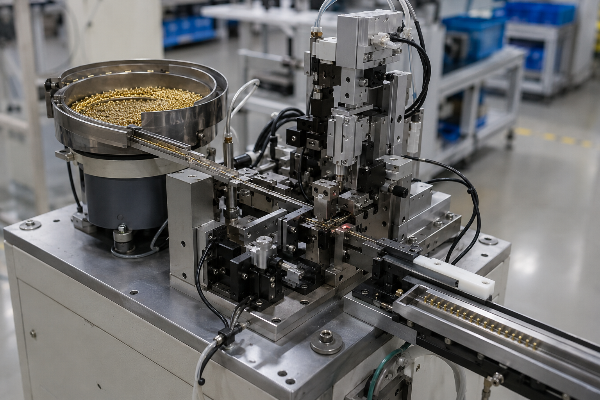
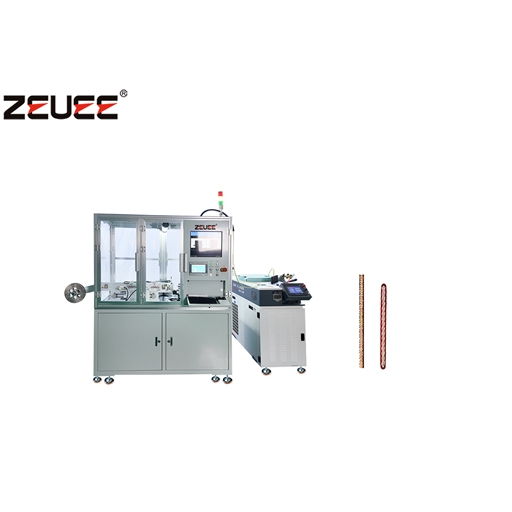
0.45 Twist-Pin Automatic Cutting & Welding Machine

0.45 Twist-Pin Automatic Cutting & Welding Machine

This machine pays out the braided twist-pin wire from a reel under precisely controlled loop tension to minimize strain variations and fretting, feeds it into a straighten system to eliminate wire set, and then accurately cuts it to length.

Each cut blank is simultaneously clamped and held by the forming jig and rotating before being indexed and then laser-welded to create both finished ends, which subsequently pass a CCD machine vision inspection that verifies their length and quality. This assembly is finally discharged into a collection bin.
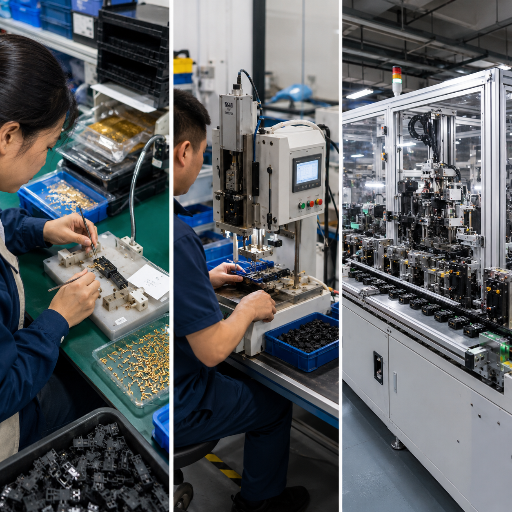

Following the path of wire through the assembly process stage by stage, will demonstrate what sources of defects are sequentially eliminated: First, wire from the reel travels to a tension controller where wire velocity and line tension remain stabilized, providing a steady feed that’s critical in reducing variation in feed accuracy and minimizing the potential for fretted contacts and poor cut length.

A second straightening stage immediately precedes the cut; this ensures accurate cut are made with no setback from wire set-stock. Instead of relying on the service life of cams for cut length control and feed speed, servo motors are used-allowing for the same 0.02mm cutting precision at end of day as it did at the start.

After each cut the clamp and form station rigidly holds and precisely rotates the individual contacts, presenting each of their two exposed ends to the laser welder at exactly the same angle of rotation – using the same principle as the assembly of the wire bundles itself.

Finally, the CCD machine-vision inspection station scrutinizes each part, verifying that no damage has occurred to the weld or wire integrity.

This order of events makes a difference to a process engineer: defects are engineered out upfront, filtered downstream and barely make it to your input inspection area. It also makes a difference to a production manager: as the steps are servo-driven and vision-gated, an individual operator can control an entire cell, and isn’t a production-level person required at each step – nor does your output quality change with the shift on the floor.

Specifications & Inspection Logic

Selecting a Configuration

Parameter Specification
Cutting Length Accuracy ±0.02 mm
Wire Feed Servo module + constant-tension release
Welding Dual-end laser fusion, servo-driven
Vision Inspection CCD — length + weld defect detection
Defects Detected Missing wire, deviation, loose strands, virtual weld, oversized / insufficient joint
End Product Twist-pin contacts for micro-rectangular & D-sub connectors
Construction Modular — fast disassembly & maintenance

Configuration ties the same platform to the contact family and standard you build to. Use the matrix below to match production targets to setup.

If You Produce… Contact / Standard Configuration Focus
Nano-D Twist-Pin Contacts MIL-DTL-32139, 0.635 mm spacing, 30 AWG Fine-wire tension + tight cut tolerance + dual-end weld
Micro-D Twist-Pin Contacts MIL-DTL-83513, 1.27 mm centers Length consistency across 9–130 contact runs
Micro-Rectangular Connector Pins Custom gold-plated twist pin Winding angle + weld integrity for signal contacts

ZEUEE Automation vs. Manual / Semi-Auto Contact Production

Labor has the hardest cost to reduce because skill, experience and focus are all human-based. There's a tax on a manual twist-pin "line of fine looking products," with each contact being re-worked and each borderline weld failing "field test", adding up in time costs far more than it costs for a single machine cycle minute. Cut, weld, inspect automations target this tax at its source.

ZEUEE Automation vs. Manual / Semi-Auto Contact Production
Production factor ZEUEE automated system Manual / semi-auto
Cut length accuracy ±0.02 mm Operator-dependent, typically wider
Weld inspection coverage 100% per contact (CCD) Visual / sampling
Defect classes auto-rejected 6 (length + 5 weld/wire) Eye-dependent
Throughput Continuous servo-fed cycle Piece-by-piece handling
Direct labor Single operator / unmanned-capable Multiple operators
Consistency over a shift Machine-stable Fatigue-sensitive

View the table in terms of cost rather than features. In connector assemblies, the biggest expense is the cost of inspection, not just of cut or weld. A manual process which inspects its output visually is actually shipping the remaining portion uninspected -- accepting the inherent risk of failure from that portion not observed closely. (In military/aerospace settings this could even lead to product recalls.)

0.02 mm hold on cut length is nice, but full coverage on your welds is what converts that precision into a reliably certified product. A second cost-saving dimension of an automated line is consistency - it delivers the same product in the eightieth hour as it did the first. Resulting production output and inspection results remain steady through an entire shift or an entire run, where on a manual line the trend lines often tend to sag. Those two aspects - perfect, consistent inspection coverage and consistent production output - explain why the capital cost of automation justifies its cost over a simpler manual process.

Labor + Scrap

Automation removes two costs first: operator hours on repetitive cut-weld work, and the scrap-and-rework bill from inconsistent manual welds. Over a multi-year horizon these typically dominate the total cost of producing a contact — which is where a servo, vision-verified line pays back.

Built for Mission-Critical Standards — MIL-DTL-32139, 83513 & 38999

A stranded gold-plated twist-pin contact exists to ensure continued, low resistance contact in stressful environments where a solid pin would fret or fracture. Production must maintain tight dimensional control so every component adheres to the standard requirements. Below, that table maps each standard to its governing requirement and to the machine capability that keeps your output inside it, the part of the picture connector catalogs never show.

Standard Governs Key manufacturing requirement How ZEUEE equipment ensures it
MIL-DTL-32139 Nano-D twist-pin contacts 0.635 mm (.025") contact spacing, gold alloy pin crimped to 30 AWG wire ±0.02 mm cut length + dual-end laser weld + 100% CCD verification
MIL-DTL-83513 Micro-D connectors High-density micro contacts on 1.27 mm centers, 9–130 positions Length consistency + weld integrity across long contact runs
MIL-DTL-38999 Circular harsh-environment connectors Rugged, sealed interconnect for vibration / EMI environments Supplies the precision welded contacts that populate these housings

Each of these rows points to a manufacturability point that bears highlighting. Nano-D contacts are specified by MIL-DTL-32139, where our gold-alloy twist pin is crimped to a 30AWG wire and welded on 0.635mm spacing- at that pitch, even a length variation that wouldn't register for the human eye moves the pin relative to the wire. The MIL-DTL-83513 Micro-D has its own challenge: dense arrays of up to 130 pins on 1.27mm centers require uniformity from the first contact to the last-1 bad weld in 100 gets you an assembly that fails, so length uniformity and consistent weld quality through the run is the target. One tier up sits MIL-DTL-38999: we don't make the rugged circular housing, but we weld up the twist pin and socket contacts that go into it-we're providing contacts that make the finished connector survive aircraft levels of shock, vibration, thermal cycling, and EMI. Material constraints here are their own discipline-the gold plated, beryllium copper class contact wire won't stand up to too much heat when it's welded, another good reason for welding machine laser parameters and inspection to be linked rather than separate.

It's also where your hard-environmental specs connect back to your interconnect's signal integrity: shielding for EMI, surviving shock and impact, begins with correctly-dimensioned, completely-fused contacts. High-speed signal contacts don't play with weld variances; it's not the weld's capability, but the weld's coverage, that makes a production machine.

Applications Across Aerospace & Defense

Our equipment’s connectors move signal and power into the defense systems where their reliability is paramount. ZEUEE serves manufacturers that build rugged connectivity and interconnects for these platforms, including the defense and aerospace industries:

Avionics & Flight Systems

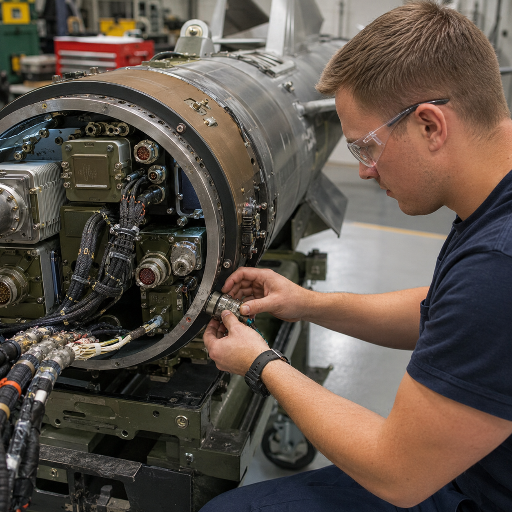
Twist-pin and Micro-D contacts for dense, weight-critical aircraft electrical cables and connectors.

Avionics & Flight Systems

Missile & Weapons Systems

Contacts engineered to survive high shock and vibration without losing connection.

Missile & Weapons Systems

Satellites & Space

High-reliability, hermetically compatible contacts for systems with zero service access.

Satellites & Space

UAV & Unmanned Systems

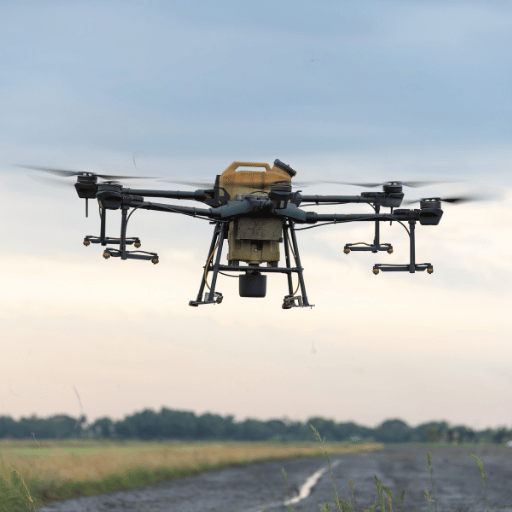
Compact, rugged interconnects for drones and robotics where mass and reliability both matter.

UAV & Unmanned Systems

Military Ground Vehicles

Ruggedized contacts for control and communication systems under continuous vibration.

Military Ground Vehicles

Soldier & Portable Electronics

Miniature connectors for navigation, communication, and sensor packs in the field.

Soldier & Portable Electronics

Why A&D Manufacturers Partner with ZEUEE

This is a multiannual purchase. That’s why behind every spec sheet should be the question whether the manufacturer is backing it up. ZEUEE has been making industrial automation since 2005, and aerospace clients are using similar engineering.

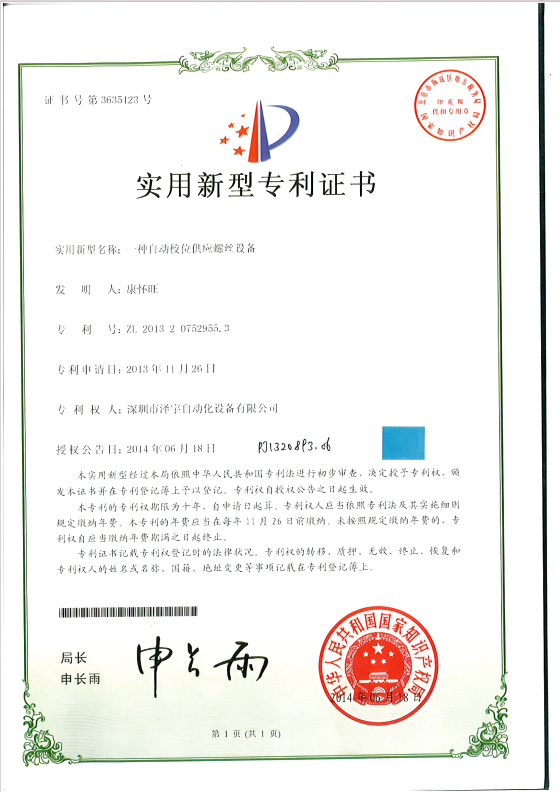
ISO 9001:2015

Quality management certified

150+ patents

32+ invention, 68+ utility model

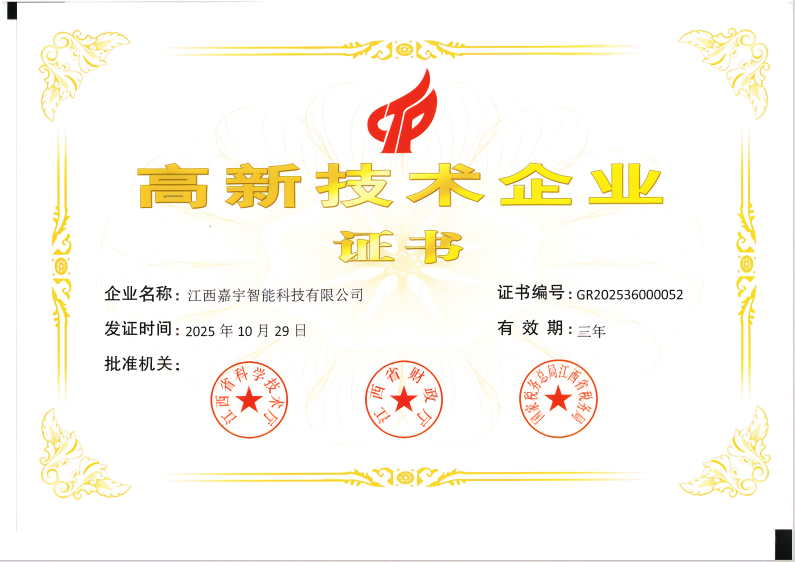
National High-Tech

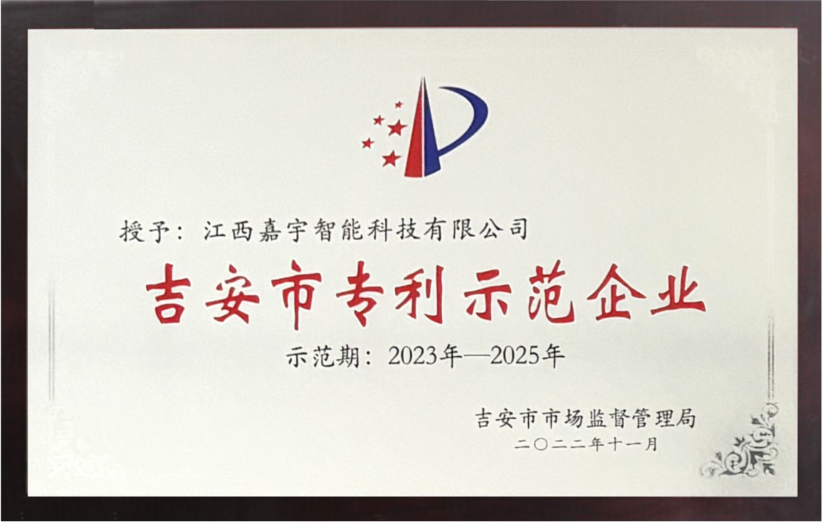
Specialized & New "Little Giant" SME

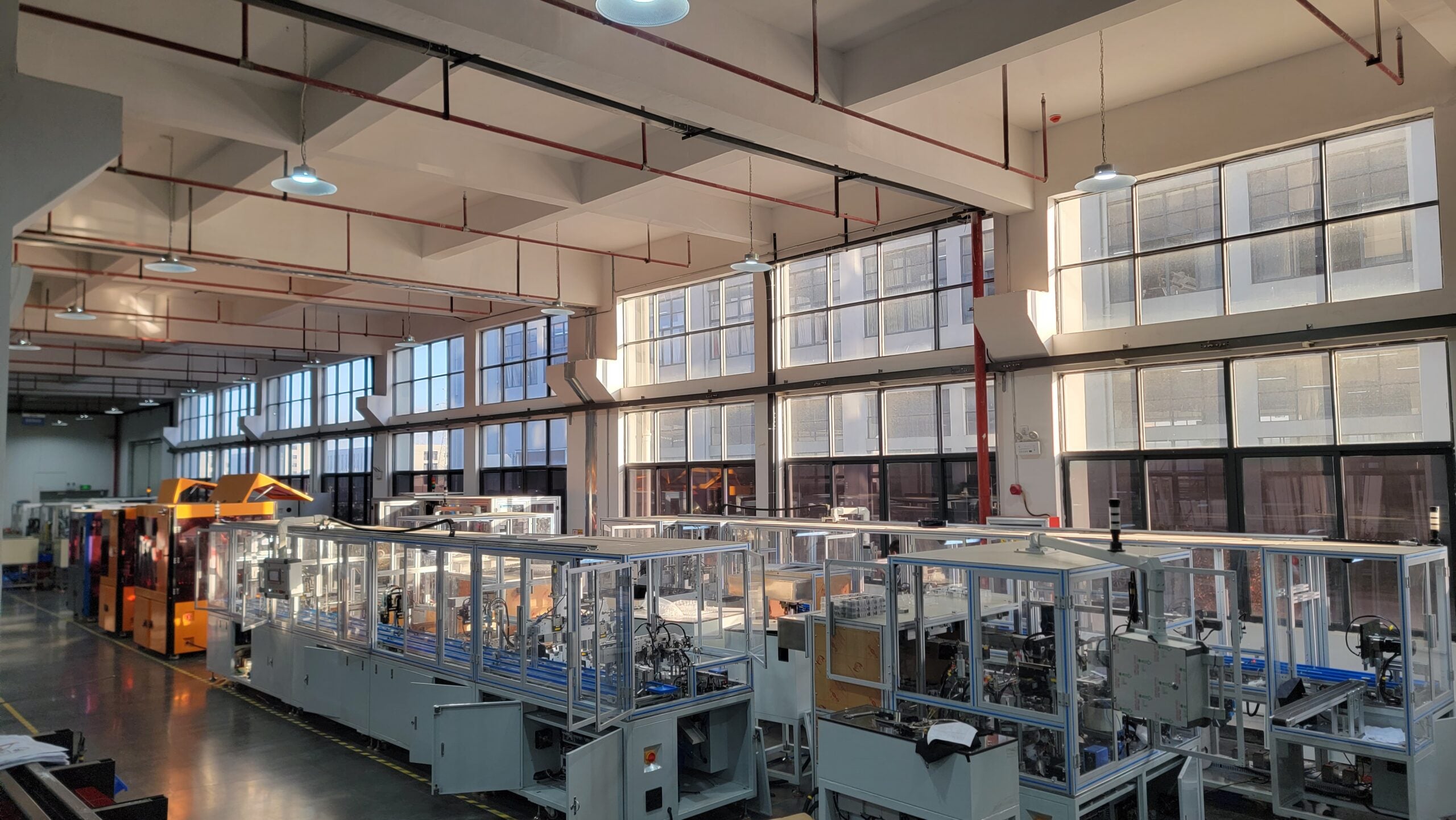
20,000 m²

Full-chain production base

30+ countries

10,000+ cases delivered

Leading suppliers in high-stakes production industries, including AVIC, China Shipbuilding, TE, Sumitomo, Corning, and Foxconn, rely on our automation. When you choose our equipment as your go to solution for aerospace or defense connector suppliers, you’re partnering with an experienced operator within high-reliability supply chains providing intelligent automation from whole factory to even one machine; this’ll be what transforms unfamiliar brand to one with proven pedigree.

ZEUEE Aerospace & Defense Equipment Integration

Procurement Guide — Customization, Integration & Global Support

A piece of equipment from a builder in the Far East calls into question serviceability, interoperability, and fit and how ZEUEE resolves each of these issues to make an acquisition easy.

Request A Quote →

What Drives Your Configuration And Quotation

Instead of list pricing, twist-pin equipment is quoted to your specific production requirements. Anything that can shift your production will shift the quotation: the MIL-Spec standard and family of contacts you're manufacturing to, the type of wire you use, throughput rates, the extent of CCD inspection and logging you need, and the depth of integration with your current lines are all adjustable “levers”. These levers that you, the customer, will use for this equipment - are all scaled by ZEUEE collaboratively.

On integration, modular design is considered from day one to ensure easy service access to machines without pulling down the entire production cell - saving time in commissioning, and the time, resources, and production disruption costs over the machine lifetime. For support, ZEUEE is already serving more than 30 countries globally; so commissioning and spares are designed in from the outset. Our objective is to support lines that run, rather than shipping a large box that sits in your shop.

Aerospace Production Optimization Tools

Twist-Pin Automation Savings Estimator

Estimate annual labor hours and scrap exposure an automated cut-weld-inspect cell can remove.

Calculate Savings

Escaped-Defect Cost Calculator

What sampling-based inspection lets through — and what a single field failure costs you downstream.

Analyze Risk

MIL-DTL Twist-Pin Spec & Machine-Config Selector

Pick the standard you build to — see its key contact data and the matching ZEUEE production setup.

Select Configuration

Frequently Asked Questions

The platform is configured to produce contacts to MIL-DTL-32139 (Nano-D twist pin, 0.635 mm spacing), MIL-DTL-83513 (Micro-D), and the welded contacts used in MIL-DTL-38999 circular connectors. The machine holds the dimensional and weld-integrity requirements; final qualification of the finished connector remains with your part's QPL process.

Cutting length accuracy is ±0.02 mm, and every contact passes a CCD vision station that checks length and weld quality and rejects missing-wire, deviation, loose-strand, virtual-weld, and oversized or insufficient-joint defects.

Inspection coverage and consistency are the decisive differences: the system inspect 100% of contacts per cycle and holds geometry independent of operator fatigue, where manual lines rely on visual or sampling checks. For most producers the payback show up as lower scrap, rework, and field-failure risk rather than as a single headline number, we can model it for your volume.

Yes. Wire gauge, contact family, throughput, inspection depth, and line integration are all configured to your drawing. Its modular design drops into an existing production flow and is serviced station-by-station.

It processes gold-plated stranded twist-pin wire for micro-rectangular, Nano-D, and Micro-D contacts. Contact us with your wire specification and we'll confirm fit before quoting.

ZEUEE supports customers in over 30 countries, with commissioning, spare parts, and service scoped into the purchase. The modular construction also lets your own maintenance team handle routine service with minimal downtime.