Get in touch with Zeyu lntelligent Industrial Company
Custom Assembly Machines, Specified and Proven by the Numbers
A custom assembly machine earns its capital when three numbers line up: a cycle time your line can actually hold, a placement accuracy your parts can pass, and a cost-per-part that recover the build inside two years. ZEUEE designs and builds that machine, rotary dial, linear transfer, or robotic cell, with published throughput, 0.1 mm placement accuracy, and a cost-per-part ledger, proven on connector and terminal lines since 2005.
Request a Custom Quote (24h)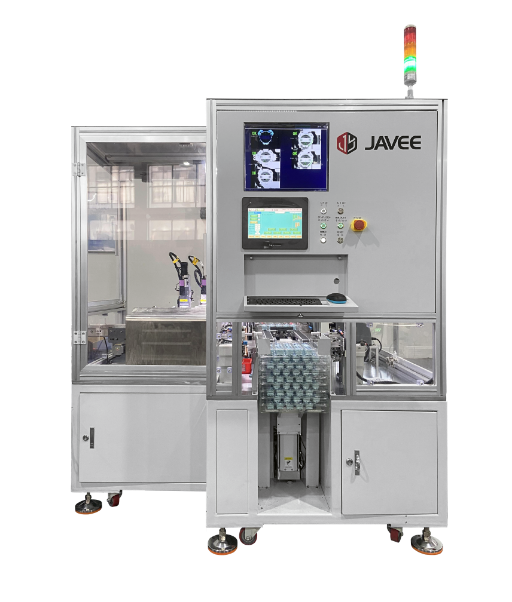
Custom Assembly Automation at a Glance
25–45 pcs/min
Verified Model Throughput
0.1 mm
Pin-Insertion Accuracy
ISO 9283
Repeatability Mapped
150+ patents
32 Invention + 68 Utility
20 years
Building Since 2005
30+ countries
Delivered Worldwide
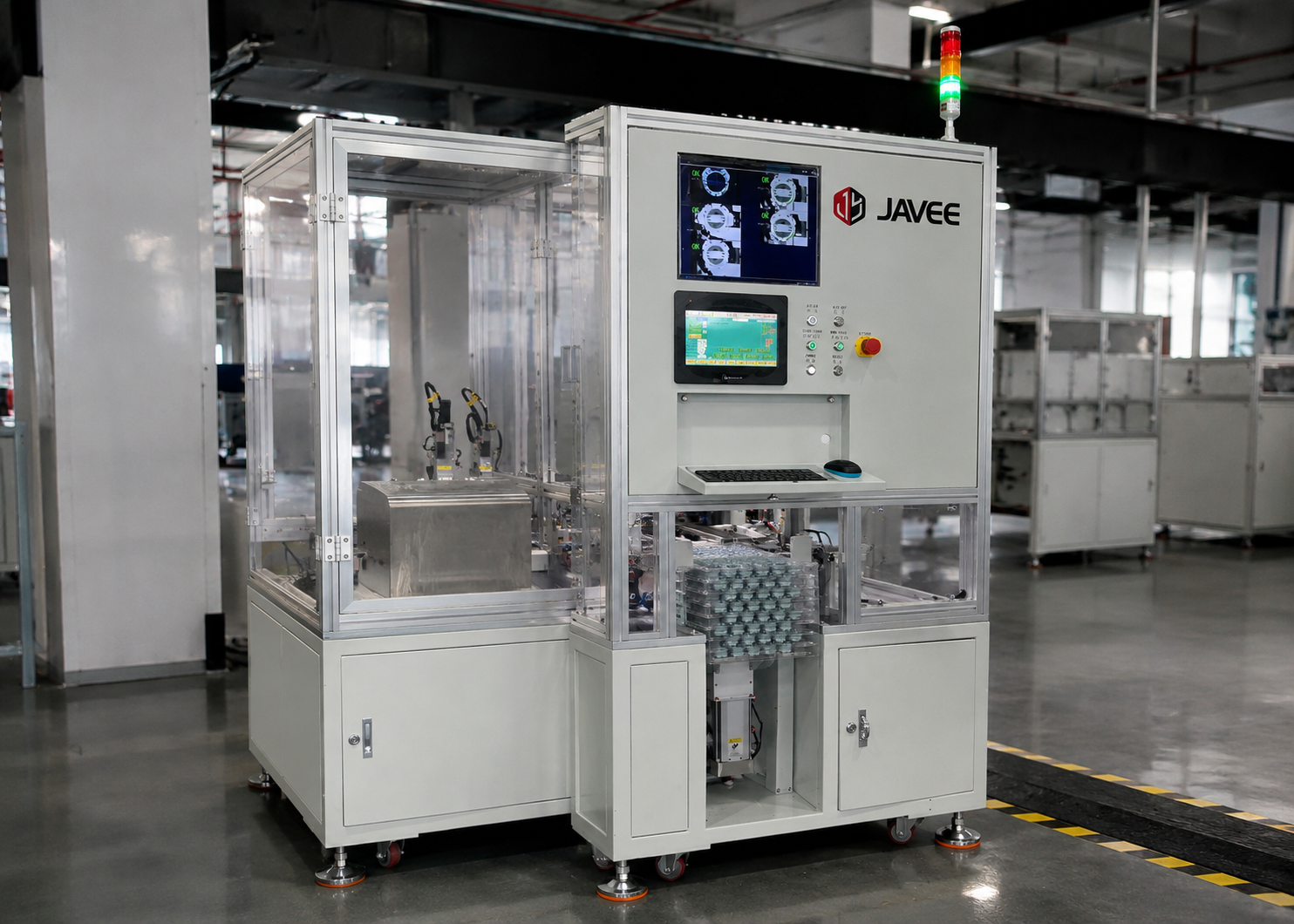
Every machine ship with PLC control, pneumatics, linear rails, CCD vision and a documented factory acceptance test, not a bare frame.
When Off-the-Shelf Assembly Equipment Can’t Hit Your Cycle Time or Cost Per Part
A custom assembly machine gets specified at the moment a standard, off-the-shelf unit stops fitting the part. Off-the-shelf assembly equipment is built for an average product; the modifications you need to make it fit your component are clunky and expensive, so the business ends up adapting to the tool instead of the tool adapting to the part. That trade is the reason engineers reach for a machine designed and built around one assembly, not a catalogue.
[ Baseline Economics ]
Manual-line economics is what usually triggers the search. Direct manual labor runs 30–50% of a production budget with no path to scale, and a fully-burdened US assembly operator costs roughly $45,000–$65,000 per year, anchored on a BLS median base wage near $43,570 and a 1.3–1.5x burden multiplier. Manual assembly also drifts: scrap sits at 3–5% of output and operator-to-operator variation slips defects through that inspection misses at roughly 1 in 50. .
[ Structural Reality ]
This is structural, not a matter of effort. Human cells can’t fasten, pick-and-place, weld, dispense and inspect at one stable beat for an 8-hour shift, so cycle time and quality both wander. Custom assembly machines fix the beat: the part is held in a known position, each station performs one operation to a fixed tolerance, and a vision check confirm the result before the part advances. We build that machine as connector-insertion, terminal-inserting, nozzle and special-purpose assembly automation, with verified outputs of 25–45 pieces per minute on its current models and 0.1 mm positioning accuracy where the part demands it.
Buyer Intent & Page Overview
Buyers arrive here searching for automated assembly machines, assembly automation equipment, a rotary assembly machine, or a multi station assembly machine, different phrasings of one need. What follows is built for a buyer comparing two or three quotes. It covers the four assembly architectures and when each fits, ZEUEE’s published machine specs against the ISO 9283 repeatability standard, a sourced performance teardown versus manual and off-the-shelf lines, a cost-per-part ledger you can run on your own numbers, the named customers behind the work, and the procurement details, lead time, factory acceptance, integration, that decide whether an offshore custom build is a risk or an advantage.
Primary buyer roles: Engineering (architecture fit) · Procurement (volume-to-cost match)
Rotary Dial, Linear Transfer or Robotic Cell, The 4-Architecture Assembly Selector
Most failed custom builds trace back to picking the wrong architecture before the first drawing. Rotary dials bottleneck the whole machine at the speed of their slowest station, a 12-second leak test in a ring of 4-second stations wastes two-thirds of the capacity at every other station. Get the architecture right and the part flows; get it wrong and you pay for stations that idle. Each row below maps the four families ZEUEE builds, plus their common variants, to cycle time, station count, annual volume and the part profile each one suits. Industry patent activity is converging on modular, reconfigurable tooling.
| Machine Type / Architecture | Cycle / Index | Throughput | Stations | Annual Volume Fit | Best For |
|---|---|---|---|---|---|
| Rotary dial (cam-indexed) | 3–8 s/index | 60–120 pcs/min | 8–15 | 500K–5M units/yr | Small parts under 200 mm, stable design |
| Rotary dial (servo index) | 2–2.5 s min index | 30–80 pcs/min | 4–16 | 500K–3M units/yr | Tight registration, variable dwell |
| Linear transfer (synchronous) | 5–15 s/station | up to 240 cyc/min | 6–40+ | 100K–2M units/yr | Many operations, long processes |
| Free-flow (non-synchronous) | independent/station | line-balanced | 10–40+ | 100K–1M units/yr | Mixed cycle times, buffering |
| Robotic cell (6-axis) | 10–30 s | part-dependent | 1–4 robots | 10K–500K units/yr | High mix, changeover in minutes |
| SCARA assembly cell | 3–8 s | fast pick/insert | 1–2 robots | 50K–500K units/yr | Planar fasten / pick-and-place |
| Delta high-speed pick-and-place | 0.2–0.5 s/pick | up to 300 picks/min | 1–3 robots | 200K–2M units/yr | Light parts, sorting + placing |
| Collaborative (cobot) cell | part-dependent | ~55 assy/hr at <0.2% defect | 1–2 cobots | 10K–200K units/yr | Low volume, shared workspace |
| Special-purpose pin/terminal inserter | fixed beat | 25–45 pcs/min | integrated | 50K–1M units/yr | Connector, terminal, nozzle assembly |
| Hybrid (rotary + robot) | mixed | balanced | combined | 200K–3M units/yr | Fast core + flexible end-of-line |
Throughput and volume bands are industry-typical envelopes; the figure your machine holds depends on part complexity, dwell processes and changeover frequency.
Primary buyer role: Engineering (specs match, RFQ verification)
Published Specs, The ZEUEE Custom Assembly Machine Spec Sheet
Three of the four competitors a procurement team usually shortlists publish no throughput, no accuracy, and no model specifications at all, the page reads as capability language with nothing to verify. We publish the real numbers from machines already in production, because a spec a buyer can check before a deposit is the fastest way to kill the unknown-brand objection. Vendor-claim gaps are real: independent reviews note suppliers often test repeatability under looser-than-ISO-9283 conditions, so field accuracy disappoints. Each model is mapped to the ISO 9283 robot-repeatability band (0.02–0.2 mm) so the claim and the standard line up.
| Model / Application | Throughput | Key Spec | Power / Air | Footprint (mm) | Weight |
|---|---|---|---|---|---|
| ZEUEE-PZ01 Nozzle Assembly (cosmetics) | 40–45 pcs/min | multi-part nozzle assembly | AC220V 50Hz; 0.4–0.6 MPa | 1500 × 900 × 1400 | 150 kg |
| Automatic Pin Inserting Machine | 25 pins/min | 0.1 mm positioning; CCD vision + missing-pin detect | 3500 W; 0.5 MPa ±0.1 | 2100 × 1350 × 2150 | — |
| ZEUEE-MY0728 British-Plug Assembly | 35 pcs/min | replaces 25–30 manual workers | AC220V 50Hz 450 W | 2150 × 1000 × 1700 | 250 kg |
| Electric Connector Terminal Inserting | 25–30 pcs/min | servo insertion + detection | AC220V 50Hz | custom | — |
| Twist-Pin / Hyperboloid Socket Assembly | configured to part | precision contact forming | servo + pneumatic | custom | — |
| RJ11 / RJ45 Connector Assembly | configured to part | multi-station insertion | AC220V 50Hz | custom | — |
| Optical Fiber Terminal Assembly | configured to part | fine-alignment assembly | servo + vision | custom | — |
| Hinge Assembly Machine | configured to part | fasten + rivet stations | pneumatic + servo | custom | — |
| DC Wire Production Line | line-balanced | cut-strip-crimp-assemble | 3-phase | line | — |
| Toy Assembly Machine | configured to part | multi-component assembly | AC220V 50Hz | custom | — |
Primary buyer roles: Engineering · Manager · Procurement (every figure cited)
Custom vs Manual vs Off-the-Shelf, A Sourced Performance Teardown
Comparison tables are easy to fill with unsourced numbers. This one attributes every figure, because the point a procurement team has to defend internally isn’t “automation is better” — it’s “by how much, and who says so.” A custom assembly machine lifts equipment effectiveness from the 78–85% range typical of a manual cell toward the 92–97% range, and the gain compounds across throughput, scrap and labor at once.
The pain this teardown answers is specific. A manual cell that drifts between 60 and 200 parts per hour with 3–5% scrap forces a plant to overstaff or miss ship dates, and at a fully-loaded $46/hour per operator the overstaffing alone runs into six figures a year. ZEUEE engineers each machine to a fixed beat and certifies it against the tolerance written into your specification, the structural reason a purpose-built machine holds 92–97% effectiveness where an off-the-shelf unit, tuned for an average part, drifts below 85%. For industrial buyers in the US and EU weighing an offshore custom build against a domestic one, the line that matter isn’t the country on the nameplate; it’s whether every figure in the table carries a source, because an unsourced 40% labor-savings claim is marketing and a sourced one is a procurement input.
| Dimension | Custom Assembly Machine | Manual Cell | Off-the-Shelf Unit |
|---|---|---|---|
| Throughput (parts/hour) | 600–2,400 | 60–200 | Fixed to its design point |
| Throughput per sq ft | 3–5x manual | Baseline | Not part-optimised |
| Scrap rate | <1% | 3–5% | Varies; no part-specific tuning |
| Placement accuracy | 0.02–0.2 mm (ISO 9283) | Operator-dependent | Catalogue tolerance |
| Process capability (Cpk) | 1.33–1.67 achievable | Drifts below 1.33 | Part-dependent |
| Equipment effectiveness (OEE) | 92–97% | 78–85% | Depends on fit |
| Direct labor | −40–60% (industry-reported) | 30–50% of budget | Some reduction |
| Fit to your part | Engineered to the assembly | Flexible but slow | Part adapts to the machine |
Primary buyer roles: Manager (budget) · Procurement (ROI)
The Real Economics, Cost-Per-Part Economics Ledger & Payback
The number that decides a custom assembly machine isn’t the sticker price, it’s cost per part and the month the savings cross the capital. Comparing on capital alone misleads, because the total cost of ownership (uptime, scalability, maintenance, spare parts) routinely exceeds the purchase price, and the cheapest proposal is frequently the most expensive over its life. This ledger is the structure; the multiplier sit in your own labor rate, volume and uptime.
| Input | Figure | Source / Basis |
|---|---|---|
| Operators displaced (one ZEUEE plug machine) | 25–30 | ZEUEE-MY0728 published |
| Fully-loaded US operator cost | $46.30/hr ($45K–$65K/yr) | BLS base $43,570 × burden |
| Direct-labor reduction | 40–60% (floor 40%) | Industry-reported |
| Throughput vs manual | 4–8x | AMD assembly benchmarks |
| Scrap reduction | 3–5% → <1% | AMD assembly benchmarks |
| Downtime cost avoided | $10K–$25K/hr | Industry downtime studies |
| Equipment effectiveness gain | 78–85% → 92–97% | OEE benchmarks |
| Annual ongoing savings | 25–45% of capital | Automation ROI guides |
| Typical payback | 12–24 months (real case 8.5 mo) | AMD / SDC payback data |
Built for TE, Amphenol, AVIC, Corning, LEGO and SONY, Named-Customer Proof
The sharpest objection in cross-border automation procurement isn’t price, it’s whether an offshore builder has a traceable customer base in your industry. We answer it with names, not adjectives. Connector and terminal assembly machines have shipped to TE Connectivity, Amphenol and Yeonhab for optoelectronic and electrical connectors, verifiable through ZEUEE’s own product channels, and the broader company has built automation for AVIC, China Shipbuilding, GAC, Corning, Sumitomo, LEGO, TCL, SONY and Foxconn across two decades. Assembly automation itself is moving toward exactly what ZEUEE builds, modular, vision-guided, reconfigurable assembly, as recent automation patents confirm.
2005
Founded
10,000+
Cases Built
30+
Countries Served
20,000 m²
Taihe Production Base
ZEUEE’s automation reaches building door-and-window hardware, 3C electronics, aerospace electronics, precision electrical components, auto parts, medical, toys and new energy. Connector and terminal machines sit in the precision-electronics segment, where a missed pin or a 0.1 mm position error fails a board test downstream, which is why CCD vision and missing-part detection are standard, not options. Its cosmetics nozzle line (40–45 pcs/min) and British-plug machine (35 pcs/min, replacing 25–30 operators) show the same engineering applied to consumer and electrical assembly.
TE Connectivity
Amphenol
Yeonhab
AVIC
Corning
Sumitomo
LEGO
TCL
SONY
Foxconn
Primary buyer roles: Procurement (supplier qualification) · Engineering (standard applicability)
Certified Quality and a 150-Patent Engineering Base
A quality system the buyer can name beats a quality claim the buyer has to trust. Our quality management system is ISO 9001:2015 certified, and the company holds National High-Tech Enterprise status, Sp-Inn (SRDI) Enterprise recognition, and Patent Demonstration Enterprise standing, the same credential tier that aerospace and medical buyers screen for. Behind the certificates is the engineering base that makes custom assembly repeatable: more than 150 R&D patents, including 32+ invention patents and 68+ utility model patents.
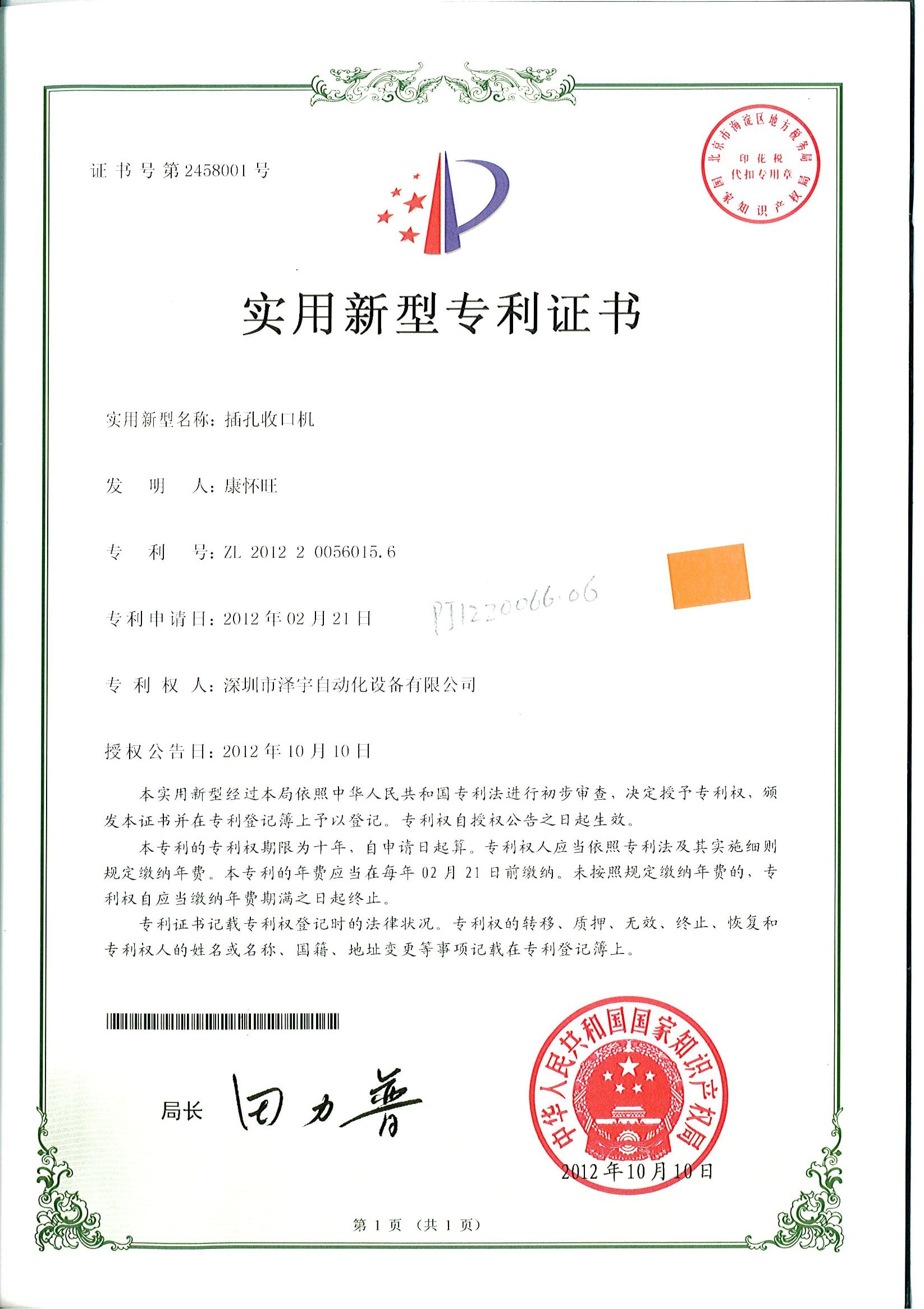
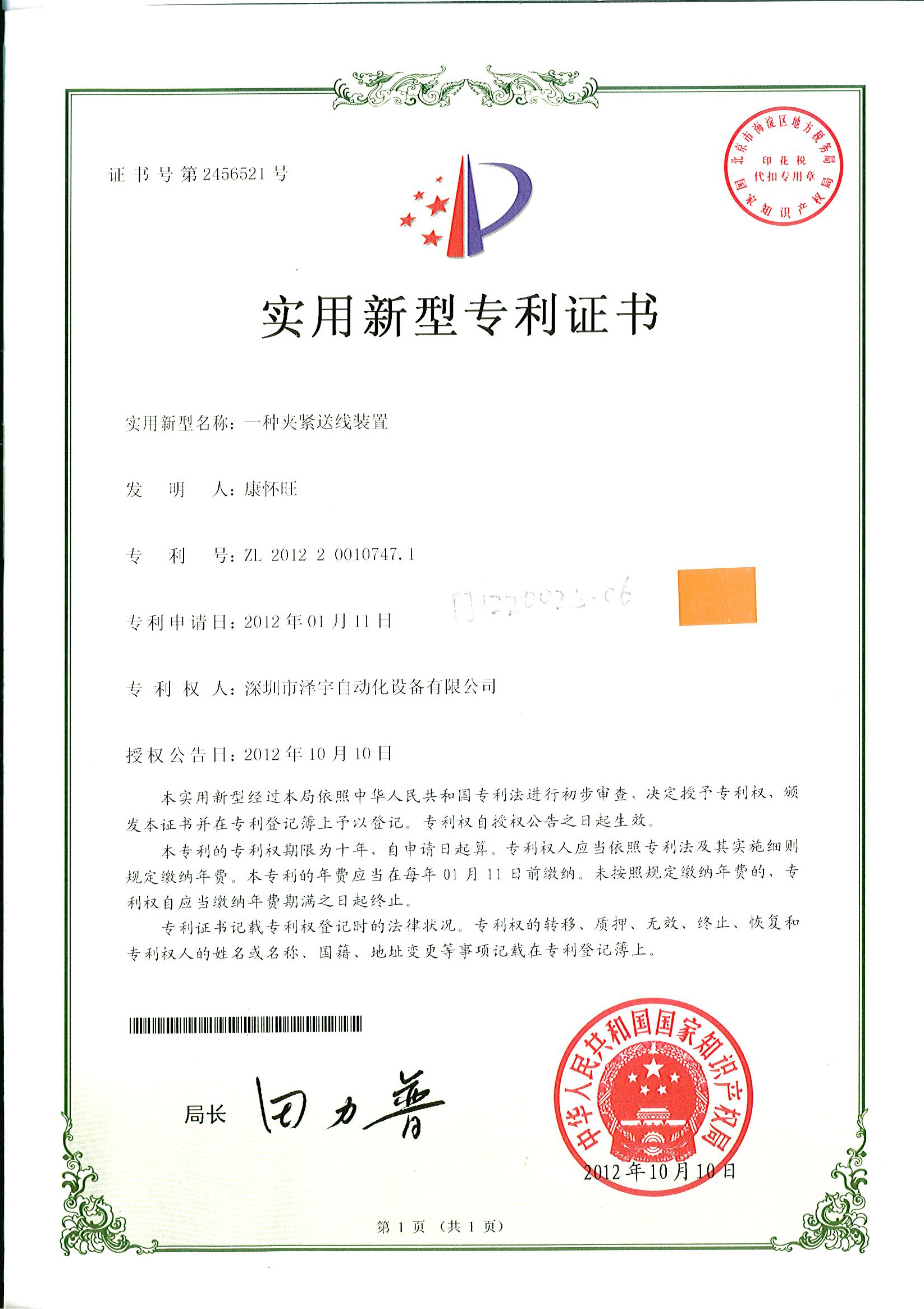
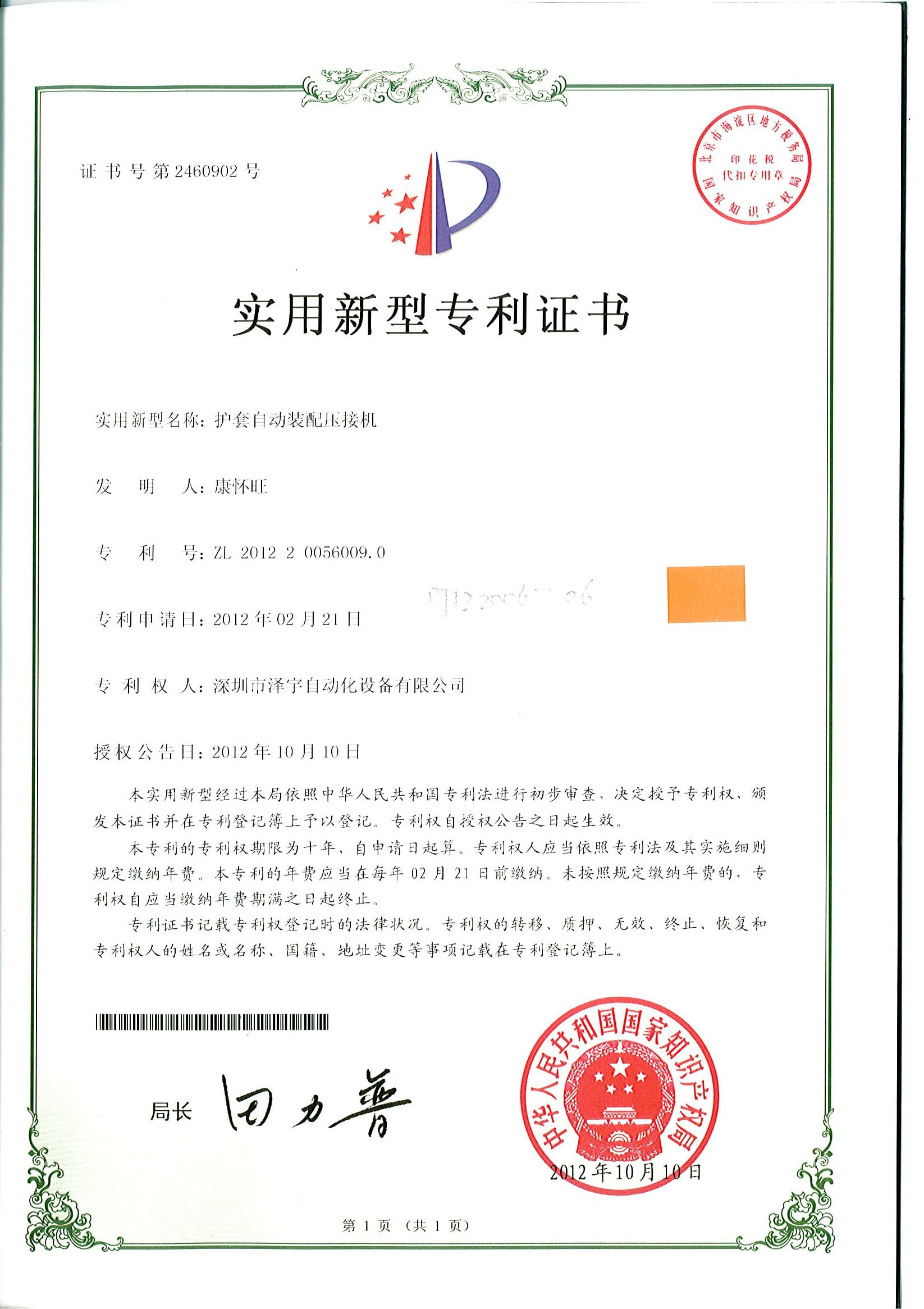
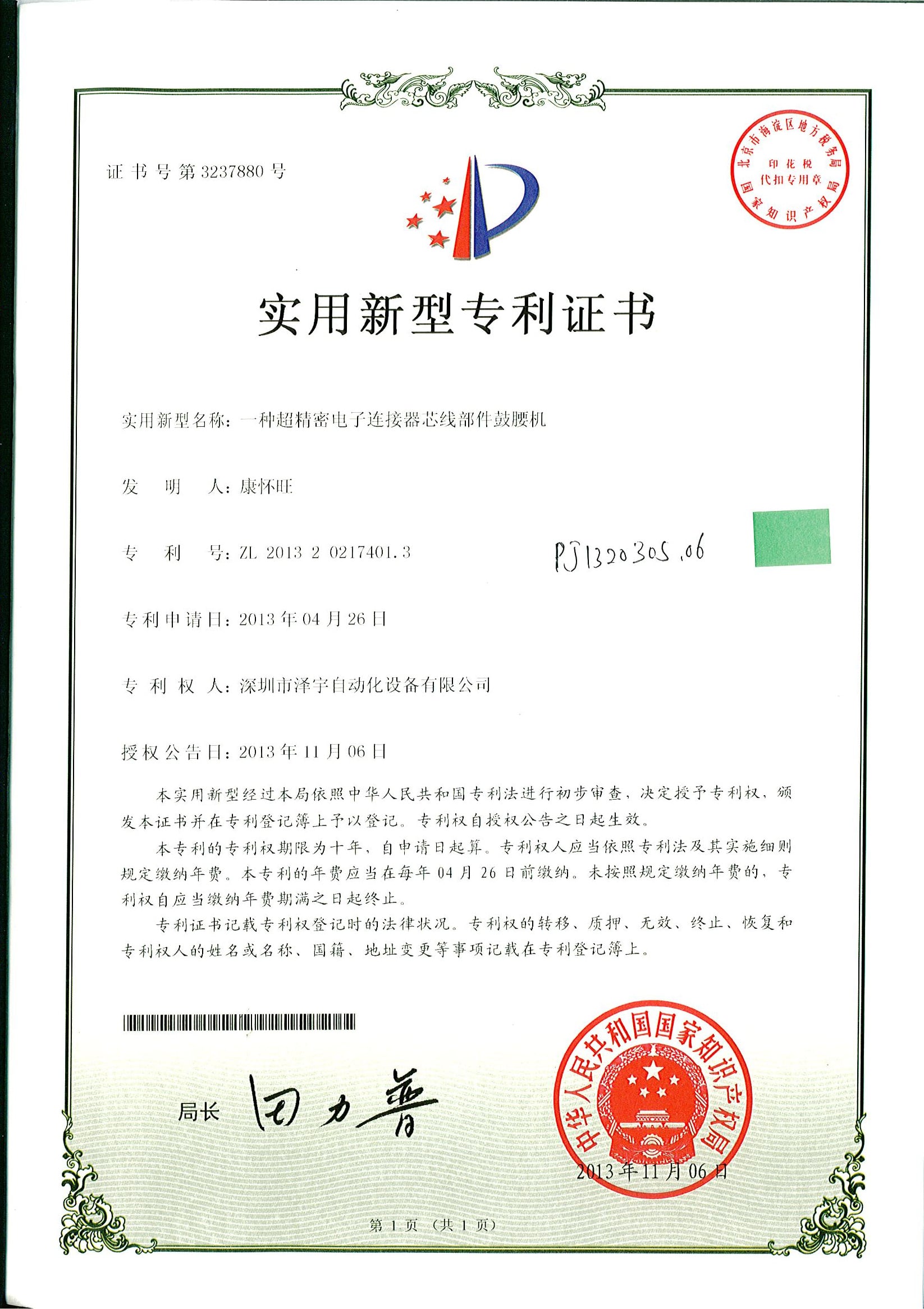
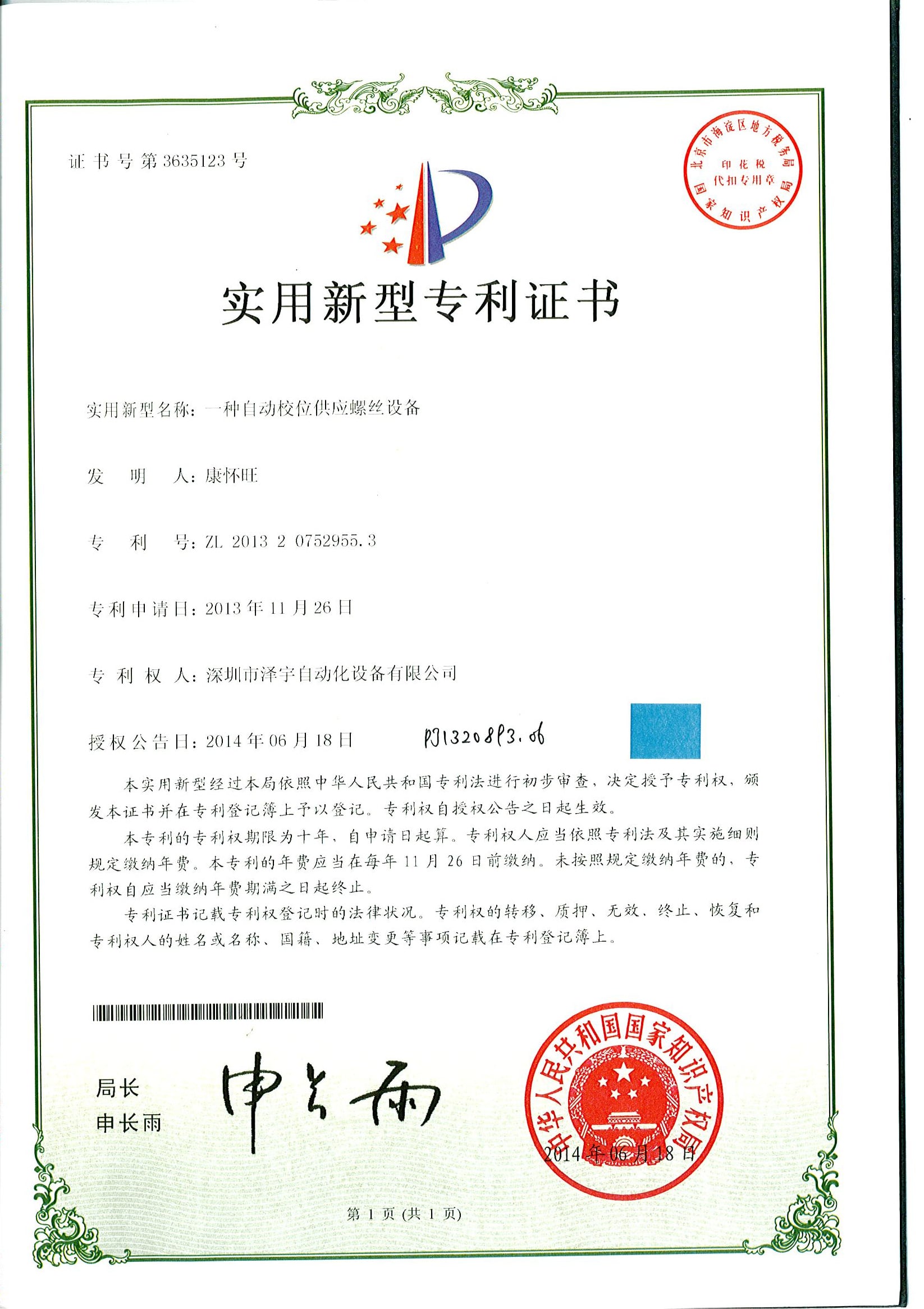
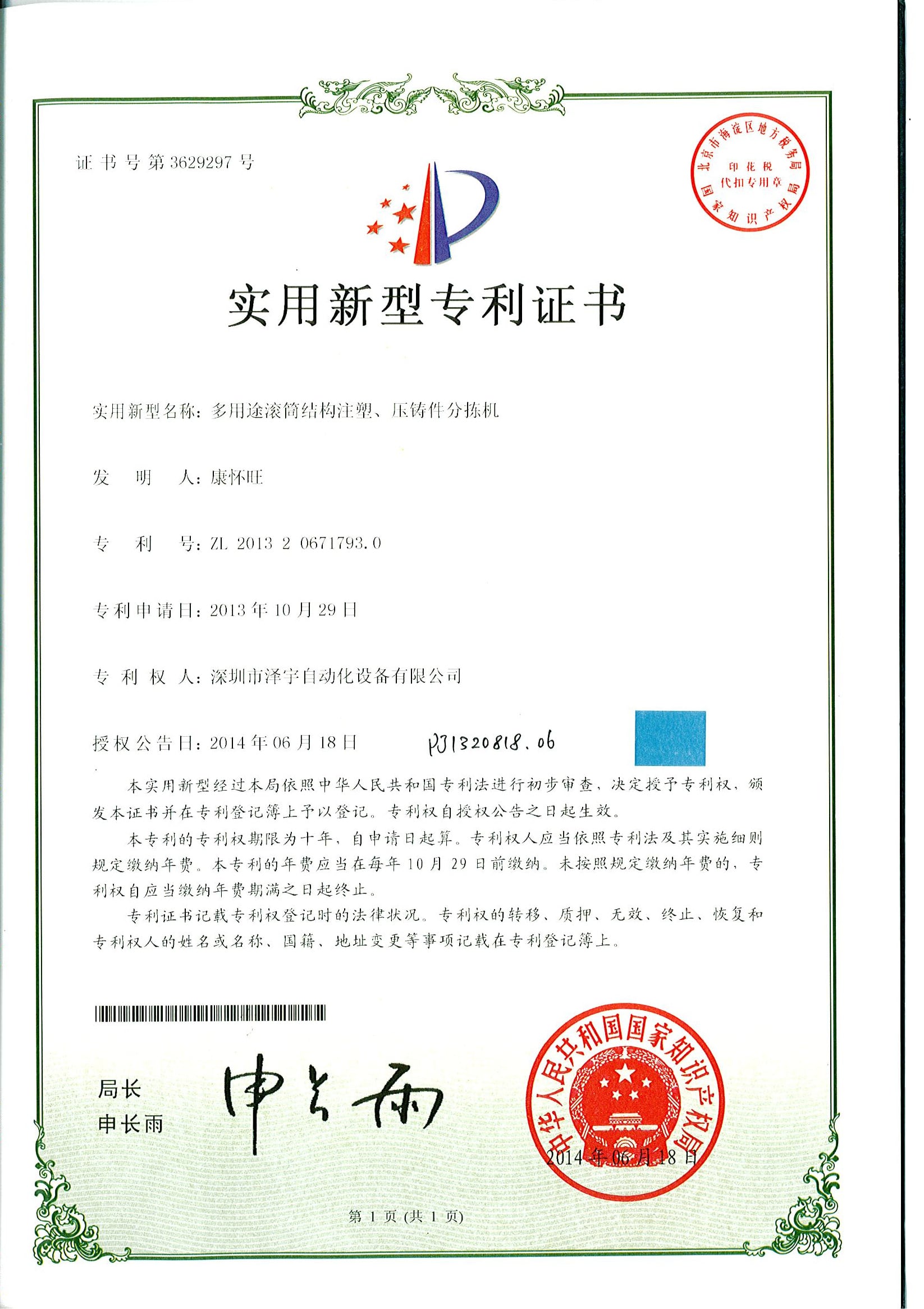
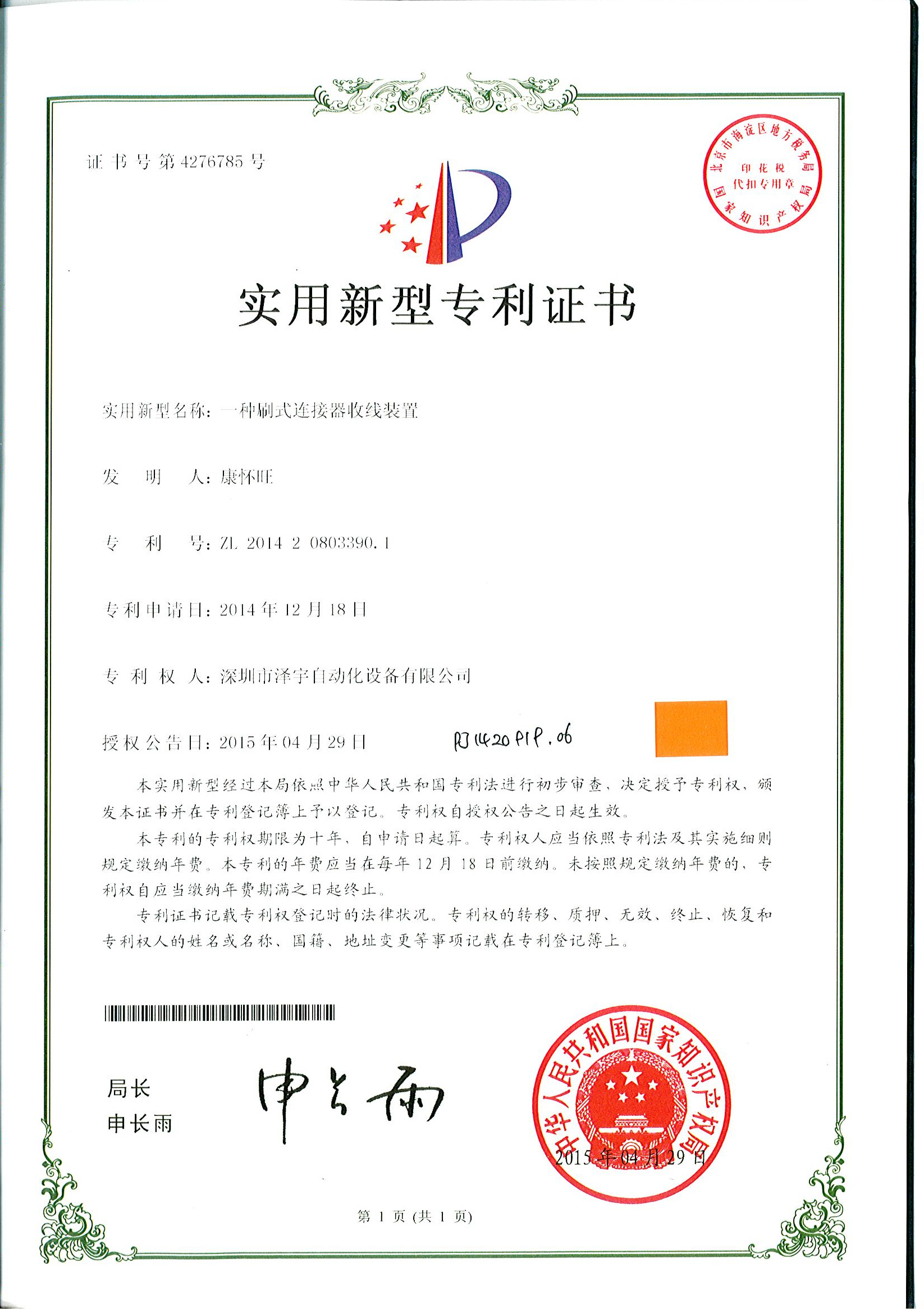
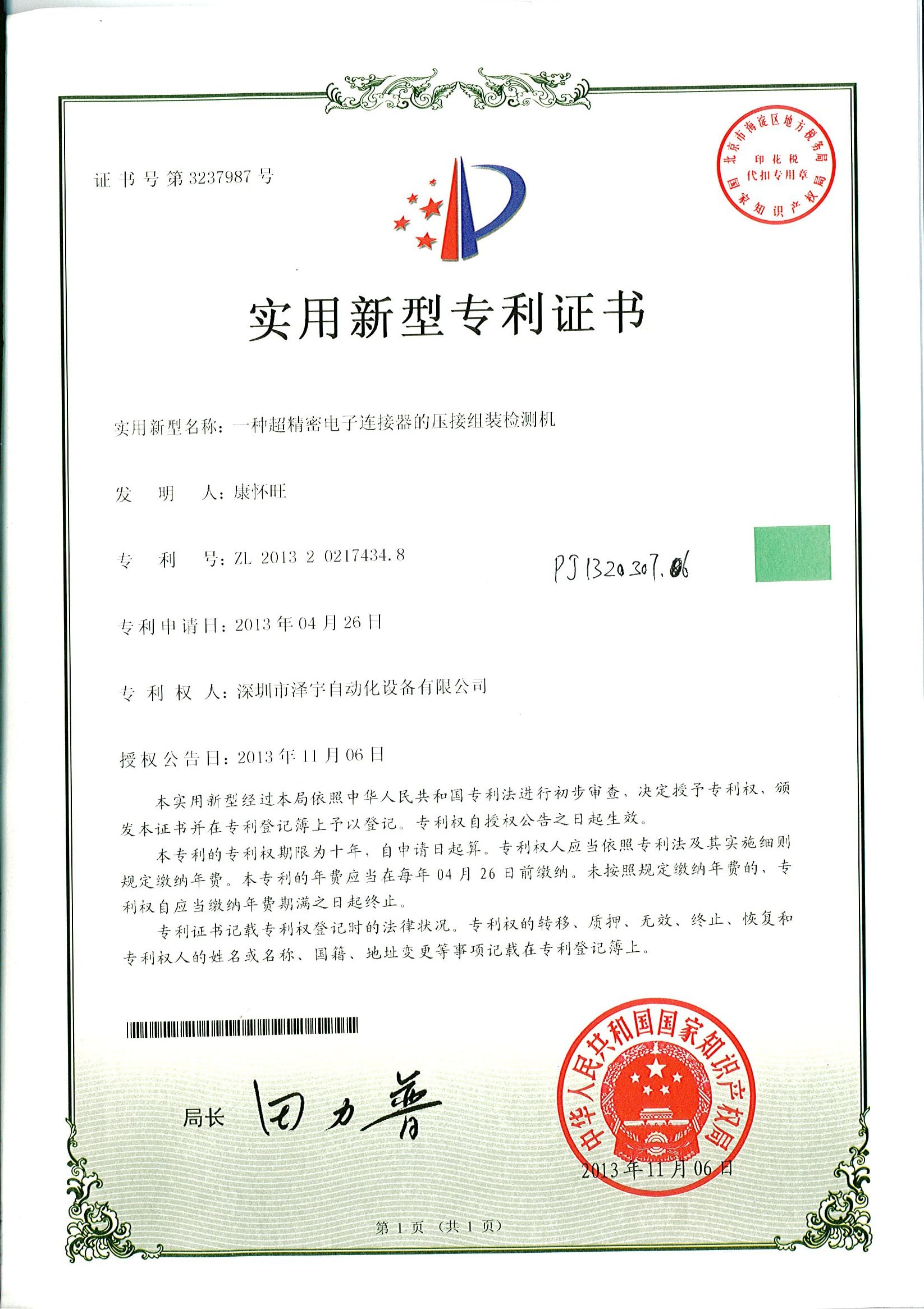
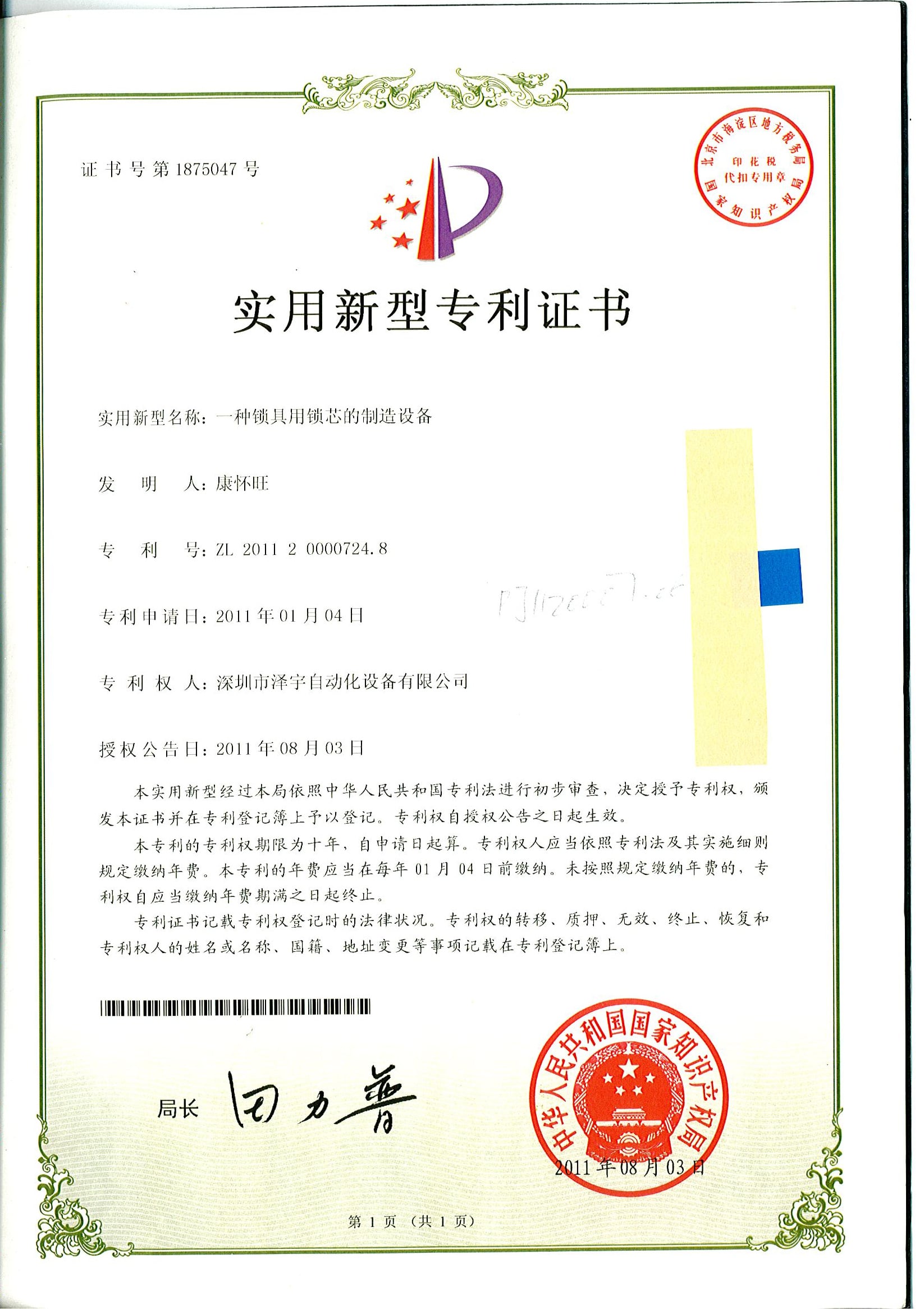
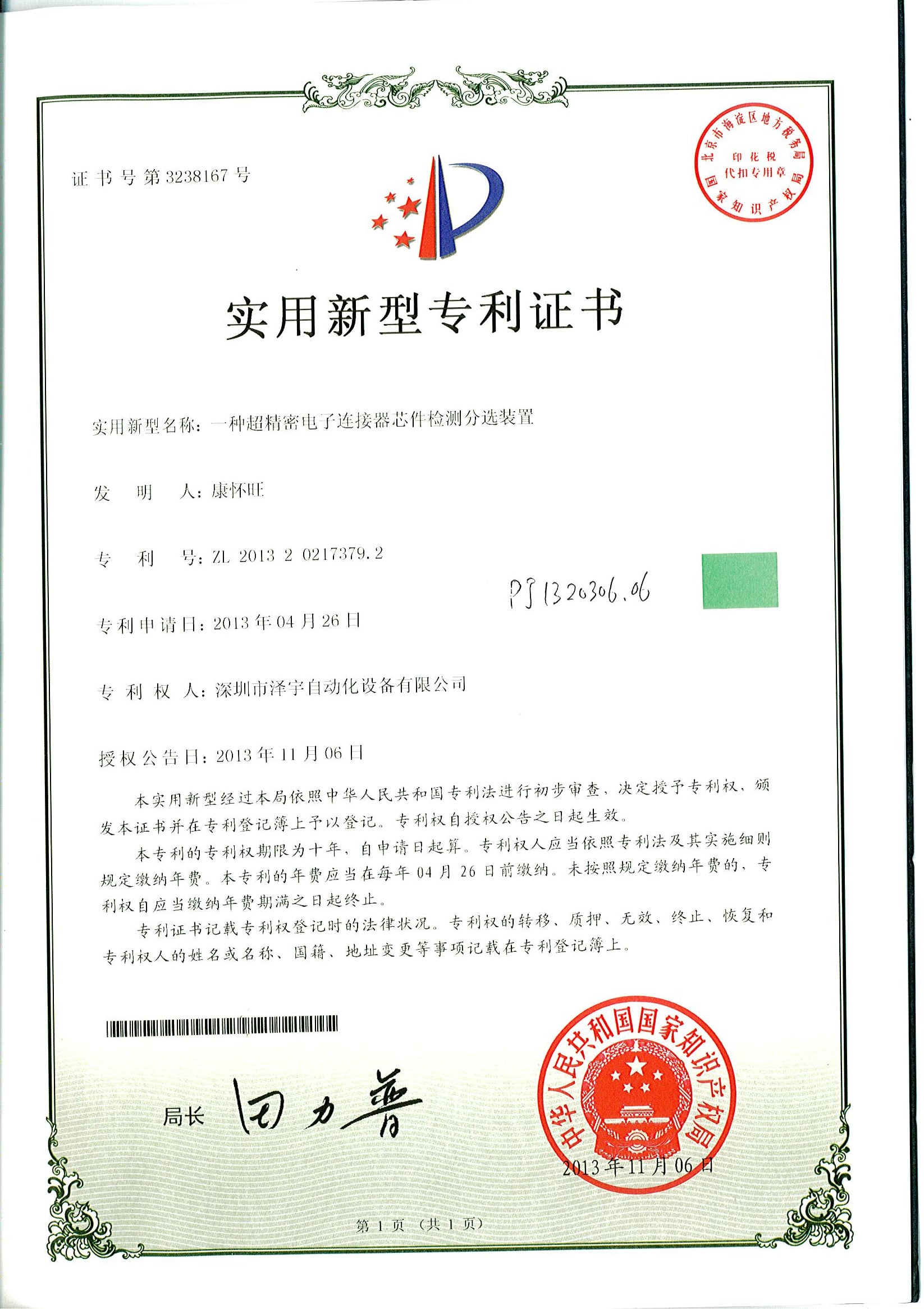
01/10
[ Patent Context ]
One honest note on the patents: the broader assembly-automation field is filing heavily on modular tooling, machine vision and flexible reconfiguration, from learning-from-demonstration assembly to single-operator closed-loop lines. ZEUEE’s own portfolio sits in connector and non-standard assembly mechanisms; we cite the wider patent activity as evidence of where the technology is heading, not as a claim over someone else’s IP.
[ Critical Validation Metrics ]
Two metrics decide whether a certified shop actually holds quality on your part. Process capability (Cpk) of 1.33 is the minimum acceptable level (about 63 defects per million); Cpk of 1.67 is the safety-critical threshold near Six Sigma (about 0.57 defects per million) that aerospace and automotive OEMs demand. Overall Equipment Effectiveness (OEE) of 85% is the world-class benchmark from the Nakajima TPM framework, the product of 90% availability, 95% performance and 99% quality. Our machines are designed to land inside those bands, then prove it at the factory acceptance test rather than asking you to take the number on faith.
Primary buyer roles: Procurement · Manager (budget approval)
How to Buy a Custom Assembly Machine, Specification, Lead Time and Acceptance
An engineered-to-order machine has no catalogue price, so a buying decision turns on three things a good supplier will put in writing: what drives the quote, how long the build take, and how the machine is accepted before it ships. Hidden risk here isn't country of origin, it's scope creep, which appears in 52% of automation projects and can drive 100%+ overruns without formal change control. A clear specification and a staged contract are the defense.
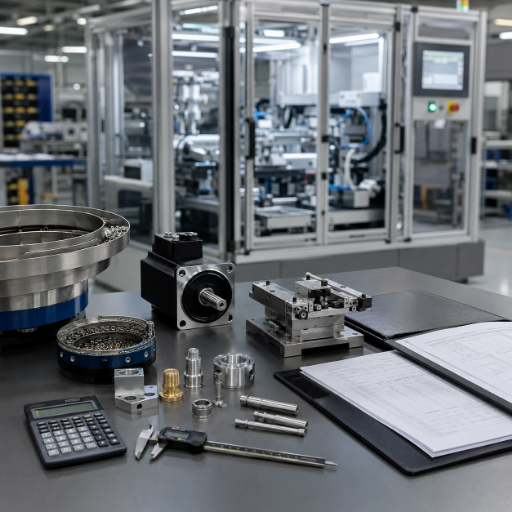
ZEUEE quotes a custom assembly machine from the parameters that actually move cost. Rather than a headline number that means nothing until the part is defined, the quote is built from:
- Part complexity and number of components assembled per cycle, more parts means more stations and feeders.
- Faster beats raise drive, indexing and feeder cost as the cycle-time target tightens.
- Vision and inspection scope—CCD position checks, missing-part detection and measurement each add a station.
- Your chosen architecture—rotary dial, linear transfer or robotic cell, follows the selector above.
- Quick-change tooling for changeover and flexibility across a product family cost more up front and less over the line's life.
For context, full custom systems run $250K–$2M+ industry-wide; ZEUEE's special-purpose machines are scoped below that band.
Your deliverable is a quotation built on your part. Contact ZEUEE for a quote with your component drawing and target volume, and the estimate come back inside one working day.
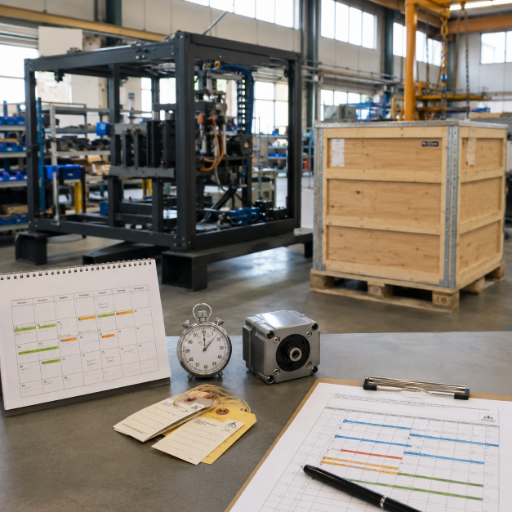
Lead-time risk is industry-wide, not offshore-specific. Small cells under $300K commonly quote 12–20 weeks; large systems above $3M run 36–52+ weeks even from domestic builders, and compressed quotes are usually a signal of corner-cutting rather than speed. We scope lead time to the build and state it in the contract, with staged milestone payments tied to design sign-off, build, and acceptance.
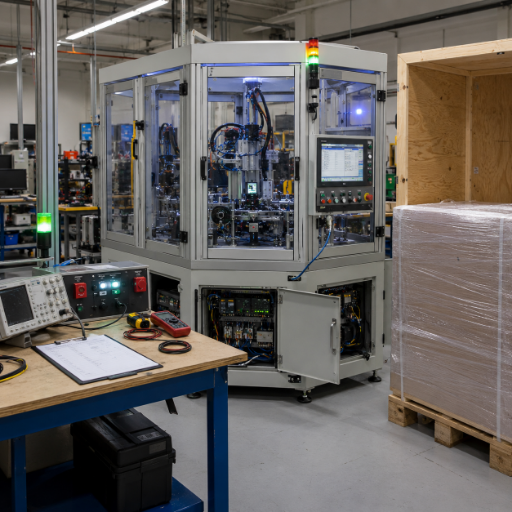
The single best protection against an offshore build is a documented factory acceptance test (FAT). International practice, IEC 62381 for the FAT/SAT sequence and ISO 13485 for medical-grade builds, requires the manufacturer to present the test procedure with pass/fail criteria for your pre-approval, so the machine is proven against your spec at the factory, not discovered at your dock. ZEUEE runs FAT with cycle-time, accuracy and yield criteria agreed before build, plus HS codes, packing list and commissioning documentation so the handoff does not force your maintenance team to reverse-engineer the machine.
Custom Assembly Machine Calculators & Estimators
[ Knowledge Base & Clarifications ]
FAQ, Custom Assembly Machine Cost, Cycle Time and Sourcing
How much does a custom assembly machine cost?
It is engineered-to-order, so price tracks the work rather than a catalogue number. Four parameters move the quote most: how many components are assembled per cycle, the cycle-time target you need to hold, the vision and inspection scope (a CCD position check or a missing-part detector each adds a station), and the architecture the part justifies. For context, full custom assembly systems run $250K–$2M+ industry-wide, while ZEUEE's special-purpose machines — pin inserters, terminal inserters, nozzle and plug assembly — are scoped below that band. Payment is staged against design sign-off, build and acceptance. Send a component drawing and a target volume, and a quotation comes back inside one working day.
When should I choose a custom assembly machine instead of off-the-shelf equipment?
Choose custom when an off-the-shelf unit forces your part to adapt to the machine — when the modifications you need are clunky and expensive, when your cycle-time or accuracy target sits outside the catalogue tolerance, or when manual labor is 30–50% of your production cost with no path to scale. Trade-press guidance puts a rough volume marker around 3 million units per year for fixed automation, but the threshold drops fast when parts are expensive, tolerances are tight, or the assembly has ten or more steps.
What cycle time and throughput can a custom assembly machine achieve?
Cycle time depends on architecture. Rotary dial indexes in 3–8 seconds, linear transfer runs 5–15 seconds per station, and ZEUEE's special-purpose models are verified at 25–45 pieces per minute.
What is the difference between a rotary dial and a linear transfer assembly machine?
A rotary dial moves the part in a circle past fixed stations and runs at the speed of its slowest station, which makes it fast and compact for stable, high-volume small parts but poor for widely varying station times or long-dwell processes such as curing and leak testing. A linear transfer moves the part down a line, supports 6 to 40+ stations and independent or buffered timing, and suits assemblies with many operations or mixed cycle times. That selector table maps both to volume and part profile.
What OEE and process capability should I expect from an automated assembly line?
World-class OEE is 85% — the Nakajima TPM benchmark, the product of 90% availability, 95% performance and 99% quality. Most discrete manufacturers actually run 60–75%, and anything under 65% signals losses that have not been addressed, so treat a vendor's headline OEE with the same scrutiny you would give an accuracy claim. For process capability, Cpk 1.33 is the minimum acceptable level (about 63 defects per million) and Cpk 1.67 is the safety-critical threshold for aerospace and automotive parts (about 0.57 defects per million, near Six Sigma). Custom machines are designed to land in those bands and prove it at the factory acceptance test, not on a demo run under loose conditions.
Is a cheaper custom automation quote actually the better value?
Usually not. A proposal that is 20% cheaper up front often costs 2–5x more over the machine's life, because the saving typically comes out of engineering, testing and documentation — the parts that prevent on-site troubleshooting and downtime. With unplanned downtime running $10K–$25K per hour, a single under-engineered shutdown can erase the upfront saving in days. Cost per part and total cost of ownership, not sticker price, is the defensible comparison.
How do I verify a Chinese custom assembly machine builder before a large order?
Four practical steps: request the business license and bank account name and confirm they match the entity on the quotation; ask for a live factory video call during local business hours to see the line running; request named customer references in your region and contact one or two directly (ZEUEE can provide connector-industry references such as TE, Amphenol and Yeonhab); and require a documented factory acceptance test with pass/fail criteria you pre-approve, plus an optional third-party pre-shipment inspection (SGS, BV or Intertek) at your cost.
Can a custom machine integrate with our existing line and control system?
Yes. Our control stack — Mitsubishi PLC and HMI, SMC pneumatics, Japan THK rails — stays familiar to maintenance teams and avoids proprietary-controller lock-in. Signal exchange, safety interlocks and the line handoff are written into the specification before build, so the machine drops in rather than forcing a retrofit.
How accurate is the assembly, and how is accuracy guaranteed?
Our pin-insertion machine holds 0.1 mm positioning, mapped to the ISO 9283 industrial-robot repeatability band of 0.02–0.2 mm. Accuracy is held by design — a CCD vision station checks position before the servo acts, and a missing-part detector halts the cycle rather than passing a defect — and it is proven at the factory acceptance test against the tolerance written into your specification, not asserted from a demo run under loose conditions.
WHY WE WRITE THIS
About ZEUEE Engineering Insights
ZEUEE shares technical guides based on real automation project experience. Since 2005, we have designed and manufactured non-standard automation equipment for connector assembly, wire harness production, robotic lines, vision inspection, and smart factory upgrades.
Founded in 2005
20,000 m² production base
120+ specialists
150+ R&D patents
ISO9001:2015 certified
![Automated Screwdriving: Torque & Cycle Time [Guide]](https://zeueeauto.com/wp-content/uploads/2026/10/automated-screwdriving-featured-150x150.png)