Get in touch with Zeyu lntelligent Industrial Company
Contact Form 使用中
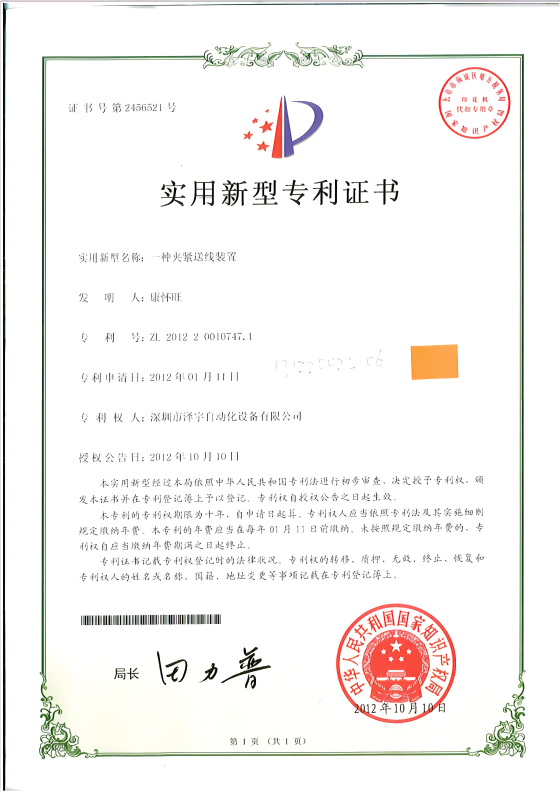
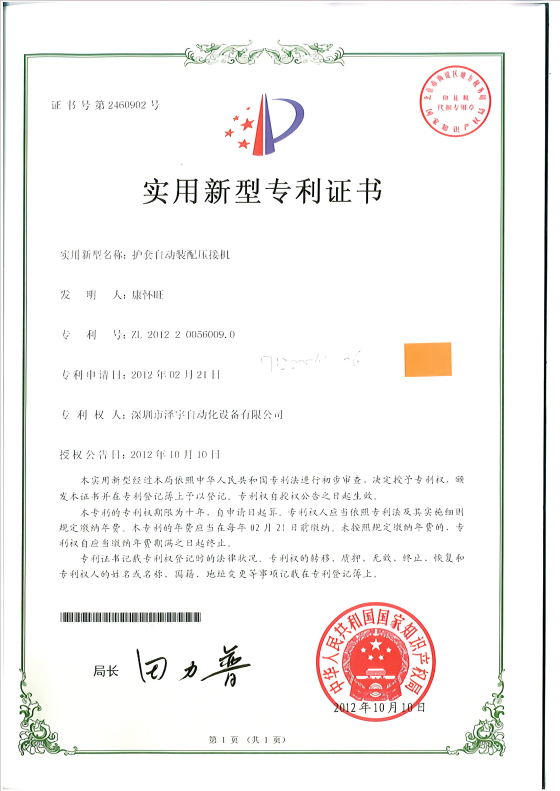
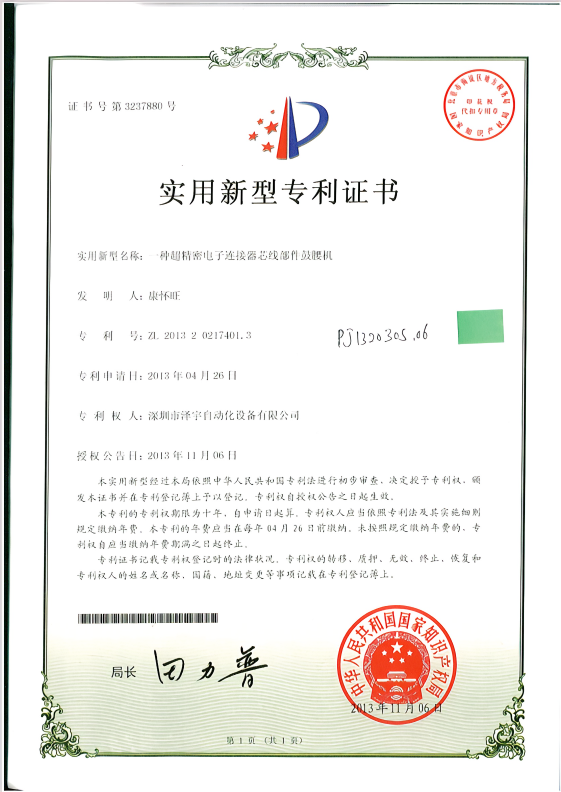
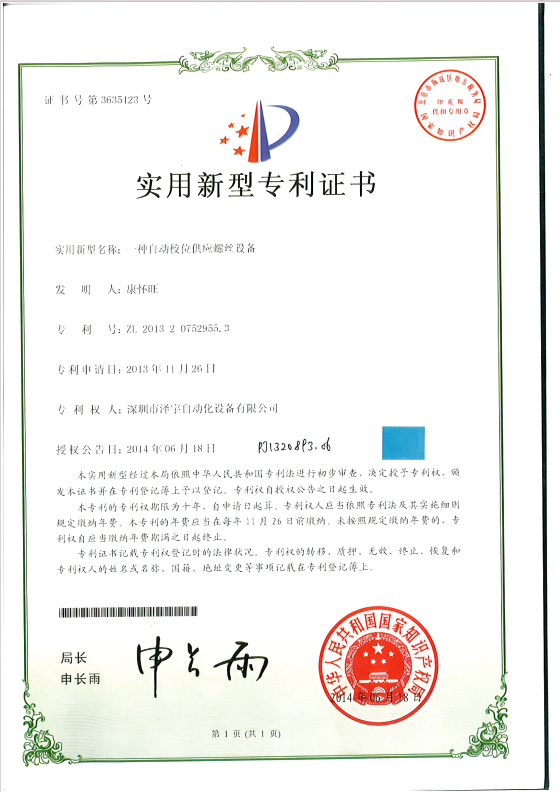
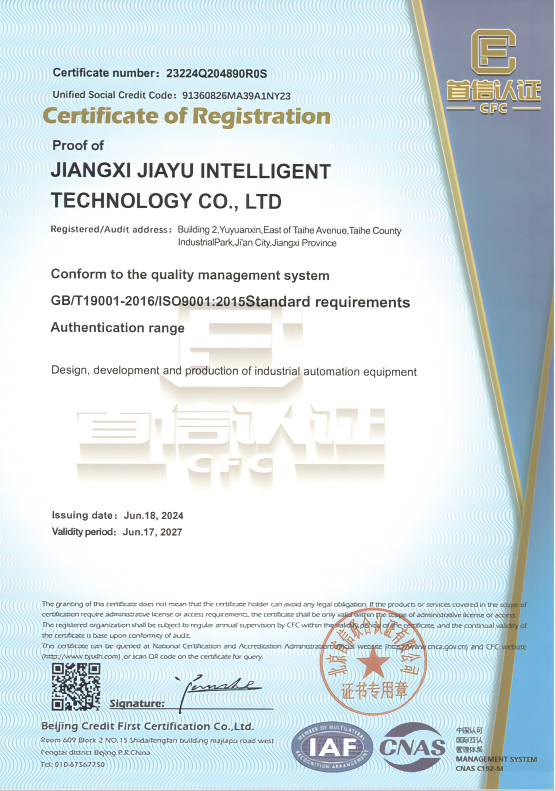
ISO 9001:2015 certified build, 150+ patents

DC Connector & Adapter Cable Line

Automated DC Connector & Adapter Cable Assembly Line

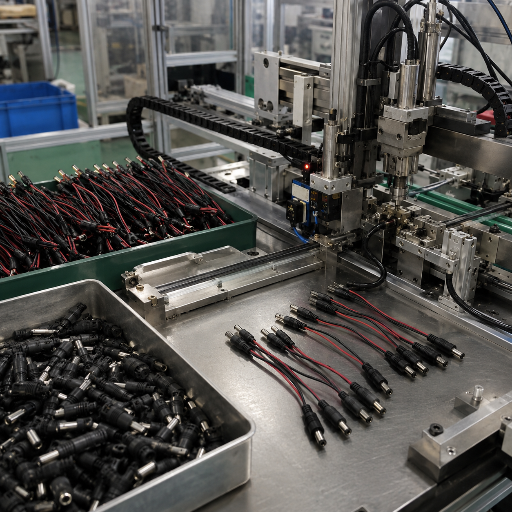
Strip, cut, crimp, solder, terminate connectors, overmold and test electrical aspects of dc adapter cables – in-line. For OEMs outgrowing the confines of a bench-based cell — from ZEUEE.

DC Cable Line at a Glance

8-stage: Cut → strip → crimp → solder → insert → overmold → CCD → test
IP67: Overmold strain relief, chemically bonded seal
Request a Line Configuration & Quote
Automated DC Connector & Adapter Cable Assembly Line
ZEUEE AUTOMATION
30+ Countries served, 20 years in automation
1 operator Replaces a multi-station manual cell
100% In-line electrical & CCD vision testing

Why Manual DC Cable Assembly Caps Your Output, and How a Full Line Fixes It

An automated cable assembly line for DC connector and adapter cables exists to break one bottleneck:

hand-built DC barrel and power-adapter cables hit a throughput ceiling that no amount of overtime clears. A DC adapter cable looks simple, a conductor cut to length, stripped, terminated to a barrel jack, and molded for strain relief, yet each of those steps carries a failure mode that compounds across an order of tens of thousands.

On a manual bench, crimp height varies among operators, solder connections depend on individual skill levels and exhaustion, and-of all parts of the wiring-the joint where the connector plugs into the wiring jacket (the strain relief) is responsible for the vast majority of all failures seen in the field. “When you cram the plug onto a moving assembly,” a contributor on an electronics discussion board sniped, “that plug see some real flexing, all of it at the pinhead. ” Without overmolding it to reinforce the point, that bend eventually snaps the connector pins, weeks after leaving the shipping dock. And, be warned: while correctly crimped connectors are as sound as solder, manual crimping will rarely deliver the consistently required pull-force specified by industry standards, and adding solder to a crimped connector actually *weakens* it, as solder slowly deforms under the crimping pressure (cold-flow).
System Solution

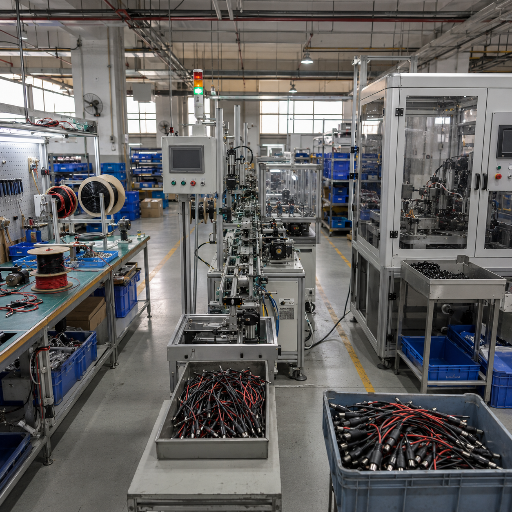
The ZEUEE DC Connector & Adapter Cable Line takes human variable out of each of those operations.

It links wire cutting, stripping, crimping or tinning, connector insert, injection overmolding and in-line 100% test into a continuous automatic material stream, ensuring the strain relief, the crimp and electrical continuity are made from the same recipe as item #1 on through item #50,000. It’s a ready to go, integrated package which can create DC connector and adapter cable assemblies at an even higher level of accuracy, efficiency and volume, and can demonstrate you’ll ship product tested, each and every time. You can find more detail on the processes, see a numerical comparison against other technologies as well as get the details on procurement.

Inside the ZEUEE DC Cable Line, Process Stages, Modules & Specs

The line is modular: every operation is done as a stand alone work station on a PLC controlled conveyor or transfer device, thus making the line fit your existing family of DC connectors and cable gauge instead of buying some one size fits all black box; The eight basic stages mimic how a DC adapter cable should be manufactured.

Stage 1

Cut & Feed

Wire feeding and cut-to-length with programmable length recipes per SKU.

Stage 2

Strip

Precision insulation stripping, single- or multi-core, with conductor-damage detection.

Stage 3

Crimp / Tin

Terminal crimping or solder-tinning with crimp-force monitoring.

Stage 4

Connector Insert

Automated housing and DC barrel/plug insertion.

Stage 5

Overmold

Vertical injection overmold for strain relief and sealing.

Stage 6

CCD Vision

Camera inspection of crimp, seating and overmold geometry.

Stage 7

Electrical Test

100% continuity, short and hi-pot verification.

Stage 8

Sort & Collect

Pass/fail sorting and finished-product collection.

The Overmold Stage Decides Field Reliability

Stage 5 is where a lot of the long-term quality resides, because the overmold is your strain relief. Running vertical injection, the integrated overmolding machine keeps the cable and connector motionless during the shot – an accuracy most horizontal injection molding machines can’t hold on a flexible assembly.

In this molding process the vertical injection mold cavity, custom-fit to the connector, clamps the assembly and injects a hot thermoplastic like TPU, PVC, or TPV over the connector body where it meets the cable jacket. Vertical-clamp overmolding machines of this kind hold the cable far better than an operator can, which is why the cable overmolding seal stays durable over time – it is the one piece of molding machinery on the line we never let a customer value-engineer down.

Deep Dive: Material Bonding & Strain Relief Specs

Jacket-to-overmold material selection becomes important; for a truly leak-proof, IP67-sealed overmolded assembly, the jacket and overmold materials must chemically bond rather than simply form a mechanical lock. In terms of strain relief durometer, we’re targeting Shore A 70-90-hard enough to avoid collapse in service, but soft enough to prevent overmold material becoming a rigid extension that simply moves the stress point down the cable.

The machine line accepts three overmold polymer families across our dc cable-build operations. The engineering choice as to which of those families gets used for a build primarily is dependent on the environment in which the cable will eventually be deployed. This decision matrix is the logic on which we configure the machine.

Overmold material Low-temp flex Oil / abrasion UV / ozone Best DC cable use
PVC (standard)Brittle below −20°CFairPoor (needs additives)Indoor adapters, office & consumer DC cords
TPU (industrial)−40 to −50°CExcellentGood (UV-stabilized)Robotics, factory-floor & outdoor DC cabling
Santoprene / TPV−60 to +135°CGoodExcellentEV charging, marine & sealed IP67/IP68 connectors

When considering dc adapter cables being put to use in automation or outdoors, TPU tends to be the go-to option – in part because it will mold onto the TPU jacket and will maintain flexibility at −40°C, but also in part because it provides some chemical resistance to the oils and greases that can embrittle some versions of PVC. For static indoor use only in an adapter assembly that must meet UL 94 V-0 flammability and when cost is at a premium, PVC will often suffice.

Advanced Applications & Engineering Quote

And where durability and resistance to harsh weather are the highest priorities-as they might be for, for example, an EV charging or marine connector, the Santoprene family of polymers offers significant advantages in terms of its resilience to ozone, a −60°C cold-start, and service up to +135°C. Where the mold compound matches the jacket, the finished cable is water-resistant far more reliably than those boots attached by hand. The physical attributes, whether the force required to break a bond, or how far the terminal is crimped in the terminal body, is monitored to those of the “working class” definitions specified in IPC/WHMA-A-620 for wire- and cable-assembly acceptability.

“We will tailor the size of the overmold tool, the specific strain-relief durometer,to an actual dc cable jacket-prior to ordering steel. For any of the dc barrel cables, it’s the plugs where we see the overwhelming number of returns, so our product line on that application will include this vertical-injection overmold-there’s not one product or customer that will be able to de-scope that-plus all associated and integrated in-line quality controls,” the system’s chief engineer added.

— ZEUEE Engineering Team, Automation Equipment Division
Configurable parameter Range / option
Line stationsCut · strip · crimp/tin · insert · overmold · CCD · test · sort (configured to SKU)
Processable cableSingle-core & multi-conductor DC power / adapter cable, configurable gauge range
Connector typesDC barrel jack, DC plug, housing/terminal connectors — tooling per family
ThroughputConfigured to product; comparable in-market full-auto cable lines run 300–600 pcs/h
Power / air220V/50Hz (customizable); pneumatic supply 6–8 MPa
InspectionCCD vision + 100% electrical continuity / short / hi-pot
ControlPLC with recipe storage and changeover presets per SKU

Beyond that, the throughput parameters of the machine (whether this will be a high-volume product or a lower-volume, high mix), the gauge size range(s), and even the connector tooling will all be specified at purchase order so it’s all up to the customer at this point. All that’s then built into the total-cost-of-ownership calculation, and that’s how we draw comparisons against other approaches, whether domestic or imported.

Automated Line vs. Manual Cells vs. Imported Systems

It rarely comes down to “to automate, or not?” – it’s often “automate with which supplier?”.

Capital investment opportunities for a DC cable maker could lie in maintaining the manually-driven cell, purchasing a western designed and made line, or developing a Chinese manufactured line of complete design – here below represented on axes that matter to purchase decision makers – and calibrated not on concept rating but on market place automation benchmarks – for the DC cables market industry :

Automated Line vs Manual Cells vs Imported Systems Comparison
Factor Manual cell Imported branded line ZEUEE DC cable line
Output consistency Operator-dependent Machine-controlled Machine-controlled + 100% test
Quality defect rate Variable, fatigue-driven Low Low, CCD + electrical verified
Labor per line Multiple stations 1–2 operators ~1 operator
Capital outlay Lowest upfront Highest Mid — branded performance, lower entry
Spare-parts lead time n/a Often weeks, cross-border Stocked program + fast response
DC-cable specialization Manual flexibility Generic wire-processing Built around DC barrel/adapter + overmold

Across automation broadly, a well-planned project can pay back between 18 and 30 months while providing a return to investment around 25% and 45% a year and boost throughput by anywhere from 35 to 60% and reduce errors substantially over its non-automated cousin. A whole production line falls towards the higher end of those numbers. A whole line can require a 24-48 month payback, which is why the supplier of that automation project matters more to a 25%+ ROI than being best in class on any individual spec. Next section converts that to a TCO perspective.

Customer Results, Throughput, Scrap Rate & Labor Savings

ZEUEE has established more than 10,000 automation projects for over 20 years, shipping production equipment into the 3C electronics, automotive, new-energy, medical and precision-electrical plants in 30+ countries. Its history, among its customers, covers major global OEMs in competitive supply chains including but not limited to AVIC, China Shipbuilding, GAC, Corning, TE Connectivity, Sumitomo, LEGO, SONY, TCL, Foxconn, etc. A history more relevant to a DC cable provider as proof of line support for the life-time of production, than as a wall of logos.

AVIC
China Shipbuilding
GAC Group
Corning
TE Connectivity
Sumitomo
LEGO
SONY
TCL
Foxconn

TCO View, Where an Automated DC Cable Line Pays Back

18–30 mo

Typical automation payback
(full lines 24–48 mo)

25–45%

Annual return on the investment

35–60%

Throughput increase vs. manual

Industry automation benchmarks (manufacturing automation ROI studies, 2026), not ZEUEE-specific guarantees. Your payback depends on cable mix, volume, local labor rate and configuration. Request a custom analysis for a figure tied to your plant.

But the true ROI story–honesty requires us to admit this–isn’t primarily about labor displacement; it’s in avoided costs for defects, in revenue captured by capacity running on an automated lights-out second shift, and in warranty claims never to be processed because the product was electrically tested prior to shipping. Any producer who moves barrel-cable production from manual assembly to the automated tested line simply stops shipping those intermittingly failing strain-relief mechanisms which create returns – and these occur concentrated right at the plug transition a good overmold should be protecting.

How the TCO Math Actually Works

Here’s one handy way to frame the payback of a robot cell even before getting a quotation from an automation specialist. Think about your project costs and organize those into the four broad categories that the business cases of automation studies regularly reveal, in terms of their magnitude.

First, direct labor, is obvious – eliminated work stations times a fully loaded labor rate (which usually works out to around 1.4 the direct labor cost, once overhead has been factored in). The second is quality/rework (which can be a larger figure than labor over 3-5 years): every defective component caught during an inline inspection is a completed unit, saving you warranty costs down the road. The third is the capacity you can sell because the robot cell enable you to run two shifts lights-out and meet delivery requirements that you would never be able to commit to on a manual line. And the fourth, often more subtle factors include reduced floor space (as automation is more compact) and lower work-in-process inventory. This analysis need not be precise to reveal the economic picture; if the direct labor and quality elements of the business case alone return roughly a quarter to nearly half of the capital cost every year, then the selection of suppliers and the architecture of the solution is far more significant than the cost savings attributed to any individual element.

Where DC Cable Lines Land, Applications by Industry

The industry segments into which the DC connector and adapter cables assembled by these robots are sold represent a fairly contained, specific set. In 3C electronics and power products, where barrel-jack and DC power plug adaptors made with molded PVC prevail, higher through-put has to take precedence.

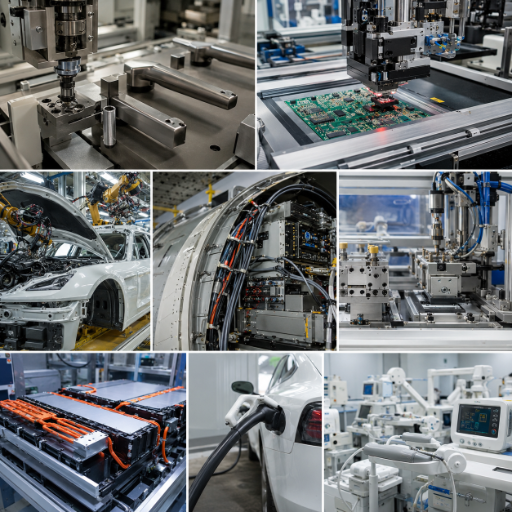
In new-energy vehicles and autos, however, an under-hood survivable environment and elevated levels of stress mean the cable compounds for which customers would specify TPU and molded, environmentally sealed connectors must be accommodated, and as EV and other vehicle designs move toward full electrification it means using Santoprene for its ozone and cold weather start-ability characteristics. In precision electrical applications and for medical instruments, which can never tolerate misconfiguration, what the robot provide at standard is traceability along with 100% verification in its end-of-line testing module. Since ZEUEE builds automation equipment for fields as varied as building hardware, 3C electronics, automotive, aerospace electronics, precision electrical, new-energy and medical, the building blocks of this DC connector-line automation are tuned to each of those connector and material profiles rather than fixed in one rigid construction.

Applications by Industry Cover
Interactive Report
Where DC Cable Lines Land, Applications by Industry
Click to Open Cover
ZEUEE QUALITY ZEUEE QUALITY ZEUEE QUALITY ZEUEE QUALITY

Certifications, Patents & Compliance

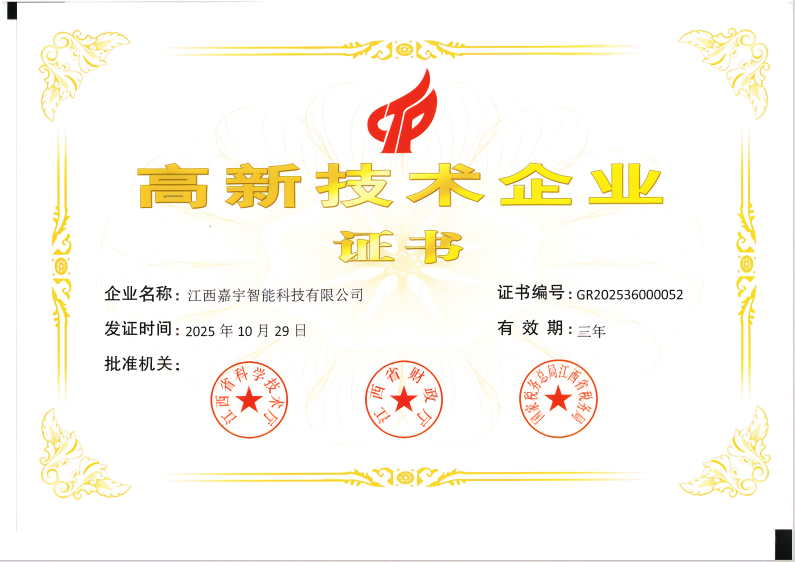
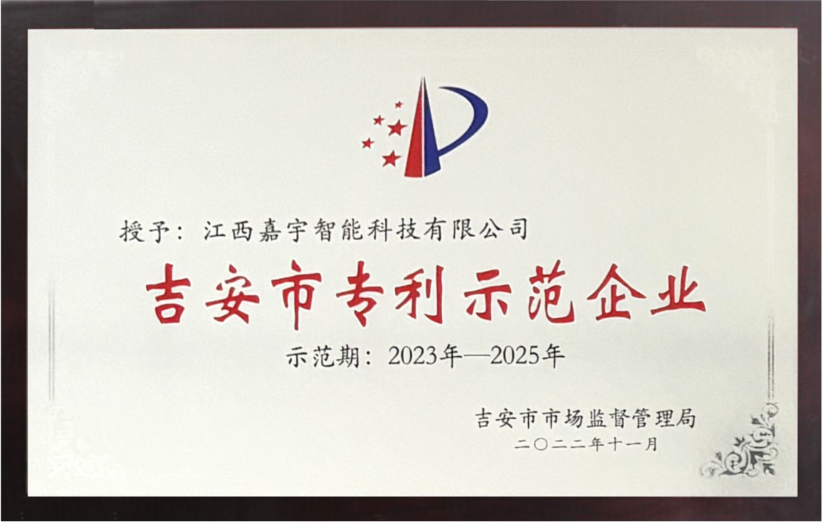
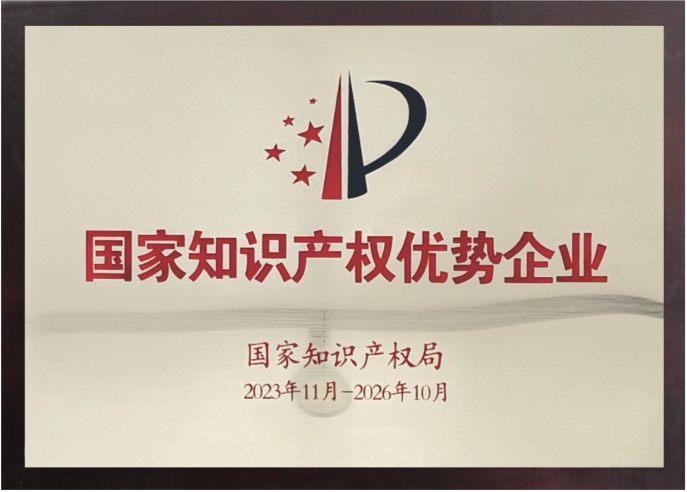
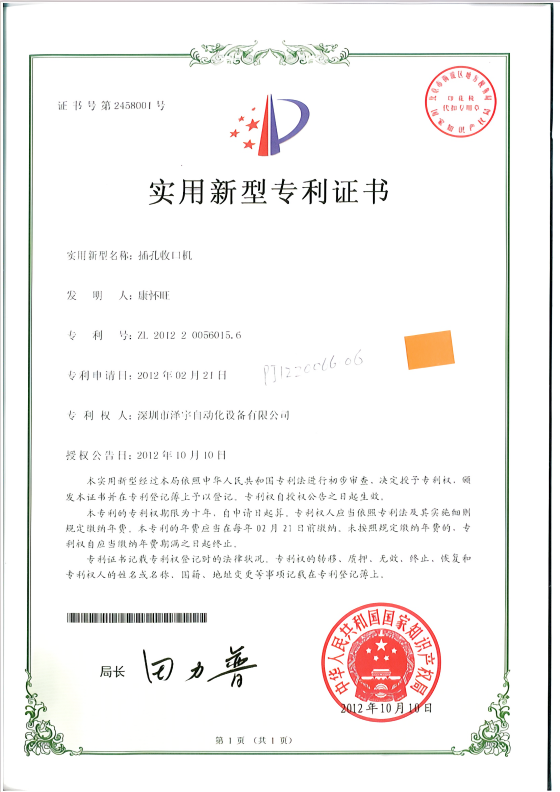
Especially for capital investment in a cross-border, highly complex sale, the certificate of the quality system itself serves to de-risk. This weighs heavily because, in the absence of local infrastructure, and because these are sophisticated machines producing critical components, a strong warranty supported by actual, registered patents provides a very real layer of confidence to any overseas buyer. ZEUEE provides a range of robotics and automated systems under a certified quality program and supports the capabilities it asserts in the design and performance claims of any of these types of cable assembly machines by an extensive patent portfolio.

Finally, it’s useful for any buyer to understand how the robots’ capabilities in producing components aligns with the customer audit and quality standards that will be in your own facility. Crimp pull-forces must meet or exceed the demands prescribed in IPC/WHMA-A-620, a.o. the crimp pull-force, which will be inspected by customer quality people, and over-molding will meet requirements for such things as fire rating (such as for a UL 94 V-0 if needed), and the conductor’s current-carrying capacity. Because ZEUEE plays a leadership role in China’s robotic- and intelligent-manufacturing communities-it holds positions within multiple domestic industry associations at levels such as council and vice-president-you’ll get the post-sales support needed to run operations efficiently (covered in next steps).

Read More

ISO 9001:2015

Quality management system certified

150+ Patents

32 invention + 68 utility-model patents

National High-Tech

National High-Tech & “Specialized-Innovative” enterprise

IPC/WHMA-A-620

Crimp & assembly to recognized workmanship classes
[ SYS.CHK_OK ]ID: ZQ-001
Cert 1
+
[ SYS.CHK_OK ]ID: ZQ-002
Cert 2
+
[ SYS.CHK_OK ]ID: ZQ-003
Patent Award
+
[ SYS.CHK_OK ]ID: ZQ-004
IP Award
+
[ SYS.CHK_OK ]ID: ZQ-005
Cert 3
+
[ SYS.CHK_OK ]ID: ZQ-006
Cert 4
+
[ SYS.CHK_OK ]ID: ZQ-007
Cert 5
+
[ SYS.CHK_OK ]ID: ZQ-008
Cert 6
+
[ SYS.CHK_OK ]ID: ZQ-009
Cert 7
+
[ SYS.CHK_OK ]ID: ZQ-010
Cert Base
+

Procurement Guide, Pricing Factors, Lead Time, Installation & After-Sales

When buying automation, the biggest expense surprise is rarely the hardware, it’s everything else. The industry reports are consistent on this: machine price accounts for only about 50%-60% of a project’s cost, while wiring installation, engineering, training, and implementation take the rest. And when it’s time to source the associated wire and cable on the consumable side, mold and testing fees often don’t show up in a bargain quote. A transparent quote names these dimensions up front.

  • 01 Pricing Factors
  • 02 Installation & After-Sales
CONTACT ZEUEE

What Actually Drives the Line’s Price

Rather than a particular number of stickers, it’s based on a mix of dimensions – once you realize what’s happening, you can bound the quote nicely.

Process steps

– a full cut, strip, crimp, overmold and test line is more costly than just one just simply strip and crimp process setup.

Connector & cable range

– each DC connector family needs its own tooling and changeover presets.

Overmold Tooling – (Cavities)

– Your molding equipment and material handling scale with the dimensions and quantity of your connector, and costs increase with higher numbers of cavities per mold.

Throughput target

– more pcs/h faster transfer and more stations working at once

Inspection level

– Add CCD vision and hi-pot stations, reduce warranty risk.

Your Plant’s Scope

– of integration-hardware install, production flow, line and MES integration.

Lead Time, Installation & the After-Sales That Matters

The absolute number-one silent killer in any automation implementation is a parts wait: a line idle for days due to a $200 servo or sensor that nullifies months of savings, a waiting game that could send that profitable new process backwards. This is why the after-sales piece of the transaction has to be on the front end of the buy process, not an appendix after the contract is signed. ZEUEE provides on-site install and commissioning, training for the operator and maintenance personnel, a full on-hand stock of critical spare parts, and rapid response through remote diagnosis – in other words, they do the same level of service to keep things running that major international OEMs already use. Many a buyer that hesitated on a machine manufactured in China (with legitimate and understood concerns in the market) will tell you that the on-going relationship, not the transaction, closed their subsequent deal.

Budget like a line, not like a machine. The most realistic budget makes integration its own line item instead of padding it into the machine price. Don’t neglect these cost centers: line installation needs electrical hookup, compressed-air supply, guard installation, line balancing and operator training. Depending on complexity, this ancillary work can run close to the equipment cost itself, so quoting integration as a distinct item protect the investment case you modeled. A defined commissioning process, a spare-parts list stocked before launch, and a training plan for operators and maintenance staff are what eliminate day-three problems. Since each line is tailored, exact pricing, delivery time and warranty terms are set against your specific design and production volume.

DC Cable Line Engineering & Configuration Tools

01

DC Cable Line ROI & Payback Estimator

Model the labor savings and payback window before requesting a quote. Estimates use published automation benchmarks — your real figures depend on configuration.

Access Estimator
02

Overmold Material Selector for DC Cables

Match the overmold polymer to your DC cable’s service environment. Guidance follows IPC/WHMA-A-620 strain-relief practice (Shore A 70–90).

Select Material
03

DC Cable Line Configuration Builder

Pick the stages and connector profile for your DC cable. Generate a configuration summary to attach to your RFQ.

Build Configuration

Frequently Asked Questions

01 Can one line handle different DC connector types and cable gauges?

Yes, the line is modular and recipe-driven. Each DC connector family (barrel jack, DC plug, housing connectors) is supported with dedicated tooling, and changeover between SKUs is handled through stored PLC presets. Share your connector range and the line is configured to cover it.

02 Is overmolding included, or is it a separate machine?

Overmolding is an in-line stage. A vertical injection station sits between connector insertion and inspection, so strain relief is produced in the same flow as cutting, stripping and crimping rather than as a separate offline step. Material is matched to your cable jacket for a true IP67 chemical-bond seal.

03 What overmold material should I use for DC adapter cables?

For indoor, cost-sensitive adapters, PVC meeting UL 94 V-0 is standard. For factory-floor, robotic or outdoor DC cabling, TPU is the working default, it stays flexible to −40°C and resists oils that crack PVC. For EV charging and sealed marine connectors, Santoprene/TPV handles −60 to +135°C and the best UV resistance. The line runs all three.

04 How does the cost compare to an imported branded line?

The line targets branded-level output consistency and 100% testing at a lower entry price, with a stocked spare-parts program that shortens the cross-border downtime that inflates the real cost of imported systems. Because configuration drives price, request a quote against your spec for a direct comparison.

05 What is a realistic payback period?

Industry automation studies put well-planned projects at 18–30 months, with full production lines typically at 24–48 months. Your figure depends on cable mix, volume and local labor rate, ZEUEE will model a payback estimate for your specific plant on request.

06 Do you support installation and training overseas?

Yes. ZEUEE provides overseas installation and commissioning, operator and maintenance training, remote diagnostics and a critical-spares program. The support model is built for the 30+ countries already served.

Configure Your DC Connector & Adapter Cable Line

Email us your cable drawing, connector family and estimated volume. ZEUEE engineers will scope the most efficient setup and configuration to build around your project, not our standard catalog.

Request a Line Configuration & Quote