Get in touch with Zeyu lntelligent Industrial Company
Custom Automation Equipment: A Buyer’s Guide (2026)

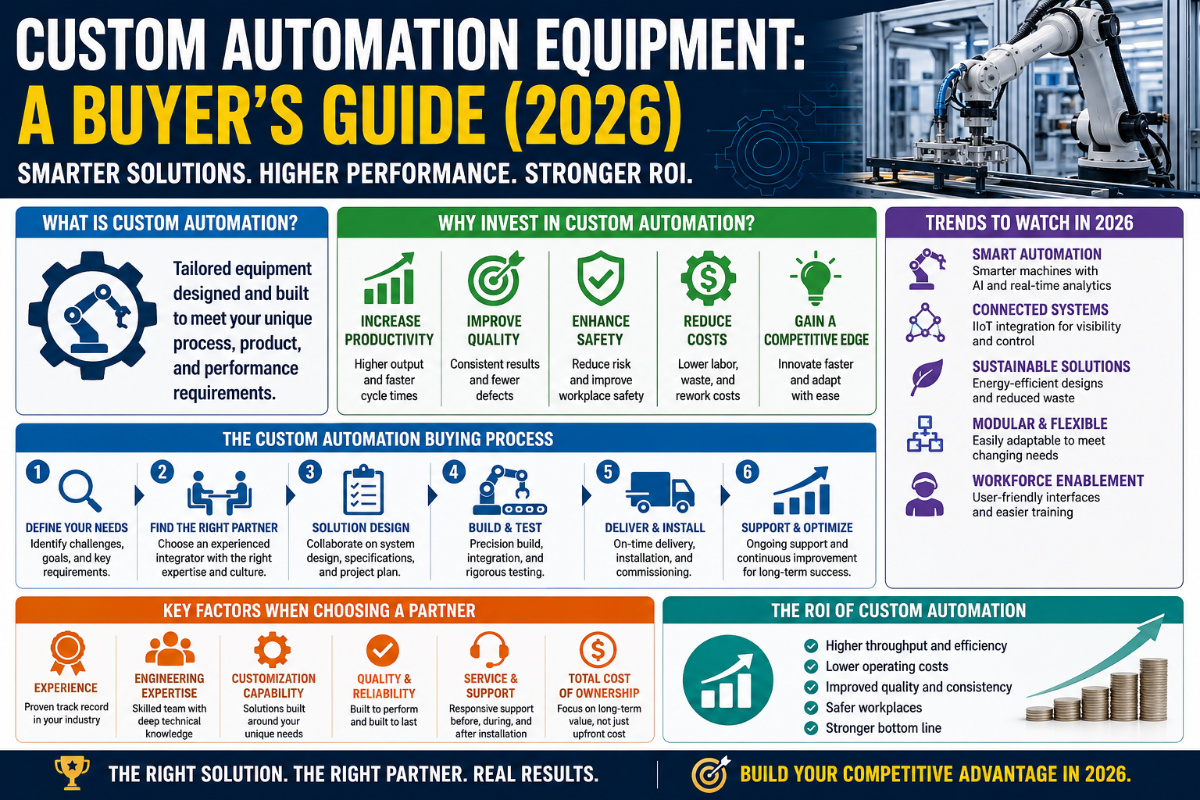
Custom Automation Equipment: How to Specify, Cost, and Buy It Right
Updated June 2026 · Reviewed by the ZEUEE technical team
Custom automation equipment is machinery engineered around one specific part, process, or throughput target instead of being bought off a catalog. If a standard machine cannot hold your tolerance, merge three of your process steps, or hit the cycle time your line needs, a custom build is usually the next step. This guide explains what custom automation equipment is, the four classes it falls into, when it beats off-the-shelf, how it gets designed and accepted, what it costs, and how to vet a builder before you sign.
Quick Specs: Custom Automation at a Glance
| Typical price band | ~US$150,000 (semi-automated station) to US$1.5M+ (turnkey line), industry-reported, 2026 |
| Lead time | 8–14 weeks (single cell) to 9–14 months (integrated line) |
| Acceptance standard | Pose accuracy & repeatability tested per ISO 9283; safety per ISO 10218 |
| Best-fit volume | Mid-to-high volume, or any volume where a catalog machine simply does not exist |
| Core decision | Build custom vs buy standard — run the 5-Signal Screen below |
What Is Custom Automation Equipment?
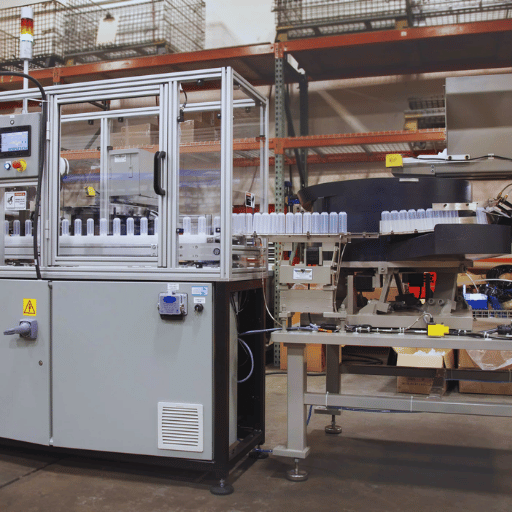
Custom automation equipment is a machine or system built to your exact part and process rather than sold as a standard model. A catalog machine is designed for a wide group of buyers, so it makes compromises. A custom build removes those compromises: the fixtures, the motion, the sensors, and the control logic are all shaped around one job. Its trade-off is that you pay for engineering time and wait for a build, instead of ordering from stock.
People also call this a custom automation system, non-standard automation equipment, or custom automation machinery — and at the cell level, a special-purpose machine. Those labels overlap. What they share is the idea that the automation system is engineered to fit the work, not the other way around. Either way the goal is the same: hold quality while lifting productivity.
Custom work sits at the precise end of a wider field. Standard industrial automation and factory automation cover the catalog machines most plants start with, and manufacturing automation as a whole spans everything from a single conveyor to a full plant. Custom automation engineering begins where those automated systems stop fitting — when the part, the manufacturing process, or the quality control requirement is specific enough that off-the-shelf industrial automation equipment and other automated equipment leave a gap. Whether you call it a custom automated machine, custom automated machinery, or complete custom automation, the result is tailored automation: systems tailored to your line rather than the reverse. This is the same capability behind ZEUEE’s custom automation equipment solutions, where the machine is scoped to a customer’s part before anything is cut.
💡 Pro Tip
The fastest way to tell custom from standard: ask the seller for the model number. If the answer is a model you can look up and order, it is standard. If the answer is “we engineer it to your part,” it is custom — and your contract should cover design ownership, not just delivery.
The 4 Types of Custom Automation Equipment
Custom automation is not one thing. It spans simple operator-assist cells up to fully unmanned lines. A cleaner way to organize it borrows the four classic automation categories — fixed, programmable, flexible, and integrated — and maps real equipment onto them. Globally the installed base keeps climbing: the IFR World Robotics 2025 report counts 4,664,000 industrial robots in operation worldwide in 2024, up 9% year over year, with 542,000 new units installed that year. Many of those robots sit inside custom robotic systems and cells like the ones below.
The 4-Class Custom Automation Spectrum
Use this matrix to place your application. Most factories need one or two of these classes, not all four at once.
| Equipment type | Class | Typical throughput | Best-fit volume |
|---|---|---|---|
| Operator-assist / poka-yoke cell | Programmable | 3–8 parts/min | Low–mid, high mix |
| Pick-and-place robotic cell | Flexible | 10–40 parts/min | Mid |
| Special-purpose assembly machine (SPM) | Fixed | 10–60 parts/min | High, low mix |
| Rotary indexing machine | Fixed | 20–120 parts/min | High |
| In-line dial / synchronous machine | Fixed | 30–150 parts/min | Very high |
| Machine-vision inspection station | Flexible | Matches line rate | Any (quality-driven) |
| Automated test / functional-test station | Programmable | Cycle-bound by test | Any |
| Robotic welding / dispensing cell | Flexible | Part-dependent | Mid–high |
| Integrated production line | Integrated | Balanced to takt | High |
| Smart / unmanned line (data-linked) | Integrated | 24/7 lights-out | Very high |
Each row maps to a real ZEUEE capability page — for example custom assembly machines, machine vision inspection systems, automated testing equipment, robot integration, and smart factory solutions.
In practice these automation solutions are built for automotive, medical device, electronics, aerospace, pharmaceutical, and food processing makers, and they cover material handling, assembly automation, inspection, and test inside clean manufacturing environments and precision machining cells. Which class you need follows the work: a medical device line that demands 100% traceability leans toward a vision-equipped cell, while a high-volume automotive part leans toward a fixed special-purpose machine.
What is the difference between assembly equipment and automated assembly equipment?
Assembly equipment is any tooling that helps a worker put parts together — a press, a fixture, a hand tool. Automated assembly equipment performs the joining itself, moving, placing, fastening, and often checking parts with little or no operator input. The line between them is who does the work: a person guided by a fixture, or a machine that runs the sequence.
Most custom builds sit on the automated side, which is why a search for automated assembly machines usually ends at a custom solution.
Custom vs. Off-the-Shelf: When Each Wins
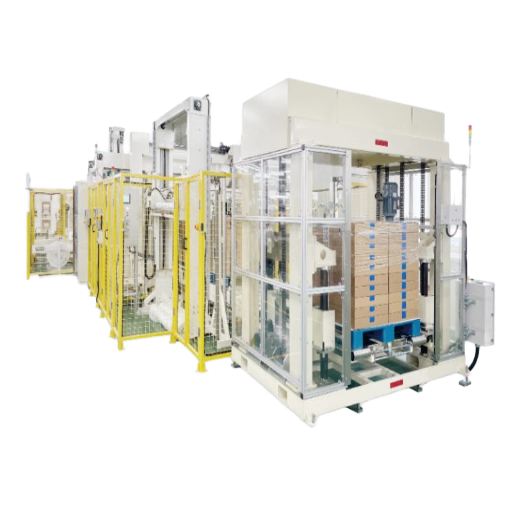
Here is the honest version: custom automation is not always the right answer. Industry analysis of automation ROI and productivity and field experience both show that for a single, proven, high-volume process, a standard machine is usually cheaper and faster to deploy. Custom earns its premium when the standard option forces a compromise you cannot live with. We will not claim every line needs a bespoke machine — that is a sales pitch, not engineering.
Done right, custom automation solutions improve quality by building automated quality checks into the workflow instead of after it. For many manufacturing operations the new equipment is less about replacing people and more about solving manufacturing challenges that manual work cannot — lifting manufacturing capabilities across one or more manufacturing facilities and turning a bottleneck into automated manufacturing that holds rate. Turnkey custom automation or turnkey manufacturing automation packages deliver the whole set: the custom automated systems, the automated machines, and the manufacturing automation solutions that tie them together as a single manufacturing solution.
The 5-Signal Custom-or-Standard Screen
Run your application through these five yes/no signals. Three or more “yes” answers usually point to a custom build.
- ✔ Non-standard geometry or process. Your part or assembly step is not something a catalog machine is built for.
- ✔ Throughput gap. No standard machine hits the cycle time your demand requires.
- ✔ Multi-process merge. You want to combine two or more steps (place, fasten, test) into one cell.
- ✔ In-line quality and traceability. You need 100% inspection or part-level data the standard machine cannot capture.
- ✔ Frequent changeover. You run several variants and need fast, repeatable switchovers.
| Your situation | Recommended path | Why |
|---|---|---|
| Single proven process, >1M units/yr | Buy standard | Catalog machine exists and amortizes fast |
| Unusual part geometry, no catalog fit | Build custom | Standard tooling cannot hold the part |
| 3+ steps you want in one cell | Build custom | Integration removes handling and WIP |
| 100% in-line inspection required | Build custom (vision) | Catalog machines rarely embed QC + data |
| Tolerance tighter than standard rating | Build custom | Off-the-shelf may not fit high-precision specs |
| Low volume, occasional run | Operator-assist or manual | Full automation rarely pays back |
| Many variants, fast changeover | Custom flexible cell | Recipe-driven tooling beats rigid lines |
| Standard machine exists but is 80% there | Hybrid (retrofit) | Add custom modules to a base machine |
| Process still changing month to month | Wait / pilot first | Freeze the process before you tool it |
✔ Where custom wins
- No catalog machine fits the part
- Several steps merged into one cell
- In-line QC and part-level traceability
- Tight, repeatable precision (sub-0.1 mm)
⚠ Where standard wins
- One proven, stable high-volume step
- Tight budget and short timeline
- Low volume that will not pay back
- Process not yet frozen
How Custom Automation Equipment Is Designed and Built
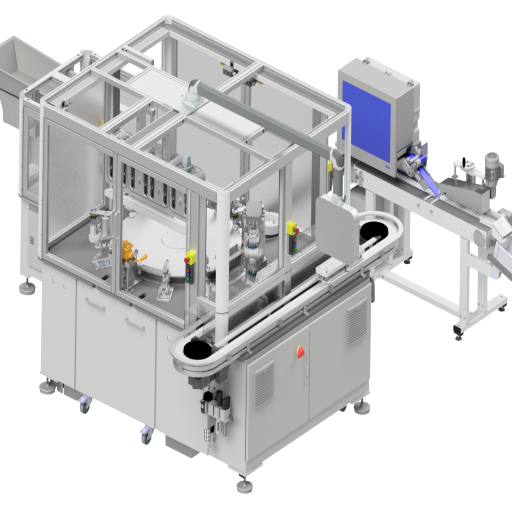
Custom builds follow a fairly consistent path from concept to a machine you sign off on. Work usually starts the way many factories scope a machine: with a time-and-motion study of the manual task, then reverse-engineering that into mechanical motions a machine can repeat. From there the project moves through design, build, and two acceptance tests.
One engineering team carrying the work keeps mechanical design, control system integration, and process control aligned, so the machine, its design systems, and its data layer behave as one — full system integration rather than a stack of parts bolted together.
| Stage | What happens | Typical duration |
|---|---|---|
| 1. Concept & scope | Time-and-motion study, cycle-time math, risk review | 1–3 weeks |
| 2. Design & DFM | Mechanical, controls (PLC), and vision design; design review | 3–8 weeks |
| 3. Build & integrate | Fabrication, wiring, system integration, software | 4–16 weeks |
| 4. FAT (factory acceptance) | Run-off at builder, repeatability and rate verified | 1–2 weeks |
| 5. SAT (site acceptance) | Install, re-verify on your floor, operator training | 1–3 weeks |
| 6. Ramp & support | Production ramp, tuning, spares, post-installation help | Ongoing |
📐 Engineering Note
FAT is where most disputes get settled, so tie it to a standard. Robot pose accuracy and repeatability are tested under ISO 9283, which measures pose at five configurations, 30 cycles each. Safety is verified to ISO 10218; the U.S. NIST industrial robotics standards documentation explains the repeatability figure of merit used in these checks. On our servo-press assembly cells we hold repeatability to 0.1 mm and verify it under ISO 9283 before sign-off, with a displacement sensor checking each press in line at 10–13 parts per minute.
“The fights we see at acceptance are almost never about the machine — they are about criteria nobody wrote down. We tie FAT to a number and a standard: repeatability to 0.1 mm under ISO 9283, at the rate stated in the contract. If it does not meet that on our floor, it does not ship.”
— ZEUEE engineering team
How long does it take to design and build custom automation equipment?
A single custom cell typically takes 8 to 14 weeks from purchase order to delivery. A special-purpose machine runs 4 to 7 months, and a fully integrated or unmanned line runs 9 to 14 months. Its biggest variable is design maturity: if your part and process are frozen, the schedule holds; if they keep changing, design loops back and the clock resets. Lock the process before you start the build.
What Custom Automation Equipment Costs (and What Drives the Price)
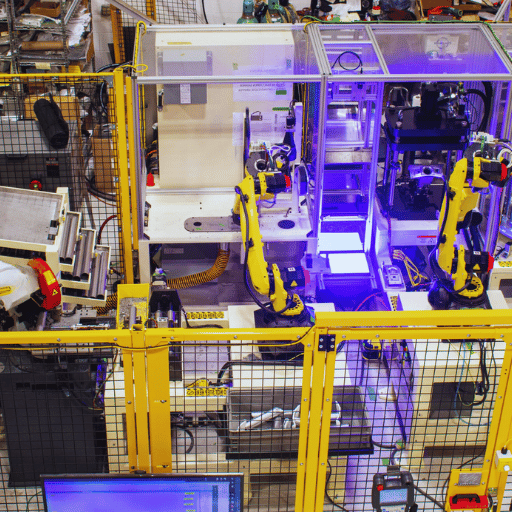
Cost is the question every buyer asks first and the one brochures dodge. Industry-reported ranges put a semi-automated station near US$150,000 and a large turnkey production line at US$1.5 million or more, as of 2026 and varying widely by scope and region. Those numbers move because six factors drive them, and the price is set more by your spec than by any list.
The 6-Driver Cost Anatomy
| Cost driver | Rough weight | What raises it |
|---|---|---|
| Part / process complexity | High | Delicate parts, tight tolerance, tricky feeding |
| Throughput / cycle time | High | Faster rate needs more stations or parallelism |
| Number of processes integrated | High | Each merged step adds tooling and controls |
| Inspection / vision depth | Medium | Cameras, lighting, and reject handling |
| Changeover / flexibility | Medium | Quick-change tooling and recipe software |
| Controls & safety | Medium | Guarding, safety rating, data and traceability |
What’s the typical cost range for custom automation machinery?
Most custom automation machinery falls between US$150,000 for a semi-automated single station and US$1.5 million or more for a turnkey line, based on industry-reported figures as of 2026. Where you land depends on the six drivers above — a vision-inspected, multi-process cell with fast changeover sits near the top of its band, while a single-purpose station with one fixed motion sits near the bottom. Always treat a quote as scope-specific, not a list price.
Worked payback example
Payback (months) = machine cost ÷ monthly savings, where monthly savings = labor saved + scrap/rework avoided.
Say a US$180,000 cell replaces two operators per shift across two shifts. At a fully burdened labor rate of roughly US$22/hour, four operator-shifts come to about US$28,000 per month. Add ~US$3,000/month in avoided scrap from in-line inspection, and monthly savings ≈ US$31,000. Payback ≈ 180,000 ÷ 31,000 ≈ 5.8 months. Change the labor rate or shift count and the answer moves — run it with your own numbers before you commit. This is an estimate, not a guarantee.
An automation investment also buys less downtime and more scalability. High-performance cells that run lights-out become scalable manufacturing capacity you can lean on as volume grows, which is why the payback math usually understates the real return.
How to Vet a Custom Automation Builder
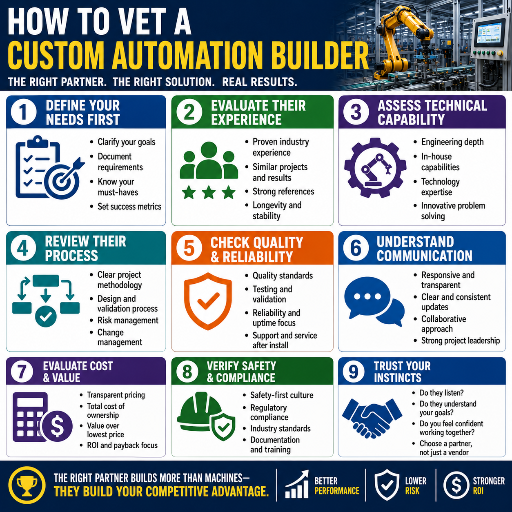
Because a custom machine is engineered, not stocked, you are buying a builder’s judgment as much as their steel. Brochures all sound the same, so push past “precision meets imagination” and ask for evidence. Reddit’s PLC and controls communities are blunt about this: a good integrator can explain its labor-versus-parts pricing and show working references, not just renderings.
- In-house design and build. One team owning mechanical, controls, and vision avoids finger-pointing.
- References in your industry. Ask for a machine doing a job like yours, then call that customer.
- Written FAT/SAT protocol. Acceptance criteria tied to ISO 9283 / ISO 10218, agreed before the build.
- Standardized controls platform. A common PLC and HMI you can support, not a one-off you cannot.
- Spares and support plan. Lead times for critical spares and a clear post-installation support path.
- Design ownership in writing. Know who owns the drawings and code before you sign.
⚠️ Important
Two red flags worth walking away from: a builder that quotes before understanding your part, and one that will not put acceptance criteria in the contract. ZEUEE’s credentials — ISO 9001:2015, more than 150 patents, and 20 years across 30+ countries — are the kind of evidence you should ask any custom machinery manufacturer to show.
For broader context on which industries buy what, see how this maps across automation by industry and the related automated assembly machines capability.
Industry Outlook: What’s Changing in Custom Automation (2026)
The demand for custom automation in 2026 is driven less by hype and more by a hard constraint: people. U.S. Bureau of Labor Statistics data shows manufacturing employment softening through 2025, while the National Association of Manufacturers estimates 2.1 million manufacturing roles could go unfilled between 2025 and 2030. When you cannot hire for a station, automating it stops being optional. Peer-reviewed work on reshoring, automation, and labor markets makes the same point: the option to automate an unfilled job changes the math for the whole line.
Two technical shifts matter for buyers right now. First, deep-learning machine vision has dropped the cost of custom inspection: tasks that needed bespoke algorithms a few years ago now train on sample images, which is reflected in patents like USPTO US10776949B2 on machine-vision 3D pose measurement. Second, modular and reconfigurable designs are shortening custom lead times, so a “custom” line is increasingly assembled from proven, configurable building blocks rather than drawn from scratch.
One tension to plan around: even as Western reshoring grows, the IFR reports Asia took 74% of 2024 robot installations, with China alone at 54%. For a buyer, the action item is simple: if labor is your bottleneck, scope your custom automation project in 2026 rather than 2028 — the lead times and the labor gap both favor moving early. (Market-size growth forecasts exist too, but treat those as directional background, not the reason to act.)
FAQ
Q: What is custom automation equipment?
View Answer
Custom automation equipment is machinery engineered around one specific part, process, or throughput target rather than bought from a catalog. It is also called non-standard automation equipment or custom automation machinery. You choose it when a standard machine cannot hold your tolerance, combine your process steps, or reach the cycle time your production needs.
Q: When should I choose custom over standard automation equipment?
View Answer
Choose custom when at least three of these hold: your part is non-standard, no catalog machine meets your throughput, you need several steps in one cell, you need in-line inspection, or you change variants often. For a single, stable, high-volume step, a standard machine is usually cheaper and faster. Custom’s trade-off is a longer lead time and a higher upfront cost — weigh that against the specific compromise a standard machine would force on your line.
Q: How much does custom automation equipment cost?
View Answer
Industry-reported figures run from about US$150,000 for a semi-automated station to US$1.5 million or more for a turnkey line, as of 2026. The price is set by six drivers: part complexity, throughput, number of processes integrated, inspection depth, changeover needs, and controls and safety. Treat any quote as scope-specific rather than a list price.
Q: How long does a custom automation project take?
View Answer
A single cell usually takes 8 to 14 weeks; a special-purpose machine runs 4 to 7 months; and a full integrated line runs 9 to 14 months. Those timelines hold only when the part and process are frozen; a design that keeps changing resets the schedule.
Q: Can you retrofit or upgrade existing automation equipment?
View Answer
Yes. When a standard machine gets you most of the way, adding custom modules — a vision station, a new fixture, a robot to tend it — is often cheaper than a full new build. This hybrid retrofit path is common and keeps a proven base machine in service while closing the specific gap you have. It also spreads the investment over time, which makes the budget easier to approve than a single large capital purchase.
Q: What are the 4 types of automation?
View Answer
Four standard types exist: fixed (hard-tooled for one high-volume task), programmable (re-set for batches), flexible (recipe-driven for mixed parts), and integrated (several systems linked into one line). Custom automation equipment is built within these categories, such as a fixed special-purpose machine or a flexible robotic cell.
Q: Can custom systems integrate AI or machine vision?
View Answer
Yes. Deep-learning machine vision is now a standard option for inspection, guidance, and measurement on custom cells. It trains on sample images rather than hand-coded rules, which is one reason custom inspection costs have fallen in recent years.
Scoping a Custom Automation Project
Run your part through the 5-Signal Screen, then talk to an engineer who builds these machines. ZEUEE designs and builds custom automation equipment for assembly, vision, and test — from a single cell to an unmanned line.
Related Articles
- Automated Assembly Machines: A Complete Guide — how assembly lines get automated, station by station
- Connector Assembly Machines Guide — a worked example of a custom assembly application
- Smart Factory Solutions — linking custom cells into a data-driven line
References & Sources
- World Robotics 2025 Report — International Federation of Robotics (IFR)
- ISO 9283 — Manipulating industrial robots, performance criteria and test methods — International Organization for Standardization
- Industrial Robotics Standards — National Institute of Standards and Technology (NIST)
- Employment Situation Summary — U.S. Bureau of Labor Statistics
- Reshoring, automation, and labor markets under trade uncertainty — Journal of International Economics (peer-reviewed)
- US10776949B2 — Machine vision-based method and system for measuring 3D pose — USPTO
- The Automation Equation: ROI, Productivity, and People — ASSEMBLY Magazine
About This Guide
We build custom automation equipment — assembly cells, machine-vision stations, and test systems — so the cost bands, lead times, and the 0.1 mm / ISO 9283 acceptance figures here come from machines we design and run, not a brochure. Those frameworks (the 4-Class Spectrum, the 5-Signal Screen, the 6-Driver Cost Anatomy) are our own way of helping buyers decide before they spend. Reviewed by the ZEUEE technical team.
WHY WE WRITE THIS
About ZEUEE Engineering Insights
ZEUEE shares technical guides based on real automation project experience. Since 2005, we have designed and manufactured non-standard automation equipment for connector assembly, wire harness production, robotic lines, vision inspection, and smart factory upgrades.
Founded in 2005
20,000 m² production base
120+ specialists
150+ R&D patents
ISO9001:2015 certified
![Automated Screwdriving: Torque & Cycle Time [Guide]](https://zeueeauto.com/wp-content/uploads/2026/10/automated-screwdriving-featured-150x150.png)