Get in touch with Zeyu lntelligent Industrial Company

Vibratory Bowl Feeder Cost: Tooling, Scope and Acceptance

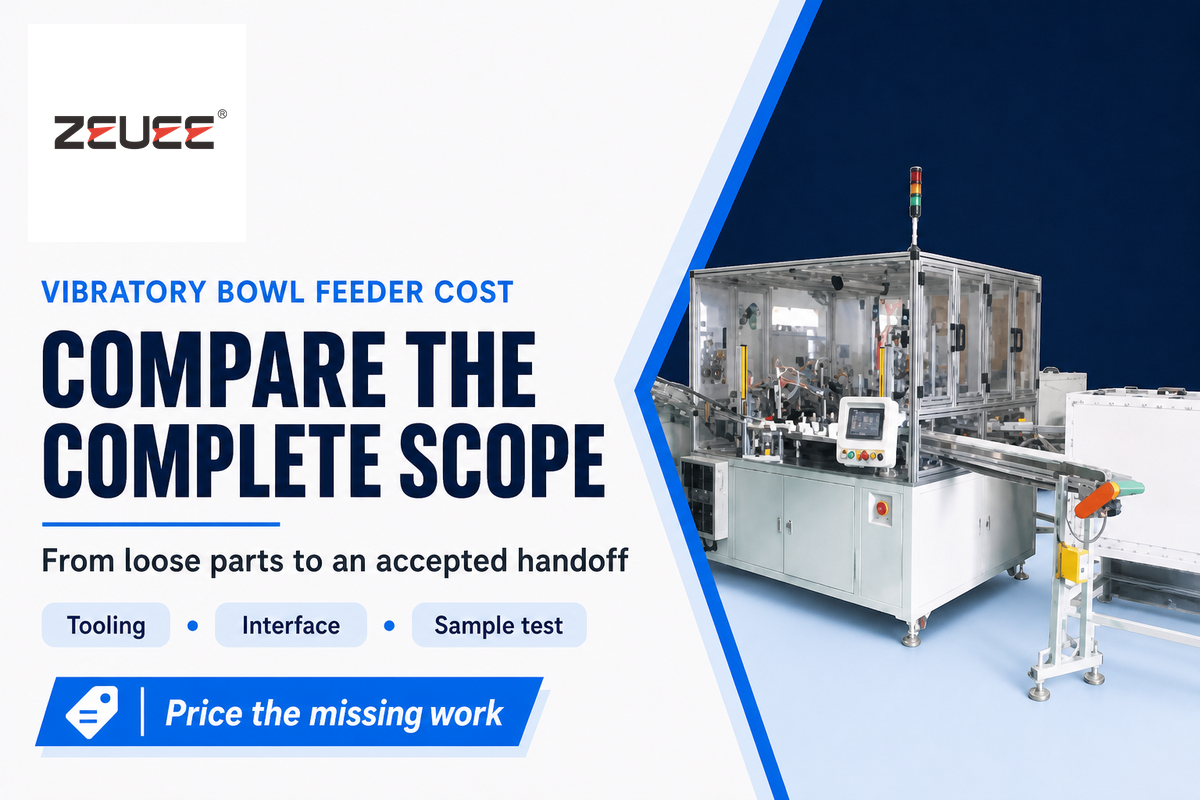
Vibratory bowl feeder costs are for the agreed-upon feeding package: a bowl and a drive, a tooled feeder, or a complete cell. Compare the same part, handoff and acceptance test before comparing costs.
A low feeder price can leave the difficult work at your factory: presenting an awkward part correctly at the assembly machine, on time. This guide separates that work so procurement can compare quotations, and production can judge what the purchase will actually give.
Before you compare quotes
- A fast bowl can still leave a machine waiting at the pickup point.
- Published historical system prices are context, not a current quote for your parts.
- Production samples, including their surface condition, matter to tooling.
- A successful demonstration needs written limits before it becomes an acceptance decision.
Vibratory bowl feeder cost: compare the same scope
Bowl feeder costs should be compared only after a matching boundary of equipment is established. A basic vibratory bowl feeder price may exclude the tooling that selects the correct orientation, the downstream track and the machine interface. Ask each supplier to price a common working endpoint. Then identify the work, if any, your team needs to supply.
There are some useful historical references. In ASSEMBLY’s March 2020 interview, Performance Feeders president and CEO Greg Pflum estimated traditional feeding systems (including bowls, step feeders and elevating systems) at $25,000 – $30,000. He placed flexible systems with vision, a robot, controls and integration at $80,000 – $100,000. These were a supplier’s historical estimates for various configurations, not matched tests or 2026 quotations.
For a current purchase, request a priced boundary schedule. A used vibratory feeder bowl with basic functionality and a new, commissioned parts feeding system are different purchases, even if pictures look similar. The price difference is meaningful only when the missing work is priced too.
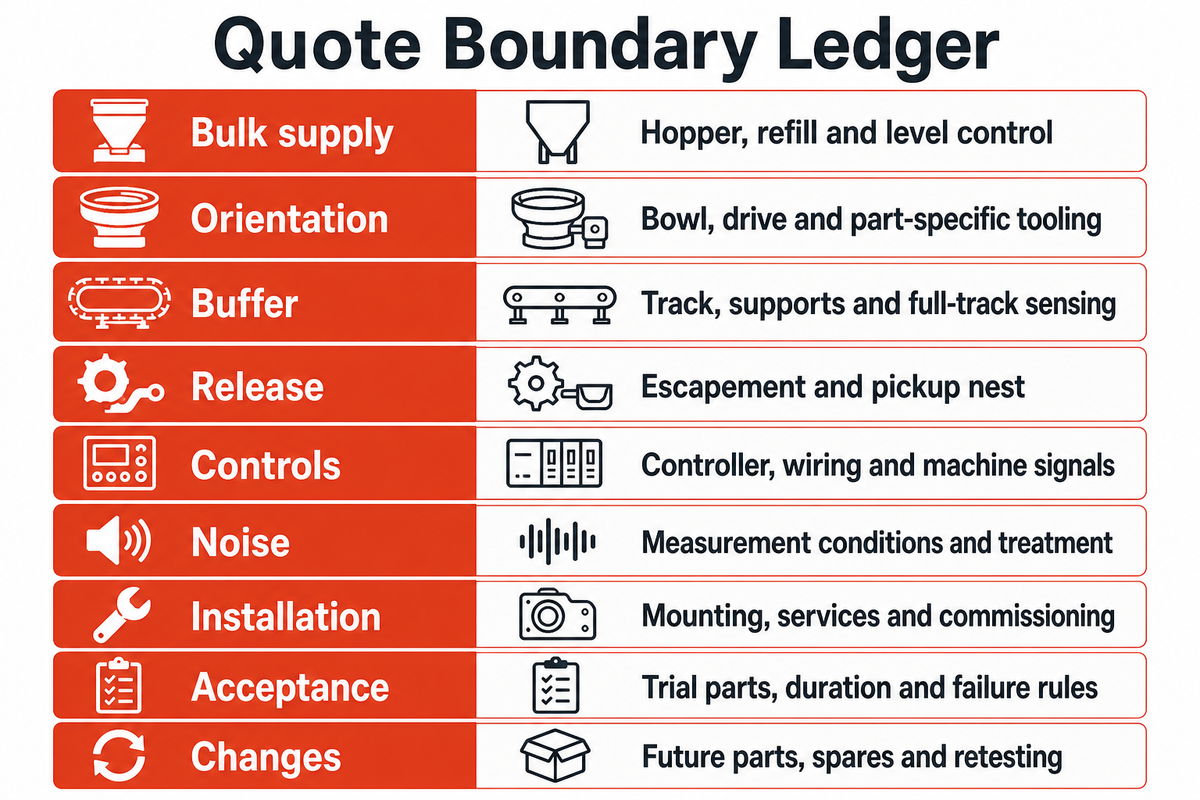
Quote Boundary Ledger
The Quote Boundary Ledger allocates a price boundary, owner and evidence of delivery for each feeding function. This exposes costs hidden between suppliers.
| Function | Boundary to price | Owner to name | Evidence to request |
|---|---|---|---|
| Bulk supply | Hopper, refill and level control | Feeder supplier or plant | Agreed refill method |
| Orientation | Bowl, drive and part-specific tooling | Feeder supplier | Sample revision and running video |
| Buffer | Track, supports and full-track sensing | Supplier or integrator | Usable capacity and stop response |
| Release | Escapement and pickup nest | Integrator | Accepted part at the handoff |
| Controls | Controller, wiring and machine signals | Electrical integrator | Input/output list and sequence |
| Noise | Measurement conditions and treatment | Supplier and plant | Noise information for intended use |
| Installation | Mounting, services and commissioning | Integrator and plant | Site responsibility schedule |
| Acceptance | Trial parts, duration and failure rules | Quality and supplier | Signed test record |
| Changes | Future parts, spares and retesting | Purchasing and engineering | Included and excluded work |
For example, mark an offer ending at the track outlet as “pickup nest excluded”. If another offer ends at a proven robot pickup, send the first supplier that handoff requirement before ranking the totals. Procurement gains a comparable number; the plant avoids inheriting an unpriced integration task.
How does a bowl feeder work?
A vibratory bowl moves loose parts around a rising track using controlled vibration. Tooling allows acceptable orientations to continue and redirects unsuitable ones for another pass. The drive creates motion; the bowl geometry and tooling determine how the specific part is presented to the next process.
The University of California, Berkeley feeding research covers this passive selection principle. It illustrates the difference in buying a mechanism that can vibrate vs. a finished part orientation solution. For the wider machine boundary, see the automated assembly machine buying guide.
How bowl tooling changes the price
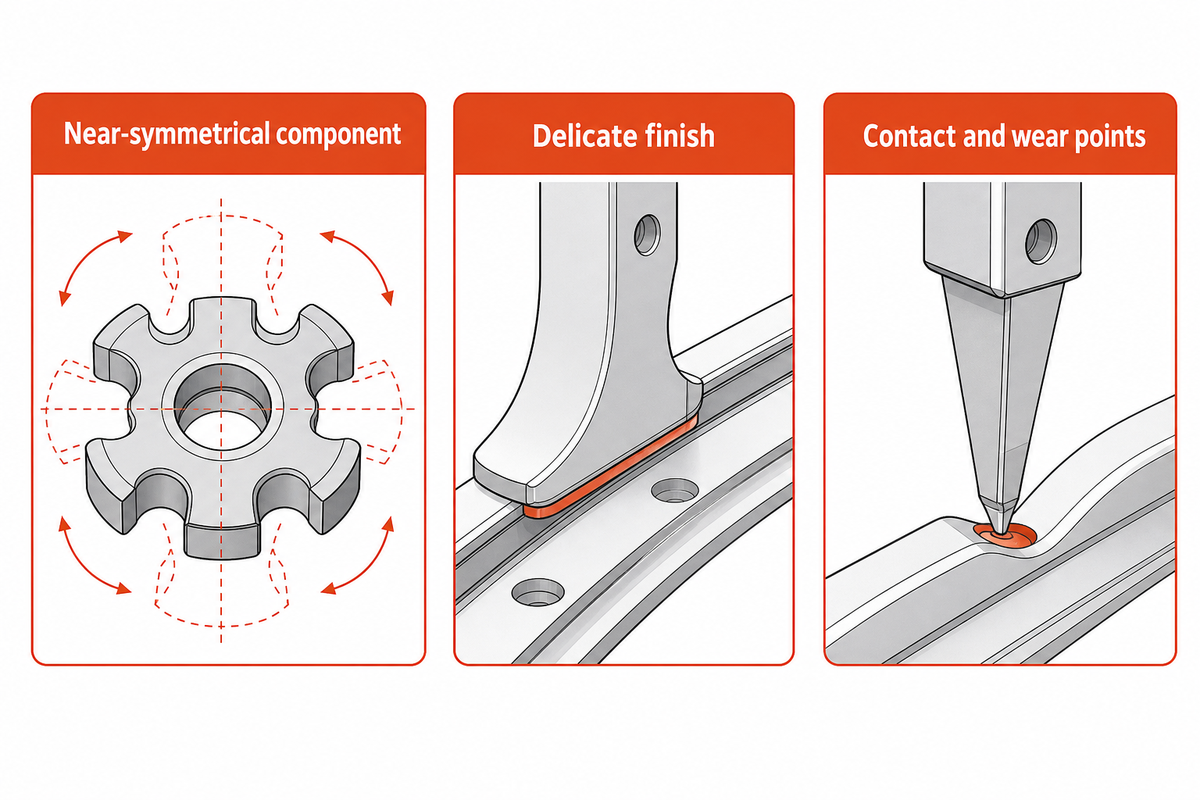
Tooling cost is determined by the difficulty of separating and orienting a part and delivering it without damage. A near-symmetrical component, an unstable resting position or a delicate finish can require more development than a simple fastener. Material choice alone doesn’t determine the cost of developing tooling.
A custom tooled bowl may require selectors, reject paths and a controlled discharge arrangement. The importance of drawings, tolerances and production samples is detailed in ASSEMBLY’s 2023 tooling article. A prototype may assist in quoting a feeding project; it may not duplicate the surface condition of the final small parts.
Prior to specifying high-quality materials by name, consider the effects of wear. ASSEMBLY’s tiny-electrode application states that hard iridium tips wore grooves in contact surfaces and orientation was addressed along a hardened linear track. This is a published supplier application; it isn’t ZEUEE test data. Contact and wear points should be defined prior to specifying a surface finish.
Stainless steel may resolve corrosion or cleaning issues; polyurethane or another lining may change contact behavior. Inquire how the proposed surface impacts grip, cleaning and gentle part handling. “Precision engineering” isn’t a substitute for naming the surfaces that physically contact the part.
Noise also belongs in the tooling discussion. In a CMT Engineering case hosted by the UK Health and Safety Executive, a 3 mm rubber lining reduced reported noise from 96 dB to 91 dB. This is one undated case, not a promised reduction for another feeder. Request noise information for your intended operating conditions before deciding whether lining or an enclosure belongs in the quote.
Parts feeder quote inputs: drawings and samples
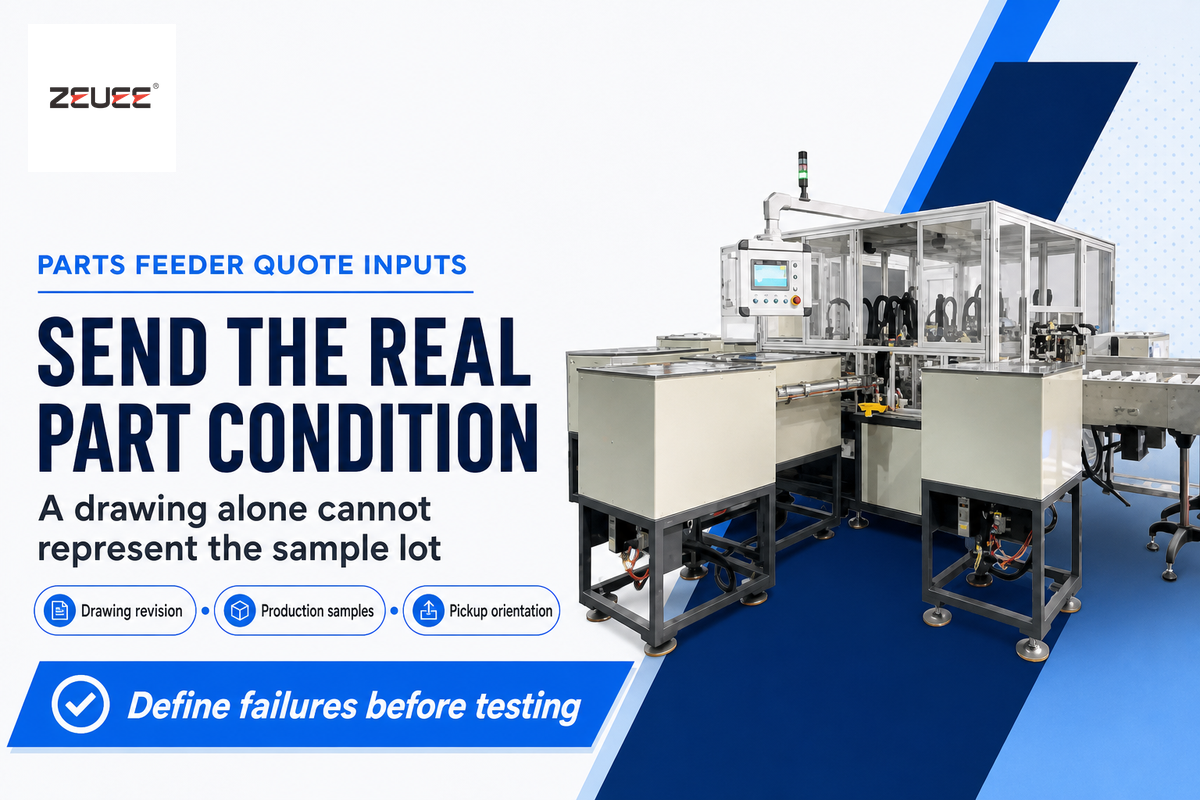
Send sufficient information to reproduce the feeding problem, not simply to identify the part. Indicate the revision level of the drawing, permitted variation, required orientation and the actual production condition. Differences in burrs, oil or other surface conditions between samples and production parts can make a successful demonstration a poor guide to the production lines.
Tooling specialists interviewed by ASSEMBLY also distinguish production parts from prototypes. Ask which sample lot will be used to develop the feeder and which will be used for acceptance. Keep a retained sample so a later dispute can be traced to the part, tooling, or operating conditions.
Sample packet: do / avoid
Do: label drawing revision, lot, finish, permitted defects and the required pickup orientation. Show the downstream fixture and any access limits.
Avoid: sending hand-selected perfect pieces without disclosing the selection, or treating a changed coating as the same feeding condition.
Specify fail definitions: reversed part, double release, damaged surface, manual intervention, missed delivery. Agree with quality which events fail the trial and which are recorded for diagnosis. There’s no universal sample quantity established by the sources reviewed; size the trial to the decision and its risk.
Small components with similar dimensions behave differently when they nest, interlock or become oily. This is why a range of vibratory bowl feeders can’t be compared with diameter only. Use the custom assembly machine guide to adjust the feeding request to the rest of the machine brief.
Feed rate: measure accepted parts at the handoff
Useful feed rate is the number of correctly presented parts accepted by the next process within an agreed time. A high feed rate at the bowl rim doesn’t imply the result. There can be several things, including track capacity, release timing and the receiving machine, which affect delivery after orientation.
As an illustrative screw bowl feeder requirement, making 8 finished units per minute with 2 identical screws per unit requires 16 accepted parts per minute across the relevant feeding lanes. This isn’t a measured ZEUEE result. It doesn’t include a universal spare-capacity allowance. Any allowance must be based on the actual behavior of stops, buffers and recovery.
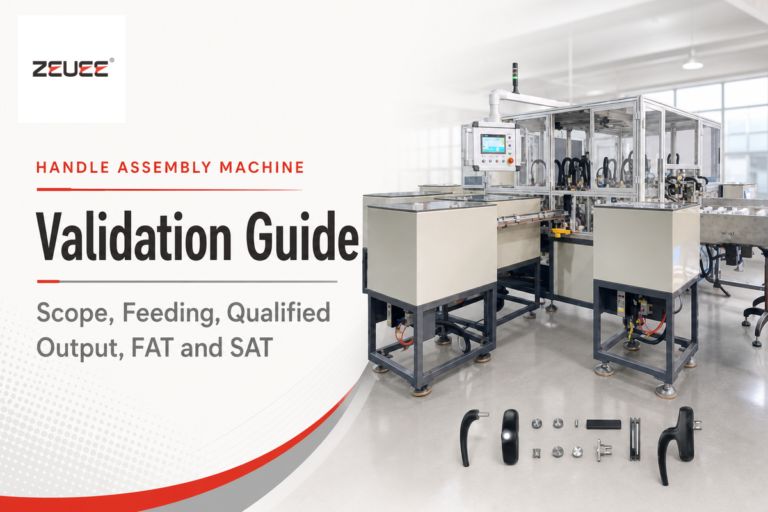
Separate finished output from feeder output. The page for ZEUEE’s C22-ZY05-01 handle assembly machine shows 5-8 finished pieces per minute and lists the total machine power as 2.5 kW. Neither establishes the power and speed of an individual bowl feeder. Use the component demand at each station to determine the feeding requirement.
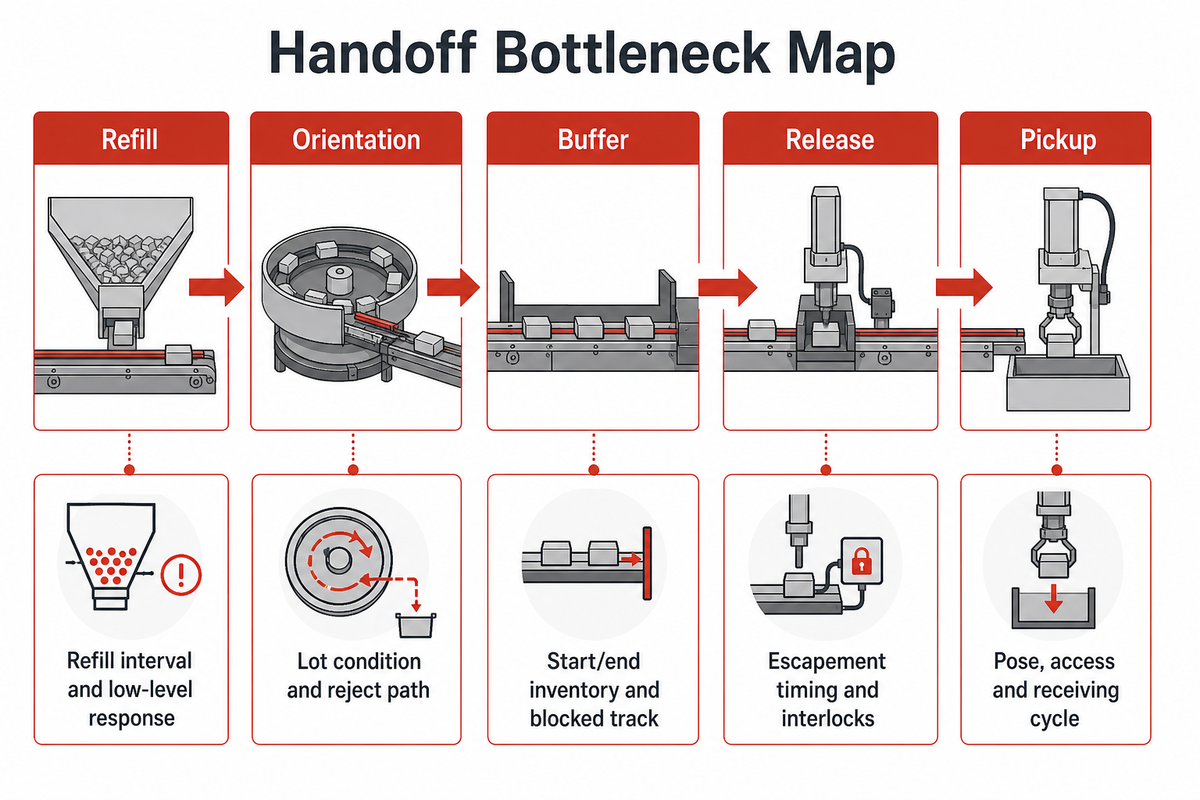
Handoff Bottleneck Map
The Handoff Bottleneck Map shows how a missing delivery is traced upstream, separating a lack of parts from orientation, buffering, release, and pick up issues.
| Stage | Observed symptom | Check before spending | Purchase implication |
|---|---|---|---|
| Refill | Bowl runs low between visits | Refill interval and low-level response | Price the hopper or operator task |
| Orientation | Parts circulate without useful exits | Lot condition and reject path | Review tooling with real samples |
| Buffer | Machine stops after short supply gaps | Start/end inventory and blocked track | Review usable buffer and sensing |
| Release | Track full but handoff empty | Escapement timing and interlocks | Assign interface work explicitly |
| Pickup | Presented part is not accepted | Pose, access and receiving cycle | Test feeder and machine together |
Indicate starting and ending buffer inventory. A short run can appear to meet demand while consuming a preloaded track. The map prevents an expensive misdiagnosis of buying a larger bowl when the full track shows the restriction is downstream. The Berkeley account of part selection distinguishes circulating parts from useful orientated output.
Linear feeders, hopper and sensor costs
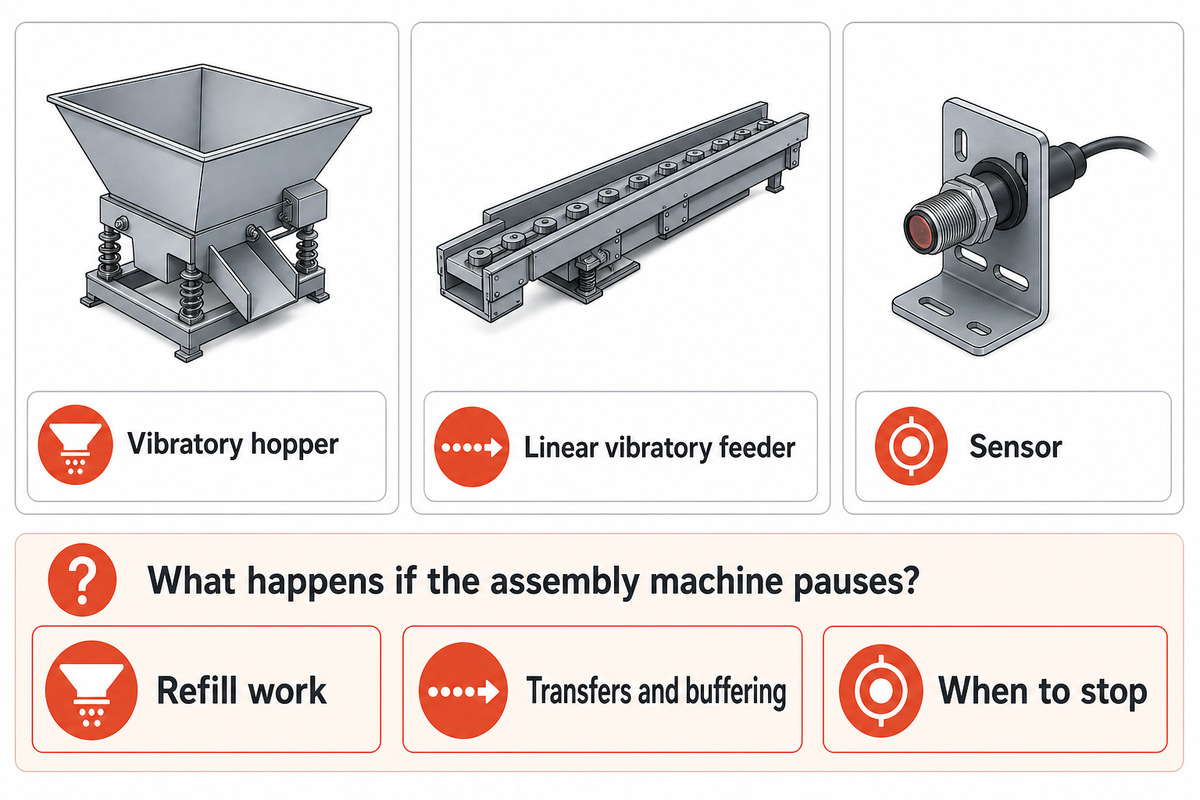
Price accessories against a stated function. A vibratory hopper can do refill work; a linear vibratory feeder can do transfers and buffering; and a sensor can tell the controller when to stop. None can prove reliable performance unless tested against the receiving equipment.
For each feeder system, show the desired stop/start sequence. What happens if the track is full? What happens if the hopper is empty? What happens if the assembly machine pauses? Vibratory feeder control must match the electromagnetic drive; amplitude adjustment doesn’t correct an inappropriate part path. Research on vibratory bowl dynamics shows the effect of operating frequency on part motion, including sliding and hopping.
Ask the supplier which bowl features address your feeding applications, and which are optional. Make adjustments to feed small parts if they help. A change that helps feed small parts may cause complications with cleaning or access. Add a system for clearing a jam that doesn’t make access an afterthought.
Noise information should describe the intended use. According to the Health and Safety Executive’s quieter-machine guidance, noise should be considered during purchase and performance evaluated after installation. State who provides the treatment and who verifies the outcome of the installation. The lowest accessory subtotal can shift costs to the commissioning.
Flexible feeder or fixed bowl: total cost of ownership
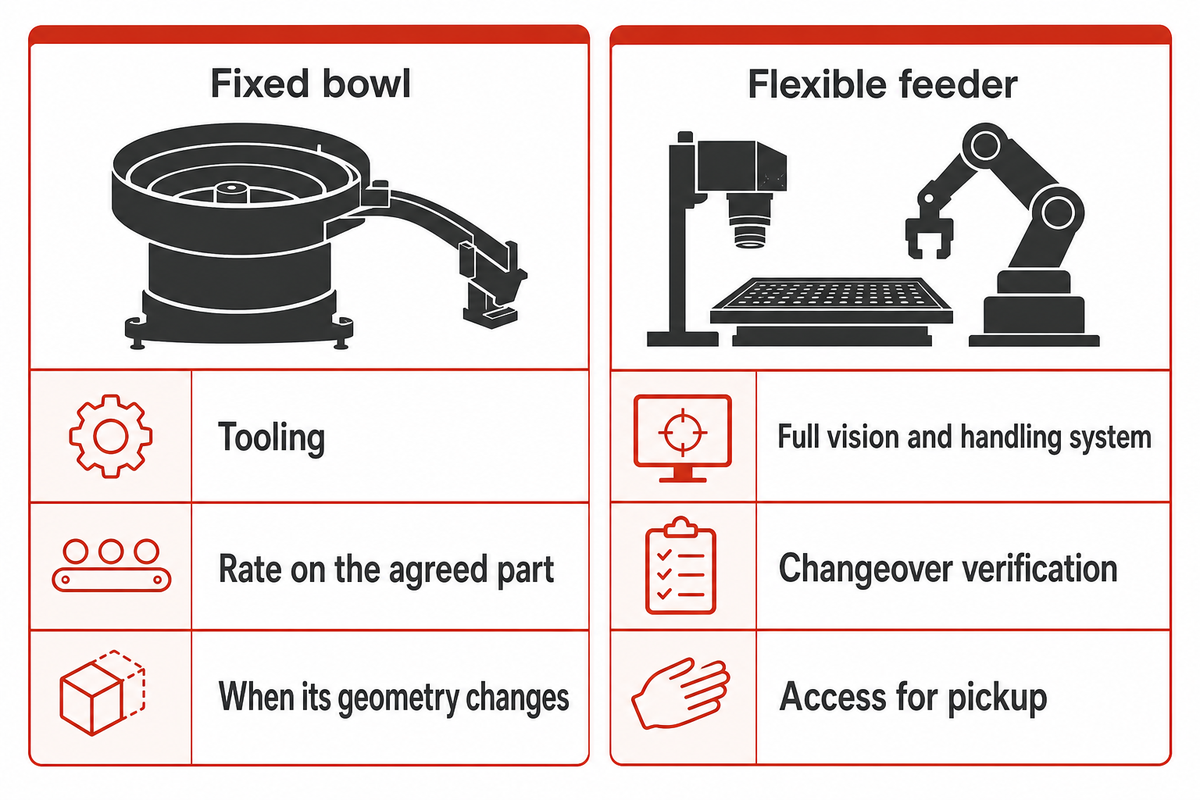
For different types of parts, choose the feeding approach around the part family, changeover work and delivery requirement. Stable high-volume production can lend itself to fixed bowl tooling. Flexible feeding can serve your planned variety of parts, but the cell still needs suitable presentation, vision, robot access and validated programs for each configuration.
Carry the commissioning and accessory boundaries for this comparison. The public abstract of Loy and Reinhart’s 2010 modular feeding study describes an economic scope of application tied to the task. The reviewed evidence doesn’t support a universal number of variants beyond which flexible feeding becomes cheaper. Compare proposals of fixed and flexible systems to support your actual production mix.
The system need not be completely flexible or completely fixed. ASSEMBLY magazine’s 2014 flexible feeding feature describes a combination of fixed bowl tooling and vision. If existing hardware presents a part acceptably, decide whether modifications to recognition or discharge can address the new requirement before replacing the complete cell.
Fixed bowl: compare tooling, rate on the agreed part and the work needed when its geometry changes. Stable high-volume demand can make dedicated tooling a sensible investment.
Flexible feeder: compare the full vision and handling system, recipes, changeover verification and access for pickup. Reusable hardware does not make a new part free to introduce.
In their 2020 flexible feeding report, ASSEMBLY includes an Epson medical-parts application in which camera clearance created a resolution problem. In this example, a second camera on the robot improved recognition, but added cycle time. The example demonstrates a tradeoff: improving recognition may change production rates. This isn’t evidence that every flexible feeder needs this kind of arrangement.
Are there ongoing costs after purchasing a vibratory feeder?
Yes. Budget for the costs of cleaning, wear items, adjustments, changeovers, energy consumption and the labor needed to refill or recover the system. Downtime should be included only for a defined case. The initial purchase is one cost; the useful output and the work for system maintenance determine the total cost of operating the system for a defined period.
Finance should evaluate operational costs for the same production schedule. Use the actual numbers for labor costs and accepted output, and don’t assume that all attendance disappears. For example, if a proposed hopper removes a refill visit and an operator tends that station, record the saved time for that task before stating that the entire shift was saved. The production line automation guide can be used to place that decision in context of the larger system.
Sample acceptance before you release the feeder
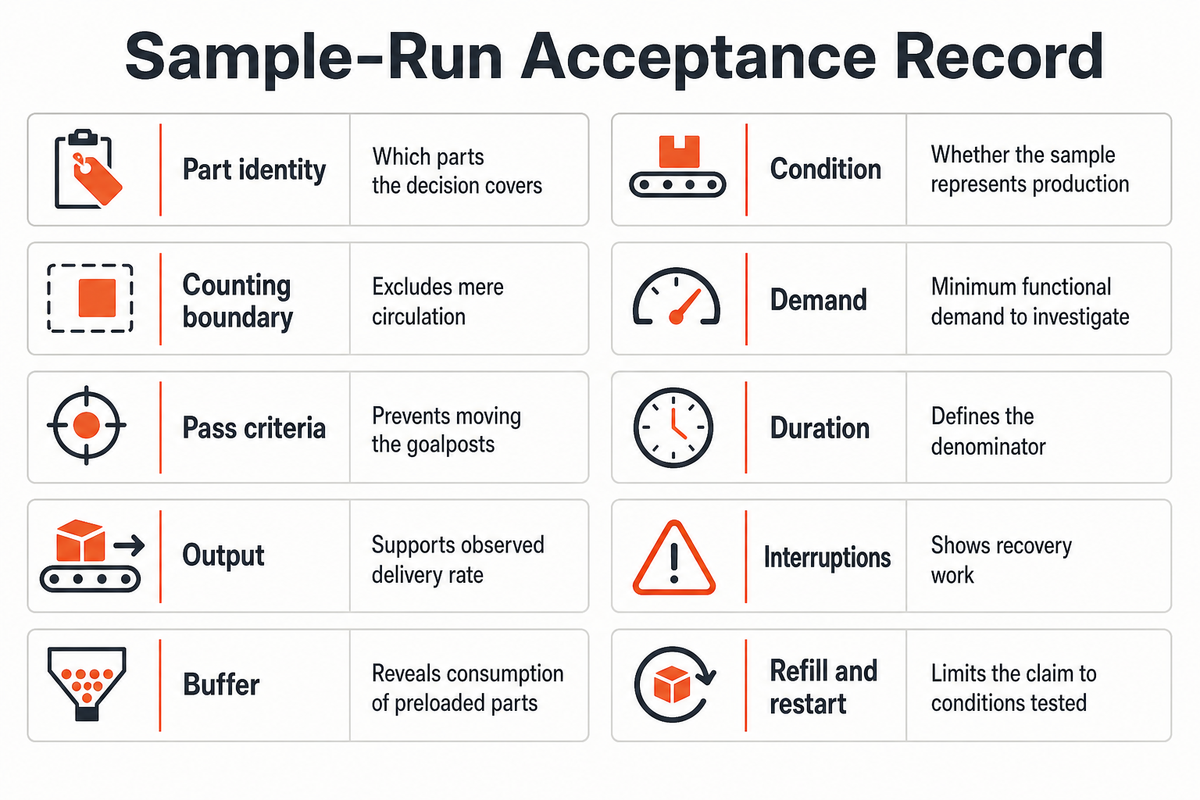
Agree on the pass criteria before the demonstration and record what actually occurred. The trial should be designed to answer a purchasing question, for example, can this configuration deliver the specified parts at the agreed handoff? One successful trial doesn’t prove that the overall system would always provide the part in that fashion.
“there is a risk of answering the question incorrectly.”
NIST’s referenced guidance concerns binary experimental responses, not a prescribed feeder test. The relevance is that we need to define the performance question and the risk associated with the decision. Quality and Engineering should decide the trial design, and not just borrow a convenient sample count from an unrelated source.
Sample-Run Acceptance Record
The Sample-Run Acceptance Record ties a purchasing decision to a part revision, operating condition, counting boundary, and agreed-upon pass criteria.
| Record field | Example entry or required input | Decision it supports |
|---|---|---|
| Part identity | Drawing Rev B; lot L1 (illustrative) | Which parts the decision covers |
| Condition | Record finish, oil and allowed defects | Whether the sample represents production |
| Counting boundary | Correct parts accepted at pickup | Excludes mere circulation |
| Demand | 8 units/min × 2 parts = 16 parts/min (illustrative) | Minimum functional demand to investigate |
| Pass criteria | Agree target, failure rules and decision risk before trial | Prevents moving the goalposts |
| Duration | Record agreed elapsed time and exclusions | Defines the denominator |
| Output | Enter accepted count; leave blank until measured | Supports observed delivery rate |
| Interruptions | Record stops, faults and manual interventions | Shows recovery work |
| Buffer | Count inventory at start and finish | Reveals consumption of preloaded parts |
| Refill and restart | Record actual sequence and outcome | Limits the claim to conditions tested |
A purchasing lead has the ability to link this record to a specific order; quality controls the criteria and the plant manager reviews the recovery burden. If a trial doesn’t address a condition, identify the condition. Reduced downtime is an outcome to be measured, not a feature established by a smooth demonstration.
Feed systems integration and supplier responsibilities
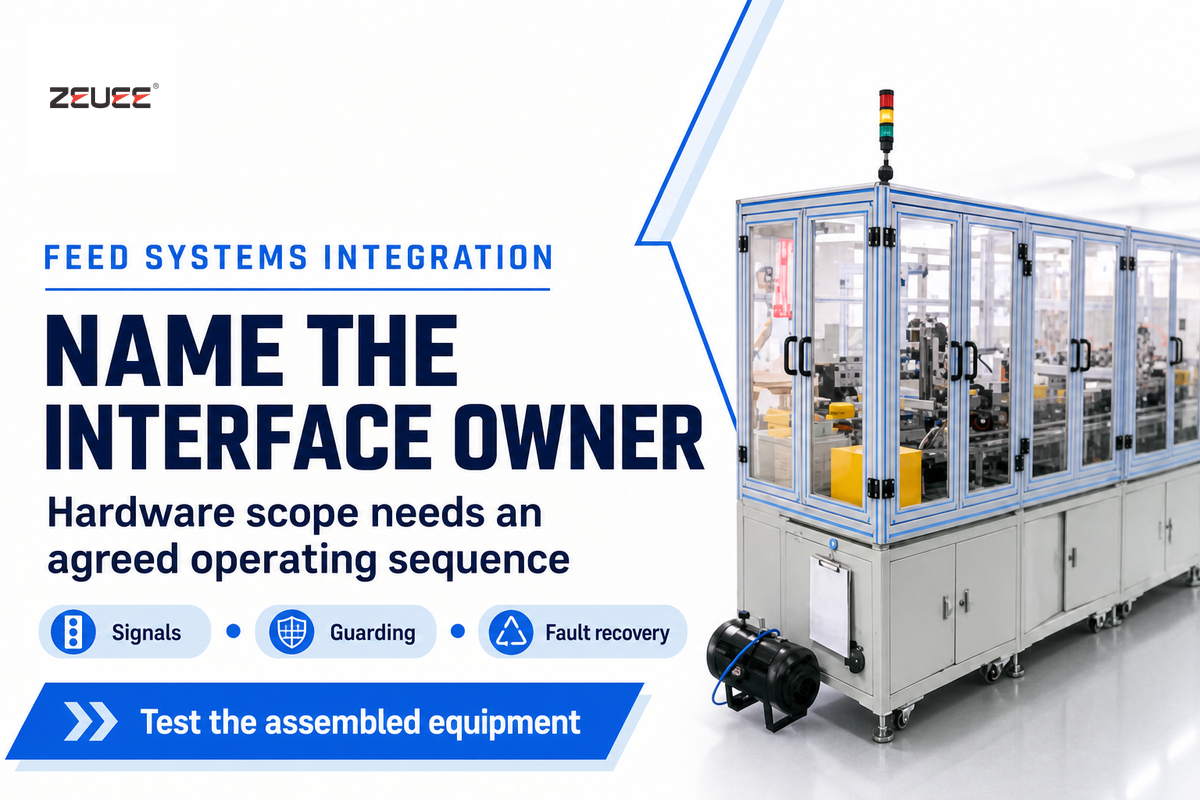
Consider one owner for the entire feeding sequence, even if multiple suppliers supply the hardware. That owner is responsible for the bowl, transfer, release, receiving machine, and fault recovery. Otherwise each component can meet its own specification while the combined automated production system still fails to deliver parts when needed.
Document mounting, service connections and guarding responsibilities along with the control system interface. For US installations, OSHA’s general machine guarding requirements are pertinent to the integrated equipment. An individual component quotation isn’t proof that the integrated machine meets the aforementioned requirements.
How about getting signals back for a low hopper or low track?
Describe the signals and the function of the machine for those signals. Low hopper and low track indicate different conditions. One condition is related to bulk replenishment, the other to downstream availability. For normal operation, delays, and alarms and their behavior as well as restart conditions, provide responses in the interface schedule and test those responses using the assembled equipment.
For example, a low-hopper warning might mean request a refill and let remaining parts keep running. What to do at pickup if a part is missing might require a different machine response. Engineering needs to agree on the actual sequence; neither of these behaviors should be assumed due to the presence of a sensor. Include who wires, programs and proves each response.
ZEUEE’s automated assembly machines present a more complete picture for a feeding inquiry. When talking about an assembly project, you send us the part revision, the targeted output, the machine arrangement, and a filled Quote Boundary Ledger. Using this, ask what work will need to be done to the standard and custom machine, and request a quotation stating scope, exclusions and acceptance.
Frequently asked questions
Answers for these questions distinguish purchase price from the work required to make a feeder useful. For similar tooling questions, the ASSEMBLY tooling interviews are a good starting point. A supplier still requires your specific requirements to quote standard and custom equipment on the same terms.
How much more does a custom feeder cost compared to a standard one? There is no supported universal premium.
Several factors change the comparison: part geometry, tooling development, discharge arrangements and what the standard package already includes. Ask for the same acceptance boundary on both offers. Custom vibratory feeders may include work that a lower-priced package leaves to your integrator. Compare that missing work before treating the price difference as a customization charge.
Is it worth paying more for a premium drive unit? Only when its demonstrated benefit matters to your application.
A higher cost is justified by a relevant capability, service provision or measured performance difference, rather than a premium label. Ask the supplier to demonstrate the proposed drive with your vibratory parts feeder configuration. Check controls compatibility and spare-parts support too. An expensive drive can’t remove an obstruction in the track or compensate for unsuitable bowl tooling.
What is the cheapest type of vibratory feeder? The lowest equipment price does not identify the cheapest working solution.
A bare or used unit may have a smaller initial price, but its tooling and interface can be wrong for your part handling task. Compare delivered scope and the work still required. A cost-effective solution meets the agreed acceptance conditions with known installation and operating responsibilities. The lowest unqualified listing isn’t a useful benchmark for a complete feeding cell.
What Is a Flex Feeder? It presents parts for recognition and pickup rather than relying entirely on fixed orientation tooling.
The complete solution commonly includes a presentation surface, vision and a robot. Verify each part recipe, reachable pickup position and changeover requirement. Software flexibility alone doesn’t establish rate, access or compatibility with every part in the proposed family.
Is a Vibratory Bowl Feeder Right For Your Business Needs? It is a candidate when a defined part can be oriented and delivered consistently for your production demand.
Start with the part family and accepted delivery requirement. Stable, high-volume assembly automation can suit dedicated tooling, while frequent changes may justify comparing other parts feeding systems. If a proposal substitutes a centrifugal bowl feeder or another rotary approach, request its part-presentation method and sample results separately; a shared bowl shape doesn’t establish equivalent behavior. For your vibratory feeding proposal, require a representative sample run and an explicit interface boundary. Decide whether it’s cost-effective after including manufacturing costs tied to attendance, rejects and interruptions, rather than judging the hardware photograph.
Additional source: ASSEMBLY, 2014, Flexible Feeding for Assembly Automation.
References & Sources
- University of California, Berkeley: parts feeder selection principles.
- Najmi and colleagues, 2020: vibratory bowl dynamics (public abstract and introduction).
- ASSEMBLY, 2023: Tips for Tooling Feeder Bowls.
- ASSEMBLY, 2020: Flexible Feeding Systems; Bowl Feeds Tough, Tiny Electrodes.
- Loy and Reinhart, 2010: A new modular feeding system and its economic scope of application (public abstract).
- Health and Safety Executive: bowl feeder noise case; buying quieter machinery.
- National Institute of Standards and Technology, 2019: Confirming a Performance Threshold with a Binary Experimental Response (Technical Note 2045 abstract).
- Occupational Safety and Health Administration: general requirements for all machines.
WHY WE WRITE THIS
About ZEUEE Engineering Insights
ZEUEE shares technical guides based on real automation project experience. Since 2005, we have designed and manufactured non-standard automation equipment for connector assembly, wire harness production, robotic lines, vision inspection, and smart factory upgrades.
Founded in 2005
20,000 m² production base
120+ specialists
150+ R&D patents
ISO9001:2015 certified
![Automated Screwdriving: Torque & Cycle Time [Guide]](https://zeueeauto.com/wp-content/uploads/2026/10/automated-screwdriving-featured-150x150.png)