Get in touch with Zeyu lntelligent Industrial Company


Cherry
I write about planning and validating automated production lines. My articles cover direct-current wire production and optical connector assembly, with attention to factory acceptance checks. I focus on the process and evidence a buyer should define before a line moves from a design proposal to production.
PCB Connector Assembly Line: Complete Engineering Guide to Pin Insertion, Press-Fit, AOI & Packaging
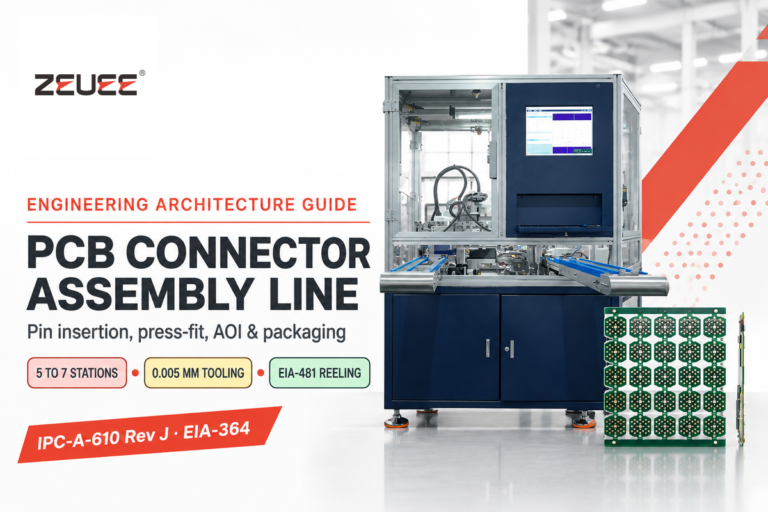
A PCB connector assembly line uses 5 to 7 synchronized stations to insert pins to 0.005 mm accuracy and to seal finished headers at high speed. Modular lines coordinate contact feeding, carrier cutoff, retention staking, optical inspection, Hi-Pot testing, and…
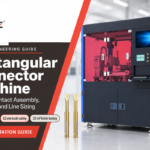
Rectangular Connector Machine: Engineering Guide to 5-Stage Multi-Row Contact Assembly, Inspection, and Line Sizing
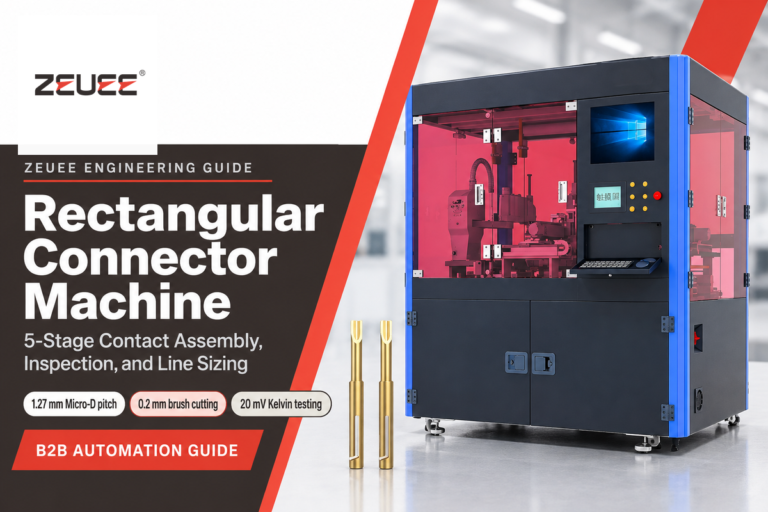
A Rectangular Connector Machine is an automated system to assemble contacts in multi-row insulator housings. This system performs functions including feeding contacts, inserting pins, four-point sleeve crimping, 0.2 mm brush cutting, closing insulator shells, and doing inline testing. Unlike benchtop…
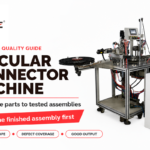
Circular Connector Machine Guide: From Loose Parts to Tested Assemblies
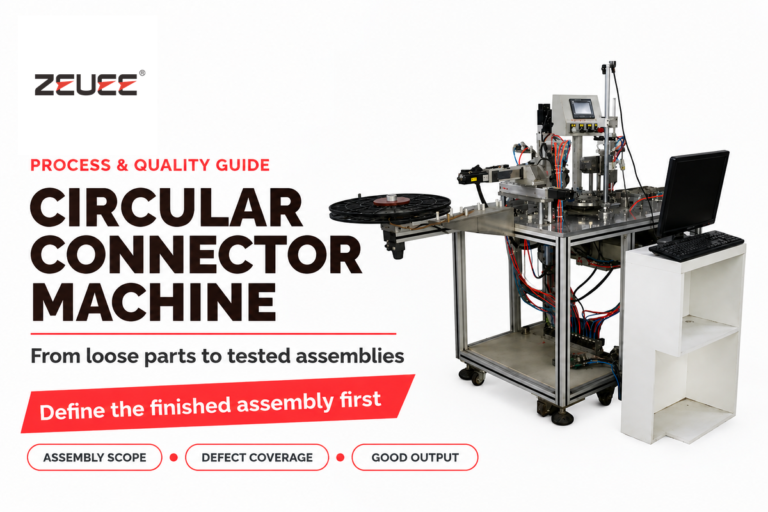
By Cherry | Updated November 2026 A Circular Connector Machine automates some operations for constructing round electrical connectors, such as feeding contacts, positioning inserts, and assembling and closing shells. It also checks the final part. Its output is a completed…
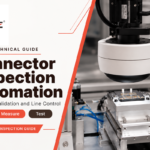
Connector Inspection Automation: A Practical Guide to Reliable Inspection
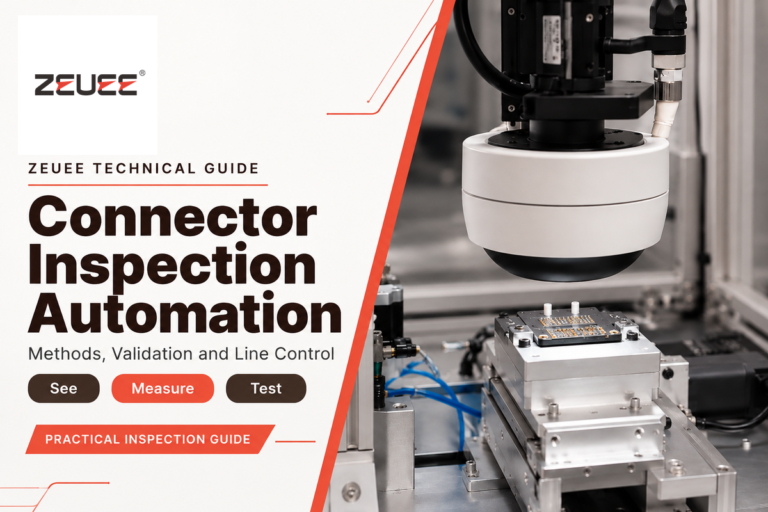
By Cherry · Updated November 2026 Connector Inspection Automation uses controlled part handling, sensors and software to inspect connector features and route parts based on results. Cameras check visible conditions; dimensional sensors check part geometry; and other electrical instruments check…
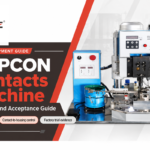
HYPCON Contacts Machine: Process, Selection and Acceptance Guide
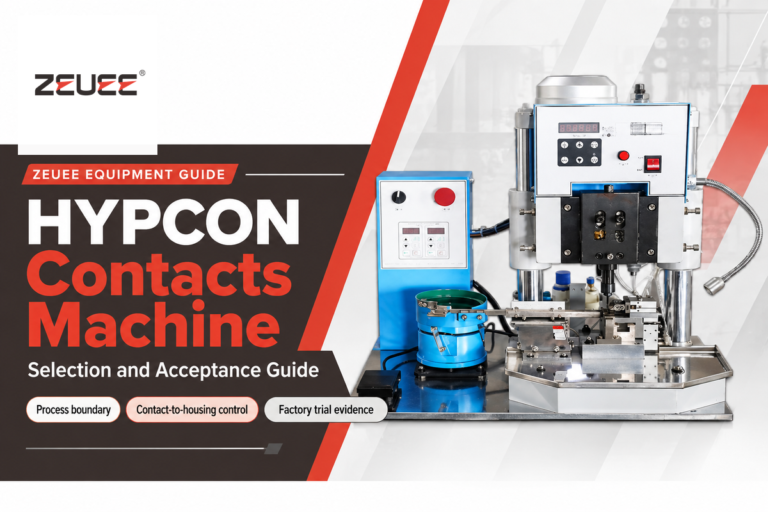
A HYPCON Contacts Machine is a controlled connector assembly station that evaluates the full contact-to-housing process. Evaluation shouldn’t be limited to assessment of the contact insertion motion. The contacts machine should position the desired contact in the proper housing cavity…
Pin & Socket Contacts Machine: Contact-to-Housing Guide
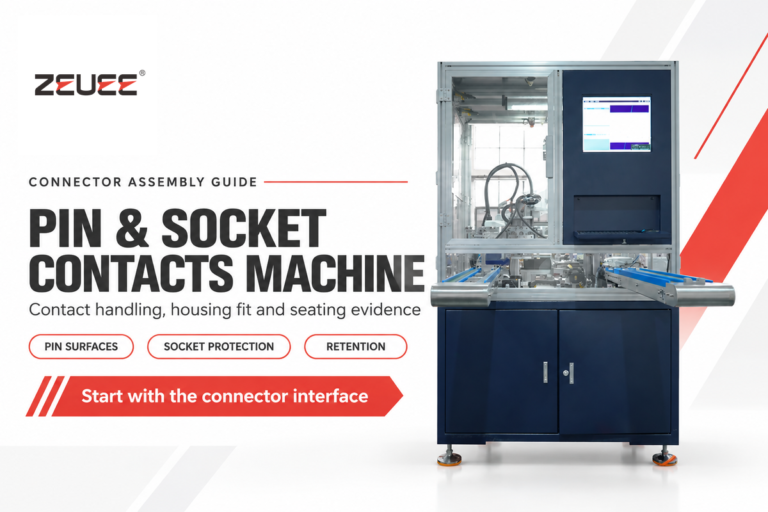
The specification for a Pin & Socket Contacts Machine must identify the parts it will handle. In a completed cycle, there may be a contact present, but its retaining feature may not be in position. The engineering task is to…
Automated Assembly Line: Architecture, Capacity and Acceptance Guide
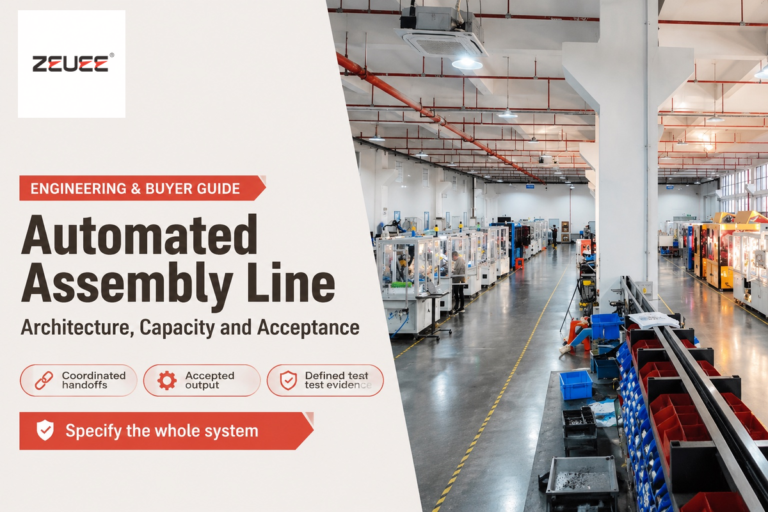
An automated assembly line connects machines that feed, position, join and inspect components to produce finished assemblies. Choose its transfer architecture around the slowest process, product variation and fault recovery. Then specify output as accepted parts per production period, so…
Robotic Production Line Architecture: Kinematics, Inter-Station Coupling, Buffers, and Zoned Safety
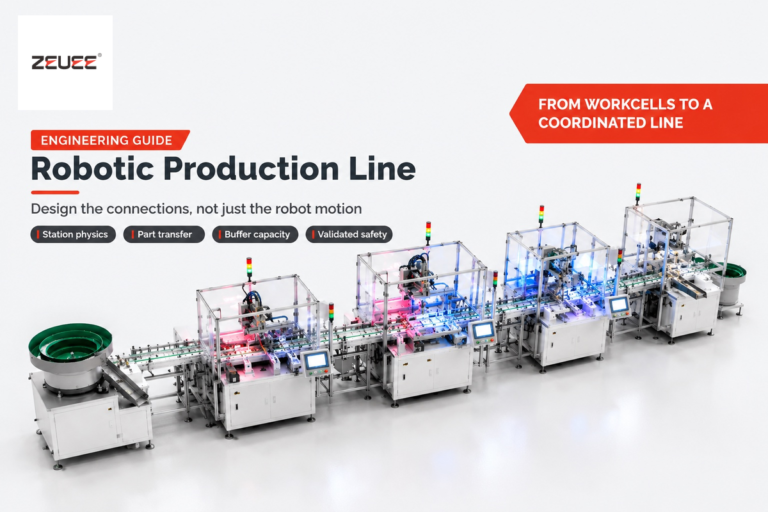
Updated October 2026 Placing four standalone robot cells next to each other won’t create a robotic production line. When robots are applied without a coordinated datum transfer, workcells can amplify micro-stops rather than multiply throughput. Using the right types of…
Automated Production Line Guide: Flow, Control and Output
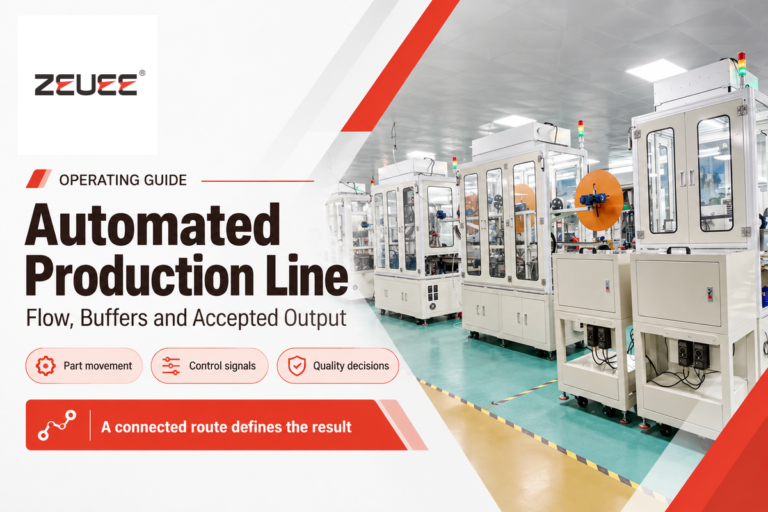
Updated October 2026 An automated production line links workstations and material transport and combines them with control systems to complete a task in a defined sequence. Machines can finish their own task while the next station is occupied. Waiting time…
Turnkey Automation Systems: How Complete Lines Work
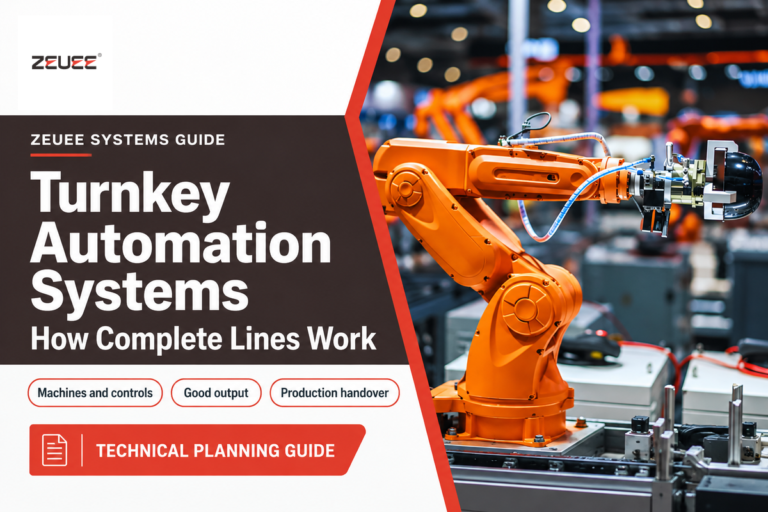
Turnkey Automation Systems deliver the equipment, controls, and integration required to complete an agreed manufacturing task. The useful question is whether the complete system can produce accepted parts consistently, including after a stop or product change. By Cherry · Updated…
Trending now